
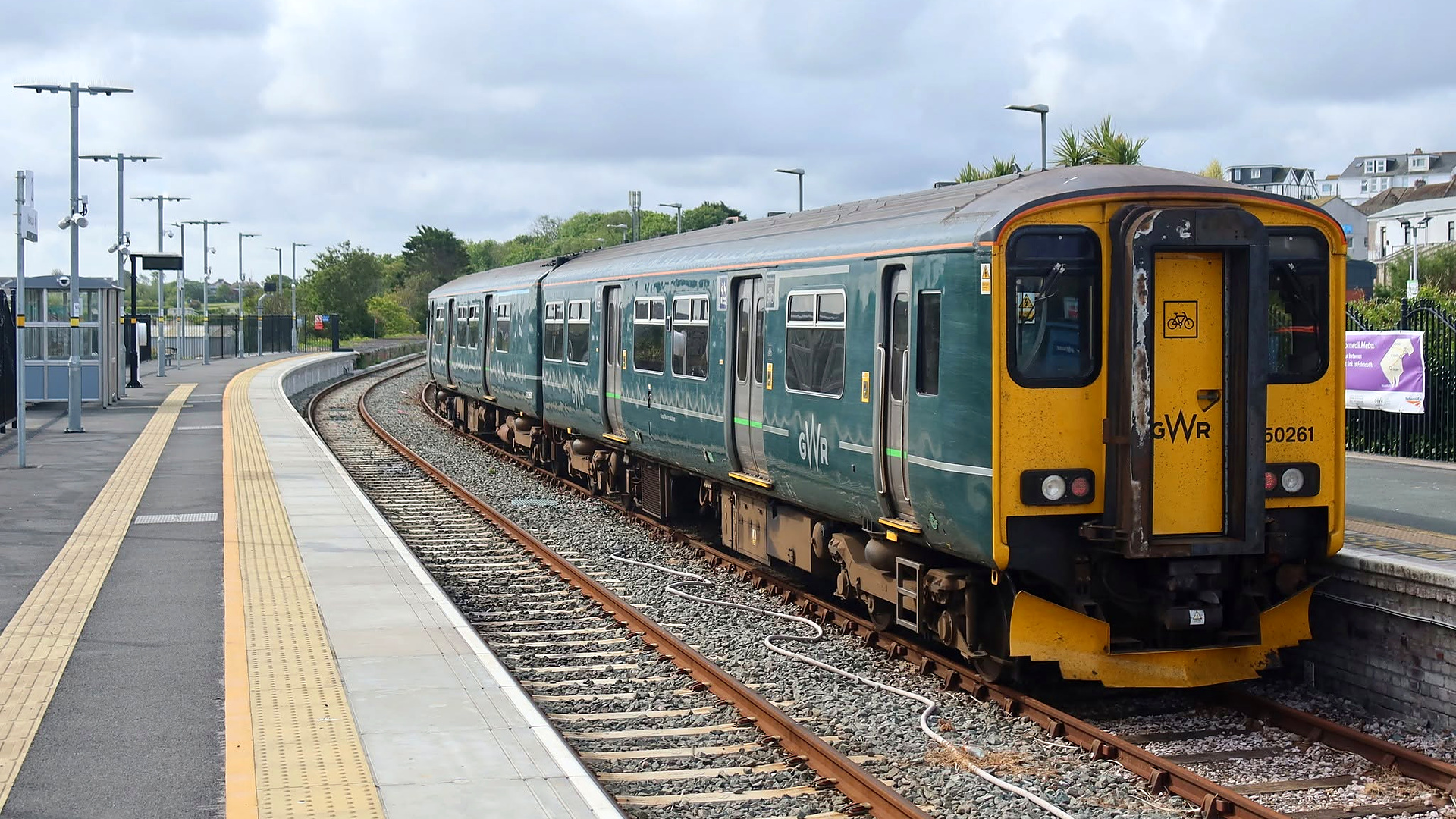
Cornwall has something called the Mid Cornwall Metro. It sounds rather grand, doesn’t it? The sort of name that makes you imagine underground stations, escalators and trains arriving every few minutes.
Don’t expect anything quite like the London Underground. There are no tunnels beneath Truro, and Newquay hasn’t suddenly acquired an underground railway. What Cornwall has instead is an ambitious project to make better use of the railway lines already running through the county, improving connections between Newquay, Par, St Austell, Truro, Penryn and Falmouth.
With an investment of £56.8 million, the Mid Cornwall Metro was designed to tackle a familiar problem. Cornwall has railway lines connecting some of its largest towns, but using them for everyday journeys hasn’t always been particularly convenient.
It is an interesting idea. Rather than spending billions building a completely new network, why not make the one we’ve already got work properly?
Why Cornwall’s Railway Needed Improving
Cornwall’s railway network developed for very different reasons from those of a modern city transport system.
Railways played an important role in moving minerals, industrial materials and goods, connecting ports and mining communities, and eventually bringing visitors into Cornwall. The main line connected the county to the rest of Britain, while branch lines linked individual towns and coastal destinations.
That history helps explain why the railway doesn’t always suit the way people travel today.
The Newquay branch, for example, was historically limited to relatively infrequent local services. For many years, passengers generally faced a two-hourly timetable, making journeys difficult to fit around work, appointments and everyday commitments. If you were heading to Newquay for a day out, you could plan around the trains. If you needed to get somewhere at a particular time, it was a different matter. Miss a train and the wait could be substantial.
Cornwall had already demonstrated how much difference improved railway infrastructure could make. In 2009, a passing loop at Penryn helped introduce half-hourly services between Truro and Falmouth, allowing trains travelling in opposite directions to pass one another.
It was a relatively simple principle, but an important one. More places for trains to pass meant more opportunities to run services.
The Mid Cornwall Metro builds on that idea, using existing railway routes to create a more frequent and connected transport network across central Cornwall.
The Small Stretch of Track That Changed Everything
One of the biggest challenges facing Cornwall’s branch railways is that much of the track is single-line.
When trains travel in opposite directions, they cannot simply pass one another wherever they happen to meet. They need specially designed passing points, and without those, the number of services that can operate is restricted.
This was particularly important on the Newquay branch, where local stopping trains also share the railway with longer-distance services, including those bringing visitors into Cornwall during the summer.
The solution included a new passing loop at Tregoss Moor on Goss Moor.
It might not sound particularly exciting, but that additional stretch of track changes what the entire branch can achieve. Trains travelling in opposite directions can pass one another, making a more frequent local timetable possible without the same conflicts between services.
Newquay station also underwent a significant transformation. For nearly four decades, trains used just one platform, but in November 2025 the second platform returned to passenger use, supported by modernised signalling and other railway improvements.
The infrastructure works also included improvements to Ponts Mill viaduct, which carries the Newquay branch across the River Par.
Built in 1873, the Victorian viaduct has been part of Cornwall’s railway landscape for more than 150 years. Its modernisation involved replacing timber decks with steel, strengthening girders and repairing its substantial stone supports. The work also removed the previous need for trains to slow down when crossing the structure.
There is something remarkable about that. A railway bridge built during Queen Victoria’s reign is still carrying passengers and freight through Cornwall, but the demands placed upon it have changed considerably.
These improvements illustrate something important about railway investment. The public notices the trains, the stations and the timetables, but behind a more frequent service lies a considerable amount of engineering that passengers might never think about.
And much of it involves maintaining and adapting infrastructure built by previous generations.
A Better Railway Between Newquay and Par
The first major operational change came in May 2026, when an improved timetable was introduced between Newquay and Par.
Instead of the traditional two-hourly pattern, trains began operating hourly between the two ends of the branch for much of the day. It marked a significant improvement for a railway that had long suffered from limited services, giving Newquay its most frequent local train service since the 1960s.
However, there is an important distinction between the frequency of trains using a line and the number stopping at every station.
Newquay, Quintrell Downs and Par benefited from the increased frequency, while the smaller stations at St Columb Road, Roche, Bugle and Luxulyan retained their two-hourly stopping pattern.
That might seem disappointing for people in those communities, but the new railway infrastructure brought another benefit.
Previously, additional long-distance services during the summer could interfere with the local stopping timetable. The improved passing facilities allowed local trains and longer-distance services to operate alongside one another, helping protect the smaller stations’ stopping service during Cornwall’s busiest visitor season.
It highlights an important distinction when judging railway investment: more trains on a line do not necessarily mean more trains stopping at every station.
For the smaller communities, a dependable two-hourly service throughout the year is an improvement in consistency, even if it doesn’t provide the flexibility of an hourly timetable.
The bigger question is whether further investment and growing demand could eventually justify more frequent stops at these stations too.
Connecting Cornwall’s North and South Coasts
The most ambitious part of the Mid Cornwall Metro is its planned coast-to-coast railway connection.
The project was developed around an hourly direct service linking Newquay on Cornwall’s north coast with Falmouth on the south, travelling through Par, St Austell, Truro and Penryn.
It is a connection that makes considerable sense when you look at the towns involved.
Newquay is an important tourism and employment centre. St Austell is one of Cornwall’s largest towns, while Truro is the county’s administrative and commercial centre. Penryn and Falmouth have substantial educational, employment and cultural activity.
These places already have railway connections, but the traditional network has often required passengers to change trains when travelling between branches.
The Metro’s proposed through-service model tackles that problem. Instead of treating the Newquay and Falmouth railways as two separate branches connected by the main line, it brings them together as parts of one longer route.
The original service specification provided for:
- Newquay to Par: One train per hour.
- Par to St Austell and Truro: Three trains per hour.
- Truro to Falmouth: Two trains per hour.
- Newquay to Falmouth: One direct train per hour.
These frequencies describe the Metro’s planned service rather than a guarantee of the timetable operating at any particular time.
The main benefit is convenience. A direct train removes the uncertainty and inconvenience of a connection, while more frequent departures give passengers greater flexibility.
For someone travelling between Newquay and Truro for work or education, not having to change at Par would make the journey more straightforward. Someone travelling between St Austell and Falmouth could benefit in much the same way.
There is also the appeal of being able to travel between Cornwall’s two coasts without changing trains. It is an attractive idea for visitors, but its real importance lies in the opportunities it creates for regular journeys between the towns along the route.
Whether travelling for work, education, shopping or a day out, fewer changes and more departure choices can make the difference between a journey people consider practical and one they don’t bother attempting.
A Railway Is Only Useful If People Can Reach It
Improving train frequency is only part of making rail travel attractive.
If a station is difficult to reach on foot, poorly connected to buses or inaccessible to someone with reduced mobility, an improved timetable doesn’t solve the whole problem.
That is why the Mid Cornwall Metro was designed to include changes to walking and cycling routes, pedestrian access, bus connections and station facilities.
At Newquay, improvements around the station and Cliff Road form part of efforts to make journeys between the railway, town centre and other transport services easier. Other locations, including Roche, Bugle and Penryn, were identified for improvements to local walking and cycling connections.
Par station was also identified for an accessible footbridge with lifts, addressing the difficulties that stairs can present for wheelchair users, people with reduced mobility and passengers travelling with pushchairs or heavy luggage.
Making stations easier to reach and navigate is not an optional extra if public transport is supposed to work for everyone.
Someone needs to travel from their front door to the station, board the train, and then complete the journey from their destination station to wherever they are actually going.
If either end is unnecessarily difficult, the train might not be a realistic option, however frequently it runs.
A properly connected railway therefore needs more than good tracks and a sensible timetable. It needs stations that work as part of the communities around them.
Making Train Travel Easier to Pay For
Another development associated with improving Cornwall’s railway is the expansion of pay-as-you-go ticketing.
Great Western Railway introduced a smartcard-based system allowing registered passengers to tap in and out at participating stations rather than buying a conventional ticket for every journey. The scheme expanded to cover Cornwall, Plymouth and the Tamar Valley Line.
The idea is straightforward. Passengers register for a GWR Touch smartcard, use it to record their journeys and have eligible fares calculated automatically.
The system can apply the best available same-day fares under its rules, together with weekly price capping for qualifying regular journeys.
For somebody using the train frequently, that removes one of the smaller irritations of public transport: having to work out which ticket to buy every time they travel.
There is an important distinction, though. This is not simply a case of tapping an ordinary bank card at the station. Passengers need to register for the scheme and use the appropriate smartcard, remembering to tap both in and out to avoid incomplete-journey charges.
The particular fares and ticketing arrangements may change, but the wider idea remains important. Making public transport easier to use is about more than improving the trains themselves.
Can the Mid Cornwall Metro Reduce Car Dependence?
This is probably the most important question surrounding the whole project.
Cornwall has particular transport challenges, and simply improving the railway cannot solve all of them.
Many communities are not served by trains at all. Some people live several miles from their nearest station, while others work in locations where public transport connections are limited or impractical.
Shift workers, tradespeople carrying equipment, families making several stops and people travelling between rural communities may have little realistic alternative to driving.
For those people, the Mid Cornwall Metro might make very little difference to their everyday lives.
But there are other journeys where rail can be genuinely useful. Someone travelling between Newquay and Truro for work or education could benefit from more frequent services and improved connections. The same applies to passengers travelling between St Austell, Penryn and Falmouth.
A more frequent railway can also provide opportunities for people who cannot drive, including younger passengers, older residents and those who simply prefer not to use a car.
The Metro’s original business case identified around 180,000 people living within four kilometres of a station on the improved network.
That represents a substantial potential audience, but living within four kilometres of a station doesn’t automatically make the railway convenient.
Four kilometres might be an easy cycle ride for one person and an impossible journey for another. Road layouts, hills, bus connections, safe walking routes and accessibility all make a difference.
There is also the question of when trains operate.
A frequent daytime service is useful, but people working early shifts, finishing late or enjoying an evening out still need practical ways to get home.
And while more trains can provide a genuine alternative to driving, it would be unrealistic to expect a railway serving a limited corridor to solve congestion across Cornwall.
The important question is not simply whether more people could theoretically use the railway. It is whether the service fits the journeys they actually need to make.
Was £56.8 Million a Sensible Investment?
The Mid Cornwall Metro was developed as a £56.8 million investment, supported by £50 million from the government’s Levelling Up Fund alongside local funding.
That is a substantial amount of public money.
It is reasonable to ask whether improving existing railway infrastructure represents good value, particularly when Cornwall has competing demands for investment in roads, buses, housing and other public services.
There are strong arguments in favour of the project.
Much of the work involves infrastructure with a long useful life, including railway track, passing facilities, signalling equipment, station improvements and the strengthening of existing structures.
These improvements are not simply temporary additions to the timetable. They change what the railway is capable of providing.
The expansion of the Newquay branch was associated with a projected increase of around 700,000 passenger seats annually. That is a considerable increase in available capacity, although it is important to understand what the figure means.
Additional seats do not automatically mean additional passengers.
It measures the extra capacity offered by the railway, not the number of people who will actually use it.
The value of the investment ultimately depends on whether the infrastructure delivers reliable services, useful connections and increased passenger demand.
A railway improvement can be a sensible long-term investment without immediately transforming every journey in the county. Equally, a large capital project should not be considered successful simply because the engineering work has been completed.
If the Metro makes it easier for people to reach work, education, services and neighbouring towns, that is a meaningful benefit. If trains run with plenty of spare seats because the wider connections don’t work, those shortcomings also deserve attention.
The important question is what Cornwall gets from the investment over time.
Can an Old Railway Become a Modern Transport Network?
There is something quite appealing about the idea behind the Mid Cornwall Metro.
Cornwall already has a railway running through some of its largest towns, along with branch lines reaching important coastal communities. Much of that network was established generations ago, for industries and travelling habits very different from those of today.
The Metro is an attempt to make those existing railways more useful to modern Cornwall.
The project is not without limitations. Some stations receive fewer trains than others, large parts of Cornwall remain some distance from the network, and improved rail services cannot remove the practical need for cars.
But the engineering improvements demonstrate that an old railway doesn’t have to remain trapped by the limitations of its original design.
A passing loop on Goss Moor, a restored platform at Newquay, improvements to a Victorian viaduct and better connections between existing lines might not sound revolutionary.
For passengers who have spent years organising journeys around infrequent trains, though, they can make an important difference.
Perhaps that is the real measure of success for the Mid Cornwall Metro. Not whether it looks or sounds like the transport system of a major city, but whether it makes travelling between Cornwall’s towns easier, more dependable and more practical.
Because Cornwall doesn’t need an underground railway just to justify calling something a Metro.
It needs a railway that people can actually use.