
Details
Address & Contact
Newquay
Cornwall
TR7 1BY
United Kingdom
Sorry, no records were found. Please adjust your search criteria and try again.
Sorry, unable to load the Maps API.
Newquay Town, Cornwall: An Honest Guide to Beaches, Where to Stay and What to Do
Newquay Town is one of Cornwall’s best-known seaside bases, and one of the easiest to get wrong. If you arrive expecting a sleepy harbour village, you may spend the trip annoyed. If you come for beaches, surf, food, coastal walks, transport links and enough practical options to keep a holiday moving, Newquay makes far more sense.
I would recommend Newquay if it suits the trip you are trying to have. It is not Cornwall at its quietest or most delicate. It is a lively Atlantic town with serious beach power, a busy centre, strong surf culture and enough going on around it to make a short break or family holiday easier than in many prettier but less practical places.
Newquay is not the place I send people for silence. It is the place I send them when they want the coast, the surf and the practical bits to line up.
Newquay Town at a Glance
Best for: beaches, surf lessons, family trips, group holidays, first-time Cornwall visitors, car-light breaks and active weekends.
Less suited to: quiet romantic escapes, tucked-away village breaks, visitors who dislike crowds, and anyone who needs step-free beach access without careful planning.
Main appeal: several beaches within easy reach of one town, plus food, shops, transport, attractions and wet-weather options.
Biggest drawback: Newquay can feel busy, noisy and uneven in peak season, especially around the centre.
Is Newquay Worth Visiting?
Yes, if you want an active, beach-led Cornwall break with plenty around you. No, if your trip depends on quiet lanes, pretty restraint and a village feel.
That is the cleanest way to judge it.
Newquay works best for visitors who want choice. You can surf in the morning, walk the coast path, eat without driving miles, use the train or bus, take children somewhere practical when the weather turns, and switch beaches depending on tide, wind and mood.
It works less well if resort energy grates on you. In summer, Newquay can be busy, loud and logistically irritating. Parking, queues and traffic can shape the day. Some parts of the centre are functional rather than beautiful. If that will bother you every time you leave your accommodation, choose a smaller place.
Who Newquay Suits Best
- First-time Cornwall visitors who want an easier base
- Families who need beaches, food and wet-weather options
- Beginners booking surf lessons or board hire
- Groups with mixed tastes
- Visitors using train, bus, coach or airport links
- People who like having a proper town around them
Who Should Think Twice
- Visitors wanting quiet evenings and a tucked-away feel
- Couples after a soft, romantic village break
- Anyone who dislikes crowds, nightlife and resort energy
- Travellers who need every street to feel polished and pretty
- Visitors with access needs who have not chosen beach and accommodation carefully
What Newquay Town Really Feels Like
Newquay sits on Cornwall’s Atlantic coast, and that explains half the town before you reach the beach. The sea feels bigger here. The surf has more weight, the cliffs cut harder, and the beaches feel built for weather rather than decoration.
The town itself is not quaint in the usual Cornish sense. It has surf shops, takeaways, cafés, bars, arcades, supermarkets, steep streets, sea-view hotels, holiday apartments and busy roads. Then, without much warning, a lane drops towards the harbour or the coast opens out and the whole place makes sense again.
That contrast is Newquay. It can be messy and beautiful in the same five-minute walk.
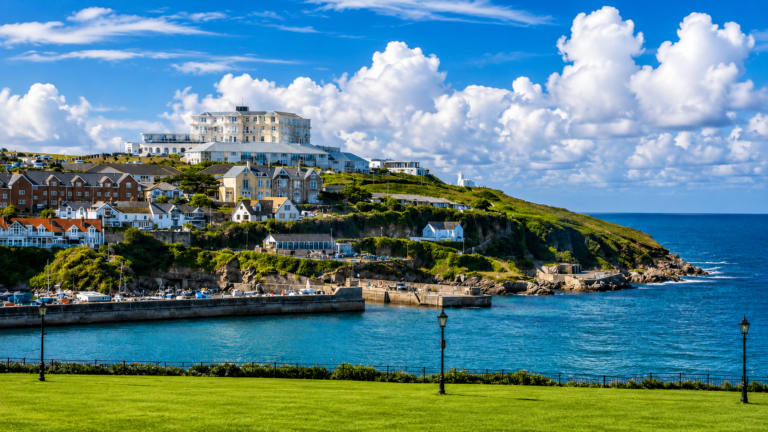
The old harbour gives it grounding. Newquay grew around its “new quay”, and the fishing-town bones are still there if you move away from the busiest streets. Down by the harbour, the town feels less like a resort machine and more like a working coastal place that happened to become famous.
I would not judge Newquay from one street. Treat it as a set of areas and it becomes far more useful:
- Fistral and Pentire for surf, sunsets and headland walks
- Towan and the harbour for central access
- Porth for an easier family edge
- Trenance for green space and attractions
- The Gannel for a quieter tidal walk towards Crantock
Best Beaches in Newquay
Newquay’s strength is not one perfect beach. It is the choice. That is what makes it such a useful base: you are not locked into one stretch of sand if the tide, wind or mood changes.
Fistral Beach
Fistral is the headline beach: broad, west-facing, exposed and built around surf culture. If you want surf lessons, board hire, surf watching, a proper beach walk or a drink after the sea, Fistral is the natural starting point.
It is also popular for a reason. When the weather and surf are good, do not expect it to feel undiscovered.
Towan Beach
Towan is the central beach, handy for town, food and the harbour. It is useful if you want a beach stop without turning the day into a mission, especially if you are already moving around the centre.
Its location is the advantage. If you want drama and surf, you may prefer Fistral. If you want easy access from town, Towan earns its place.
Great Western, Tolcarne and Lusty Glaze
Great Western, Tolcarne and Lusty Glaze sit along the cliff-backed stretch beyond Towan. They give Newquay some of its best seaside views, but they are not all equally easy.
Steps, slopes, tide times and seasonal arrangements matter more here than a quick glance at a map. A beach can look close and still be awkward for buggies, tired legs or anyone who dislikes steep approaches.
Porth Beach
Porth has a gentler, more practical feel and often works better for families than the beaches with steeper approaches. It is not the most dramatic Newquay beach, but it can be the better choice when the day needs to be easy.
That is the kind of decision Newquay rewards: not “which beach is most famous?”, but “which beach gives this group the best day?”
Watergate Bay and Crantock
Watergate Bay, a little further out, gives you more space and a big north-coast horizon. Crantock sits beyond the Gannel and has a softer, roomier feel than central Newquay.
The Gannel side is tidal, so timings matter. At low tide it can be glorious. At the wrong state of tide, your clever little route can disappear.
Choose the beach by the day, not by the name. Tide, wind, lifeguard cover, dog restrictions, access and who you are with matter more than reputation. Fistral may be right for surf and wrong for a cautious swim. A cliff-backed cove may look beautiful and still be awkward with a buggy. Porth may sound less iconic and give you the easier day.
Things to Do in Newquay Besides the Beach
Newquay is stronger when you give the town more than one role. The beaches are the draw, but the better trips build in walks, food, harbour time and a fallback plan for weather.
Walk Down to Newquay Harbour
The harbour is where I would start when the centre feels too loud. It is small, atmospheric and more grounded than the streets above it. Boat trips and sea safaris often run from this side of town in season, with weather and operators deciding what happens on the day.
Even without a trip booked, it is worth the walk down. Newquay feels different from harbour level.
Walk the Gannel
The Gannel is the opposite edge of Newquay: tidal, open, slower. It is good for walking, pausing, kayaking when conditions and operators allow, or heading towards Crantock when the tide is right.
It is one of the best ways to understand that Newquay is not only Fistral and nightlife.
Use Trenance as the Wet-Weather Card
Trenance Valley gives Newquay a practical inland pocket. Gardens, leisure space and family attractions nearby make it useful when beach weather collapses. It is not the wild coast, but it saves days. Parents know the value of that.
Follow a Town Walk or Trail
Newquay can feel bitty if you drift without a plan. A walk through the town’s older corners, coast, viewpoints and harbour helps the place join together.
A good Newquay day does not need to be complicated:
- Pick the beach after looking at tide and weather.
- Keep one flexible wet-weather option in reserve.
- Walk at least one stretch away from the busiest streets.
- Book the meal that matters.
- Leave the casual stops casual.
That is how Newquay becomes enjoyable rather than frantic.
Food and Drink in Newquay
Newquay has to feed surfers, families, couples, day-trippers, festival crowds, walkers, locals and groups who cannot agree on anything. That makes the food and drink scene broad, which is useful, but it also means you should choose with intent.
You will find beach cafés, pubs, bars, takeaways, coffee shops, seafood, family restaurants, casual lunch places and smarter dinner options. Some places are built around the view. Some are built around speed. Some are there because footfall pays the rent.
For Pasties & Pints readers, the trick is matching the stop to the day. After a surf lesson, you want easy. After a coast path walk, a pint with a view will do more for you than a fussy plan. If you are booking dinner in the busier months, secure the meal you care about and leave the rest loose.
Newquay is not a one-stop food pilgrimage. It is better than that for a practical trip. You can do a pasty above the beach, chips after a swim, coffee before the train, a family meal without too much drama, and something more grown-up in the evening if you choose well.
Where to Stay in Newquay
Do not pick Newquay accommodation on price alone. Area changes the trip.
Town Centre
Stay in the town centre for convenience, transport, nightlife, quick food and access to Towan, the harbour and shops. It is practical, but not the quietest choice.
This is the better call if you want to walk to most things and do not mind being close to the busier side of Newquay.
Fistral and Pentire
Fistral and Pentire work well for surf, sunsets, headland walks and a slightly more spacious coastal feel. This is where I would look for a trip built around sea views and walking rather than town-centre bustle.
It is still Newquay, but the mood is different.
Porth
Porth is often a sensible family base. It feels calmer, the beach is easier to use, and you are still close enough to Newquay for food and activities.
If you are travelling with children or want a less intense base, Porth is one of the first areas I would consider.
Lusty Glaze and the Eastern Side
Lusty Glaze and the eastern side can suit visitors who want beach access with a little distance from the busiest evening scene.
Before booking, check three things properly: parking, the walk back from town or beach, and likely evening noise. A good view will not rescue a bad fit.
Getting to Newquay and Getting Around
Newquay is one of Cornwall’s more connected coastal towns. It has a railway station on the branch line from Par, with links onwards to the mainline. The bus station sits close to the town centre, and Cornwall Airport Newquay is outside town. Coaches also serve Newquay.
That connectivity is one of its biggest advantages. If you stay in the right area, you can build a short break without driving every day. Beaches, food, the harbour, shops and walks can be combined on foot far more easily than in many prettier but less practical Cornish places.
Driving is still useful if you want to explore wider north Cornwall, but the car can become a burden in the busiest weeks. Newquay has a mix of council and private car parks, and the rules are not identical from one to the next.
In peak summer, parking can shape the day more than the view. Choose the car park for the area you are actually using, read the signs, and avoid moving the car around town unless there is a reason.
Can You Visit Newquay Without a Car?
Yes, especially for a short break focused on Newquay itself. The train, buses, coach links and airport make it more workable than many Cornish seaside towns.
The key is where you stay. If you book near the beach or part of town you plan to use most, you can keep the trip simple: walk to food, walk to the beach, use buses for short hops, and save taxis or car hire for specific outings.
A car helps if you want to explore further into north Cornwall, but it is not essential for every Newquay trip.
Accessibility and Practical Comfort
Newquay has cliffs, slopes, steps and beaches with very different approaches. Some routes are easy enough. Others are a poor match for mobility needs, buggies or anyone who struggles with steep climbs.
This is where Newquay needs a bit of honesty. It has plenty of facilities for a Cornish seaside town, but the landscape still decides a lot. A beach that looks close on a map may involve a steep walk. A beautiful cove may be wrong for the group you are travelling with.
If accessibility matters, plan by beach and route rather than by town name. Porth can be a more forgiving choice than some of the cliff-backed beaches, but the right answer depends on the person, the tide, the facilities needed and the exact starting point.
Newquay is at its easiest when you reduce friction: stay close to the part of town you will use most, avoid unnecessary car moves, and choose beaches that fit the group rather than the postcard.
Best Time to Visit Newquay
Summer is Newquay at full volume. The beaches, surf schools, restaurants, bars, events and family attractions all come alive. So do the queues, traffic, parking pressure and prices.
Late spring and early autumn are often the smarter choice for adults who want the Newquay advantages with more breathing room. You still have a strong chance of usable beach days, plenty open and better odds of getting around without the whole town feeling stretched.
Winter is a different Newquay: storm watching, quieter beaches, cheaper stays in some places, bigger skies and fewer distractions. It suits walkers, surfers, sea-watchers and people who do not need the full resort buzz. Some seasonal businesses and activities may scale back, so build the trip around the coast rather than a fixed list of venues.
Big events can change the town completely. That can be the reason to come, or the reason to choose another weekend.
FAQs About Visiting Newquay Town
Is Newquay good for families?
Yes, Newquay can work very well for families because you have multiple beaches, food options, attractions, shops and wet-weather fallbacks close together. I would choose the area carefully. Porth is often easier for a family base than the busiest central streets, while town-centre stays suit families who want everything close and do not mind more noise.
Which beach in Newquay is best for families?
Porth is often the most practical family choice, especially if you want an easier beach day. Towan can work well if you are already in town. Fistral is better for surf, space and atmosphere than for every family’s easiest swim-and-sand setup.
Can you visit Newquay without a car?
Yes, especially for a short break. Newquay has a railway station, bus links, coach services and an airport outside town. If you stay centrally or near the beach you plan to use most, you can manage many days on foot. A car is still useful for exploring wider north Cornwall.
Which part of Newquay is best to stay in?
For convenience, choose the town centre. For surf and sunsets, look at Fistral or Pentire. For a calmer family base, consider Porth. For beach access with a little distance from the busiest evening scene, look towards Lusty Glaze and the eastern side.
Is Newquay only for surfing and nightlife?
No. Surfing and nightlife are part of Newquay’s reputation, but they are not the whole town. The harbour, Gannel, Trenance Valley, coast path, family attractions, food scene and surrounding beaches give you plenty to do without building the trip around bars or surf lessons.
Is Newquay very busy in summer?
Yes, summer is the busiest time. The town has more atmosphere then, but parking, traffic, restaurants and popular beaches need more thought. If you want the benefits of Newquay with less pressure, late spring and early autumn are often better.
My Verdict on Newquay Town
I like Newquay most when it is allowed to be itself: lively, practical, surfy, sometimes scruffy, often beautiful, and far more flexible than its reputation suggests.
It is not the Cornwall I would choose for a silent hideaway week. It is the Cornwall I would choose when the trip needs beaches, movement, food, transport and options. Used that way, Newquay is one of the strongest bases on the north coast.
Go for Fistral at sunset, the harbour below town, the Gannel at low tide, Porth with children, a pint after a headland walk, and the freedom to change plans when the weather turns.
Not perfect. Not peaceful. Not for every visitor. But for the right trip, Newquay is hard to beat.
Newquay Town, Cornwall: An Honest Guide to Beaches, Where to Stay and What to Do
Newquay Town is one of Cornwall’s best-known seaside bases, and one of the easiest to get wrong. If you arrive expecting a sleepy harbour village, you may spend the trip annoyed. If you come for beaches, surf, food, coastal walks, transport links and enough practical options to keep a holiday moving, Newquay makes far more sense.
I would recommend Newquay if it suits the trip you are trying to have. It is not Cornwall at its quietest or most delicate. It is a lively Atlantic town with serious beach power, a busy centre, strong surf culture and enough going on around it to make a short break or family holiday easier than in many prettier but less practical places.
Newquay is not the place I send people for silence. It is the place I send them when they want the coast, the surf and the practical bits to line up.
Newquay Town at a Glance
Best for: beaches, surf lessons, family trips, group holidays, first-time Cornwall visitors, car-light breaks and active weekends.
Less suited to: quiet romantic escapes, tucked-away village breaks, visitors who dislike crowds, and anyone who needs step-free beach access without careful planning.
Main appeal: several beaches within easy reach of one town, plus food, shops, transport, attractions and wet-weather options.
Biggest drawback: Newquay can feel busy, noisy and uneven in peak season, especially around the centre.
Is Newquay Worth Visiting?
Yes, if you want an active, beach-led Cornwall break with plenty around you. No, if your trip depends on quiet lanes, pretty restraint and a village feel.
That is the cleanest way to judge it.
Newquay works best for visitors who want choice. You can surf in the morning, walk the coast path, eat without driving miles, use the train or bus, take children somewhere practical when the weather turns, and switch beaches depending on tide, wind and mood.
It works less well if resort energy grates on you. In summer, Newquay can be busy, loud and logistically irritating. Parking, queues and traffic can shape the day. Some parts of the centre are functional rather than beautiful. If that will bother you every time you leave your accommodation, choose a smaller place.
Who Newquay Suits Best
- First-time Cornwall visitors who want an easier base
- Families who need beaches, food and wet-weather options
- Beginners booking surf lessons or board hire
- Groups with mixed tastes
- Visitors using train, bus, coach or airport links
- People who like having a proper town around them
Who Should Think Twice
- Visitors wanting quiet evenings and a tucked-away feel
- Couples after a soft, romantic village break
- Anyone who dislikes crowds, nightlife and resort energy
- Travellers who need every street to feel polished and pretty
- Visitors with access needs who have not chosen beach and accommodation carefully
What Newquay Town Really Feels Like
Newquay sits on Cornwall’s Atlantic coast, and that explains half the town before you reach the beach. The sea feels bigger here. The surf has more weight, the cliffs cut harder, and the beaches feel built for weather rather than decoration.
The town itself is not quaint in the usual Cornish sense. It has surf shops, takeaways, cafés, bars, arcades, supermarkets, steep streets, sea-view hotels, holiday apartments and busy roads. Then, without much warning, a lane drops towards the harbour or the coast opens out and the whole place makes sense again.
That contrast is Newquay. It can be messy and beautiful in the same five-minute walk.
The old harbour gives it grounding. Newquay grew around its “new quay”, and the fishing-town bones are still there if you move away from the busiest streets. Down by the harbour, the town feels less like a resort machine and more like a working coastal place that happened to become famous.
I would not judge Newquay from one street. Treat it as a set of areas and it becomes far more useful:
- Fistral and Pentire for surf, sunsets and headland walks
- Towan and the harbour for central access
- Porth for an easier family edge
- Trenance for green space and attractions
- The Gannel for a quieter tidal walk towards Crantock
Best Beaches in Newquay
Newquay’s strength is not one perfect beach. It is the choice. That is what makes it such a useful base: you are not locked into one stretch of sand if the tide, wind or mood changes.
Fistral Beach
Fistral is the headline beach: broad, west-facing, exposed and built around surf culture. If you want surf lessons, board hire, surf watching, a proper beach walk or a drink after the sea, Fistral is the natural starting point.
It is also popular for a reason. When the weather and surf are good, do not expect it to feel undiscovered.
Towan Beach
Towan is the central beach, handy for town, food and the harbour. It is useful if you want a beach stop without turning the day into a mission, especially if you are already moving around the centre.
Its location is the advantage. If you want drama and surf, you may prefer Fistral. If you want easy access from town, Towan earns its place.
Great Western, Tolcarne and Lusty Glaze
Great Western, Tolcarne and Lusty Glaze sit along the cliff-backed stretch beyond Towan. They give Newquay some of its best seaside views, but they are not all equally easy.
Steps, slopes, tide times and seasonal arrangements matter more here than a quick glance at a map. A beach can look close and still be awkward for buggies, tired legs or anyone who dislikes steep approaches.
Porth Beach
Porth has a gentler, more practical feel and often works better for families than the beaches with steeper approaches. It is not the most dramatic Newquay beach, but it can be the better choice when the day needs to be easy.
That is the kind of decision Newquay rewards: not “which beach is most famous?”, but “which beach gives this group the best day?”
Watergate Bay and Crantock
Watergate Bay, a little further out, gives you more space and a big north-coast horizon. Crantock sits beyond the Gannel and has a softer, roomier feel than central Newquay.
The Gannel side is tidal, so timings matter. At low tide it can be glorious. At the wrong state of tide, your clever little route can disappear.
Choose the beach by the day, not by the name. Tide, wind, lifeguard cover, dog restrictions, access and who you are with matter more than reputation. Fistral may be right for surf and wrong for a cautious swim. A cliff-backed cove may look beautiful and still be awkward with a buggy. Porth may sound less iconic and give you the easier day.
Things to Do in Newquay Besides the Beach
Newquay is stronger when you give the town more than one role. The beaches are the draw, but the better trips build in walks, food, harbour time and a fallback plan for weather.
Walk Down to Newquay Harbour
The harbour is where I would start when the centre feels too loud. It is small, atmospheric and more grounded than the streets above it. Boat trips and sea safaris often run from this side of town in season, with weather and operators deciding what happens on the day.
Even without a trip booked, it is worth the walk down. Newquay feels different from harbour level.
Walk the Gannel
The Gannel is the opposite edge of Newquay: tidal, open, slower. It is good for walking, pausing, kayaking when conditions and operators allow, or heading towards Crantock when the tide is right.
It is one of the best ways to understand that Newquay is not only Fistral and nightlife.
Use Trenance as the Wet-Weather Card
Trenance Valley gives Newquay a practical inland pocket. Gardens, leisure space and family attractions nearby make it useful when beach weather collapses. It is not the wild coast, but it saves days. Parents know the value of that.
Follow a Town Walk or Trail
Newquay can feel bitty if you drift without a plan. A walk through the town’s older corners, coast, viewpoints and harbour helps the place join together.
A good Newquay day does not need to be complicated:
- Pick the beach after looking at tide and weather.
- Keep one flexible wet-weather option in reserve.
- Walk at least one stretch away from the busiest streets.
- Book the meal that matters.
- Leave the casual stops casual.
That is how Newquay becomes enjoyable rather than frantic.
Food and Drink in Newquay
Newquay has to feed surfers, families, couples, day-trippers, festival crowds, walkers, locals and groups who cannot agree on anything. That makes the food and drink scene broad, which is useful, but it also means you should choose with intent.
You will find beach cafés, pubs, bars, takeaways, coffee shops, seafood, family restaurants, casual lunch places and smarter dinner options. Some places are built around the view. Some are built around speed. Some are there because footfall pays the rent.
For Pasties & Pints readers, the trick is matching the stop to the day. After a surf lesson, you want easy. After a coast path walk, a pint with a view will do more for you than a fussy plan. If you are booking dinner in the busier months, secure the meal you care about and leave the rest loose.
Newquay is not a one-stop food pilgrimage. It is better than that for a practical trip. You can do a pasty above the beach, chips after a swim, coffee before the train, a family meal without too much drama, and something more grown-up in the evening if you choose well.
Where to Stay in Newquay
Do not pick Newquay accommodation on price alone. Area changes the trip.
Town Centre
Stay in the town centre for convenience, transport, nightlife, quick food and access to Towan, the harbour and shops. It is practical, but not the quietest choice.
This is the better call if you want to walk to most things and do not mind being close to the busier side of Newquay.
Fistral and Pentire
Fistral and Pentire work well for surf, sunsets, headland walks and a slightly more spacious coastal feel. This is where I would look for a trip built around sea views and walking rather than town-centre bustle.
It is still Newquay, but the mood is different.
Porth
Porth is often a sensible family base. It feels calmer, the beach is easier to use, and you are still close enough to Newquay for food and activities.
If you are travelling with children or want a less intense base, Porth is one of the first areas I would consider.
Lusty Glaze and the Eastern Side
Lusty Glaze and the eastern side can suit visitors who want beach access with a little distance from the busiest evening scene.
Before booking, check three things properly: parking, the walk back from town or beach, and likely evening noise. A good view will not rescue a bad fit.
Getting to Newquay and Getting Around
Newquay is one of Cornwall’s more connected coastal towns. It has a railway station on the branch line from Par, with links onwards to the mainline. The bus station sits close to the town centre, and Cornwall Airport Newquay is outside town. Coaches also serve Newquay.
That connectivity is one of its biggest advantages. If you stay in the right area, you can build a short break without driving every day. Beaches, food, the harbour, shops and walks can be combined on foot far more easily than in many prettier but less practical Cornish places.
Driving is still useful if you want to explore wider north Cornwall, but the car can become a burden in the busiest weeks. Newquay has a mix of council and private car parks, and the rules are not identical from one to the next.
In peak summer, parking can shape the day more than the view. Choose the car park for the area you are actually using, read the signs, and avoid moving the car around town unless there is a reason.
Can You Visit Newquay Without a Car?
Yes, especially for a short break focused on Newquay itself. The train, buses, coach links and airport make it more workable than many Cornish seaside towns.
The key is where you stay. If you book near the beach or part of town you plan to use most, you can keep the trip simple: walk to food, walk to the beach, use buses for short hops, and save taxis or car hire for specific outings.
A car helps if you want to explore further into north Cornwall, but it is not essential for every Newquay trip.
Accessibility and Practical Comfort
Newquay has cliffs, slopes, steps and beaches with very different approaches. Some routes are easy enough. Others are a poor match for mobility needs, buggies or anyone who struggles with steep climbs.
This is where Newquay needs a bit of honesty. It has plenty of facilities for a Cornish seaside town, but the landscape still decides a lot. A beach that looks close on a map may involve a steep walk. A beautiful cove may be wrong for the group you are travelling with.
If accessibility matters, plan by beach and route rather than by town name. Porth can be a more forgiving choice than some of the cliff-backed beaches, but the right answer depends on the person, the tide, the facilities needed and the exact starting point.
Newquay is at its easiest when you reduce friction: stay close to the part of town you will use most, avoid unnecessary car moves, and choose beaches that fit the group rather than the postcard.
Best Time to Visit Newquay
Summer is Newquay at full volume. The beaches, surf schools, restaurants, bars, events and family attractions all come alive. So do the queues, traffic, parking pressure and prices.
Late spring and early autumn are often the smarter choice for adults who want the Newquay advantages with more breathing room. You still have a strong chance of usable beach days, plenty open and better odds of getting around without the whole town feeling stretched.
Winter is a different Newquay: storm watching, quieter beaches, cheaper stays in some places, bigger skies and fewer distractions. It suits walkers, surfers, sea-watchers and people who do not need the full resort buzz. Some seasonal businesses and activities may scale back, so build the trip around the coast rather than a fixed list of venues.
Big events can change the town completely. That can be the reason to come, or the reason to choose another weekend.
FAQs About Visiting Newquay Town
Is Newquay good for families?
Yes, Newquay can work very well for families because you have multiple beaches, food options, attractions, shops and wet-weather fallbacks close together. I would choose the area carefully. Porth is often easier for a family base than the busiest central streets, while town-centre stays suit families who want everything close and do not mind more noise.
Which beach in Newquay is best for families?
Porth is often the most practical family choice, especially if you want an easier beach day. Towan can work well if you are already in town. Fistral is better for surf, space and atmosphere than for every family’s easiest swim-and-sand setup.
Can you visit Newquay without a car?
Yes, especially for a short break. Newquay has a railway station, bus links, coach services and an airport outside town. If you stay centrally or near the beach you plan to use most, you can manage many days on foot. A car is still useful for exploring wider north Cornwall.
Which part of Newquay is best to stay in?
For convenience, choose the town centre. For surf and sunsets, look at Fistral or Pentire. For a calmer family base, consider Porth. For beach access with a little distance from the busiest evening scene, look towards Lusty Glaze and the eastern side.
Is Newquay only for surfing and nightlife?
No. Surfing and nightlife are part of Newquay’s reputation, but they are not the whole town. The harbour, Gannel, Trenance Valley, coast path, family attractions, food scene and surrounding beaches give you plenty to do without building the trip around bars or surf lessons.
Is Newquay very busy in summer?
Yes, summer is the busiest time. The town has more atmosphere then, but parking, traffic, restaurants and popular beaches need more thought. If you want the benefits of Newquay with less pressure, late spring and early autumn are often better.
My Verdict on Newquay Town
I like Newquay most when it is allowed to be itself: lively, practical, surfy, sometimes scruffy, often beautiful, and far more flexible than its reputation suggests.
It is not the Cornwall I would choose for a silent hideaway week. It is the Cornwall I would choose when the trip needs beaches, movement, food, transport and options. Used that way, Newquay is one of the strongest bases on the north coast.
Go for Fistral at sunset, the harbour below town, the Gannel at low tide, Porth with children, a pint after a headland walk, and the freedom to change plans when the weather turns.
Not perfect. Not peaceful. Not for every visitor. But for the right trip, Newquay is hard to beat.
Contact & Details
Newquay
Cornwall
TR7 1BY
United Kingdom
Sorry, no records were found. Please adjust your search criteria and try again.
Sorry, unable to load the Maps API.