
Details
Address & Contact
Falmouth
Cornwall
TR11 3AT
United Kingdom
Sorry, no records were found. Please adjust your search criteria and try again.
Sorry, unable to load the Maps API.
Things to Do in Falmouth: My Guide to the Town, Beaches, Harbour and Food
If you are looking for things to do in Falmouth, my honest advice is to treat it as a proper Cornish harbour town, not a neat little seaside resort.
Falmouth is bigger, busier and more layered than the postcard version of Cornwall. It has docks, ferries, students, galleries, beaches, cafés, pubs, independent shops, a strong maritime past and enough everyday life to stop it feeling polished to death. That is why I rate it so highly.
This is one of Cornwall’s strongest town days if you want saltwater, food, culture and options. It is not the place I would choose for silence.
Go to Falmouth for saltwater, culture, food and movement — not for silence.
Quick answer: is Falmouth worth visiting?
Yes, Falmouth is absolutely worth visiting if you want a lively Cornish town with beaches, harbour views, food and drink, ferries, history and plenty to do in poor weather as well as sunshine.
The best version of Falmouth is not a rushed checklist. Pick one main anchor — the harbour, a beach, Pendennis Castle, the National Maritime Museum Cornwall or a ferry trip — then let the rest of the day sit around it.
Best things to do in Falmouth
If I had to strip Falmouth back to the most useful choices, I would start here:
- Wander the town centre before heading down to the harbour.
- Spend time around Discovery Quay and Falmouth Harbour.
- Visit the National Maritime Museum Cornwall if you want a strong indoor option.
- Walk towards Pendennis Castle for history, headland views and a different feel.
- Choose a Falmouth beach — Gyllyngvase, Castle Beach, Swanpool or Maenporth.
- Take a ferry or boat trip if the weather is right.
- Build in food and drink rather than treating it as an afterthought.
- Use the coast path if you want Falmouth to feel less town-heavy.
That is the short version. The better version is choosing the right mix for the day you actually want.
Start with Falmouth town centre
I would start in the town centre rather than heading straight for the beach.
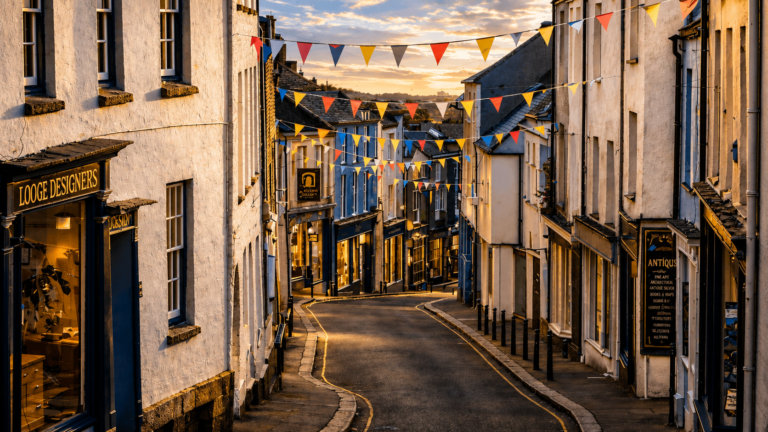
Falmouth’s shops and streets are part of the visit. The mix is useful: independent retailers, galleries, specialist shops, cafés, pubs, restaurants, delis and familiar names where they make life easier. It feels lived-in, which is one of its biggest strengths.
A sensible first route is:
- start around The Moor or the main shopping streets;
- work down towards Events Square and Discovery Quay;
- pause around Falmouth Harbour;
- then choose beach, castle, ferry or food.
That route gives the day a natural flow. It also stops you zig-zagging across town and wasting energy on the dull bits.
Spend proper time around Falmouth Harbour
Falmouth Harbour is not background scenery. It is the point of the place.
You feel it in the ferries, sailing, waterfront, docks and the way the town leans towards the Fal. The water is still working, not only posing for photographs.
Discovery Quay is a sensible place to get your bearings. From there you have the National Maritime Museum Cornwall, food and drink nearby, ferry links, harbour views and an easy route back into the town centre.
If you only have a short visit, I would still make time for the harbour. Without it, you miss the thing that gives Falmouth its weight.
Pick one main Falmouth attraction
Falmouth has plenty of attractions and activities, but the strongest day comes from choosing one main anchor and giving it room.
National Maritime Museum Cornwall
The National Maritime Museum Cornwall is the best choice for an indoor, harbour-based visit. It suits mixed weather, families and anyone who wants the day to have more substance than shops and lunch.
It also makes sense in Falmouth because the subject is all around you. You are not reading about the sea in a town that has forgotten it. You are in a place still shaped by boats, harbour life and the Fal.
Pendennis Castle
Pendennis Castle is the better choice for history, views and open air.
Its position on the headland tells you exactly why it mattered: it watched the water and guarded the approach. Even if you do not build the whole day around the castle, the Pendennis side of town is worth considering for a walk and a wider view of Falmouth.
Ferries and boat trips
If the weather is kind, getting on the water is one of the best things to do in Falmouth.
A ferry or boat trip changes how the town feels. From the water, Falmouth stops being a collection of streets and beaches and starts making sense as a harbour town connected to the Fal, St Mawes and the wider river landscape.
Best beaches in Falmouth
Falmouth’s beaches are what lift it from a good town visit to a proper Cornwall day out. The useful point is not that one beach is “best” for everyone. It is that each one suits a different kind of day.
Gyllyngvase Beach
Gyllyngvase is the easiest Falmouth beach to fold into a town day. It is close to the centre, broad, popular and straightforward.
I would choose Gyllyngvase when you want beach time without turning the day into a logistics exercise.
Castle Beach
Castle Beach sits below Pendennis and has a more exploratory feel. It is better for rock pooling and poking around than for a long lazy beach day.
It works well if you are already walking the Pendennis side or if the tide gives you more to explore.
Swanpool Beach
Swanpool feels a little more tucked away. It is a good choice if you want a softer edge of town and an easy link to the coast path.
From here, the walk towards Maenporth is one of the better ways to stretch the day without leaving the Falmouth area completely.
Maenporth Beach
Maenporth is the one I would choose when you want the coast to become the focus rather than a quick add-on.
It sits further out, so it needs a bit more intention. If you are already walking from Swanpool or want a less town-centred beach plan, it makes sense.
Best Falmouth beach by mood:
- Gyllyngvase: easiest and most convenient.
- Castle Beach: rock pools, Pendennis views and a more exploratory stop.
- Swanpool: a gentler edge of town with good walking potential.
- Maenporth: better if you want the coast to lead the day.
Beach rules, facilities, lifeguard cover and dog restrictions can change by season, so keep the beach plan flexible.
Food and drink in Falmouth
Falmouth is a good Pasties & Pints town because food and drink are easy to build into the day.
You are not relying on one pub, one café or one overworked seafront counter. The centre, waterfront and beach areas give you enough choice to be practical: cafés, pubs, restaurants, delis, takeaways and places for a slower sit-down meal.
I would choose the area before the venue.
- Town centre if you want the widest choice.
- Discovery Quay and the waterfront if the harbour is shaping the day.
- Gyllyngvase or Swanpool if the beach has taken over.
- Later afternoon into evening if you want Falmouth with more atmosphere.
During peak summer or big events, do not wing the practical bits. Parking, queues, full tables and slower roads can shape the day more than the view. A loose plan is enough; pretending the crowds will not exist is where people come unstuck.
Falmouth events and evening visits
Falmouth has proper event energy. Sea shanties, sailing, markets, arts, live music, museum events, gallery programmes and Falmouth Week all fit the town rather than feeling tacked on for visitors.
That gives Falmouth life beyond the usual sunny-day seaside script.
The trade-off is crowding. On a big event day, the town can feel brilliant if you want atmosphere and frustrating if you wanted a slow wander and an easy table. Neither version is wrong. You need to choose the day you actually want.
If you like a buzz, time the visit around what is happening. If you want more breathing room, avoid the biggest weekends and school-holiday pressure points.
Falmouth also works well later in the day. Some Cornish places fade once the beach crowd leaves. Falmouth has enough pubs, restaurants, venues and student-town energy to stay useful into the evening.
Getting to Falmouth and getting around
Falmouth is more practical than many Cornish places, but the approach still matters.
By train, the usual route is to change at Truro and take the Maritime Line into Falmouth. That is a genuine advantage. It makes the town possible without a car and avoids the usual parking hunt.
By car, the route into Cornwall is usually via the A30 or A38, then down towards Truro and Falmouth. In quieter months, fine. In peak holiday periods, give the final stretch some respect.
In the main season, the Ponsharden Park & Float/Ride option can be useful when operating. The float runs towards Prince of Wales Pier and is affected by weather and tides, so treat it as a helpful seasonal option rather than a fixed promise. Bus links from the same general area can also help.
Once you are in Falmouth, walk where you can. Parts of the town are hilly and the beaches, headland and centre are not all on one neat flat loop, so do not overload the plan. A free town map is handy, and the town’s free WiFi between The Moor and Events Square is useful when you are adjusting plans on the move.
For ferries, local maps and river information, Prince of Wales Pier is a sensible place to get your bearings.
My suggested Falmouth day
My best version of a Falmouth day would look like this:
- Morning: town centre, coffee, shops and a slow walk down to the harbour.
- Late morning: one main anchor — museum, Pendennis, ferry or beach.
- Lunch: stay in the area you are already in rather than chasing a perfect spot across town.
- Afternoon: Gyllyngvase, Swanpool, Castle Beach, Maenporth or a coast path stretch.
- Early evening: back towards town or the waterfront for a pint, food or a final harbour wander.
That gives you the full flavour without turning the day into admin.
If time is tight, cut the itinerary rather than speed it up. Falmouth is much better with fewer stops done well.
Who Falmouth is best for
I would send you to Falmouth if you want Cornwall with movement: harbour, food, beaches, galleries, boats, walks and enough life to keep the day interesting.
It suits couples, groups of friends, families who need options, food-and-pub wanderers, ferry people, beach walkers, history lovers and anyone who gets bored by places that only offer one view and a gift shop.
I would not send you here for total quiet. Falmouth is a working, studenty, visitor-heavy harbour town. That is the appeal, not a flaw, but it will not suit every mood.
If you want a tiny cove and very little else, go smaller. If you want a full Cornish town day with saltwater in its bones, Falmouth is one of the best choices.
FAQs about Falmouth
What are the best things to do in Falmouth?
The best things to do in Falmouth are the town centre, Falmouth Harbour, National Maritime Museum Cornwall, Pendennis Castle, the beaches, ferry trips, coastal walks and food around the waterfront or town centre. I would choose one main anchor rather than trying to fit everything into one day.
Is Falmouth good for a day trip?
Yes, Falmouth is a strong day trip because the town, harbour, beaches, food and attractions are close enough to combine. The best day trip plan is town centre, harbour, one main attraction or ferry, then beach or food.
Can you visit Falmouth without a car?
Yes. Falmouth is one of the easier Cornish towns to visit without a car because it has rail links via Truro and local stations around the town. Once you arrive, walking is the best way to use the centre, harbour and nearby areas, though some parts are hilly.
Which is the best beach in Falmouth?
Gyllyngvase is the easiest and most convenient Falmouth beach for most visitors. Castle Beach is better for rock pooling, Swanpool works well for a gentler edge of town, and Maenporth suits a more coast-led day.
Is Falmouth good in bad weather?
Falmouth is better than many Cornish places in bad weather because you have indoor options such as the National Maritime Museum Cornwall, galleries, shops, cafés, pubs and restaurants. I would save the beaches and ferries for better conditions and use the town properly instead.
Final verdict
Falmouth earns its place because it has depth. The harbour matters. The beaches are useful. The food and drink choice is strong. The cultural side is real. The ferries, walks and events give the town reach beyond the main streets.
Go expecting a polished little resort and you may miss the point. Go expecting a lively Cornish harbour town with plenty to do, and Falmouth makes a very strong case for your time.
Things to Do in Falmouth: My Guide to the Town, Beaches, Harbour and Food
If you are looking for things to do in Falmouth, my honest advice is to treat it as a proper Cornish harbour town, not a neat little seaside resort.
Falmouth is bigger, busier and more layered than the postcard version of Cornwall. It has docks, ferries, students, galleries, beaches, cafés, pubs, independent shops, a strong maritime past and enough everyday life to stop it feeling polished to death. That is why I rate it so highly.
This is one of Cornwall’s strongest town days if you want saltwater, food, culture and options. It is not the place I would choose for silence.
Go to Falmouth for saltwater, culture, food and movement — not for silence.
Quick answer: is Falmouth worth visiting?
Yes, Falmouth is absolutely worth visiting if you want a lively Cornish town with beaches, harbour views, food and drink, ferries, history and plenty to do in poor weather as well as sunshine.
The best version of Falmouth is not a rushed checklist. Pick one main anchor — the harbour, a beach, Pendennis Castle, the National Maritime Museum Cornwall or a ferry trip — then let the rest of the day sit around it.
Best things to do in Falmouth
If I had to strip Falmouth back to the most useful choices, I would start here:
- Wander the town centre before heading down to the harbour.
- Spend time around Discovery Quay and Falmouth Harbour.
- Visit the National Maritime Museum Cornwall if you want a strong indoor option.
- Walk towards Pendennis Castle for history, headland views and a different feel.
- Choose a Falmouth beach — Gyllyngvase, Castle Beach, Swanpool or Maenporth.
- Take a ferry or boat trip if the weather is right.
- Build in food and drink rather than treating it as an afterthought.
- Use the coast path if you want Falmouth to feel less town-heavy.
That is the short version. The better version is choosing the right mix for the day you actually want.
Start with Falmouth town centre
I would start in the town centre rather than heading straight for the beach.
Falmouth’s shops and streets are part of the visit. The mix is useful: independent retailers, galleries, specialist shops, cafés, pubs, restaurants, delis and familiar names where they make life easier. It feels lived-in, which is one of its biggest strengths.
A sensible first route is:
- start around The Moor or the main shopping streets;
- work down towards Events Square and Discovery Quay;
- pause around Falmouth Harbour;
- then choose beach, castle, ferry or food.
That route gives the day a natural flow. It also stops you zig-zagging across town and wasting energy on the dull bits.
Spend proper time around Falmouth Harbour
Falmouth Harbour is not background scenery. It is the point of the place.
You feel it in the ferries, sailing, waterfront, docks and the way the town leans towards the Fal. The water is still working, not only posing for photographs.
Discovery Quay is a sensible place to get your bearings. From there you have the National Maritime Museum Cornwall, food and drink nearby, ferry links, harbour views and an easy route back into the town centre.
If you only have a short visit, I would still make time for the harbour. Without it, you miss the thing that gives Falmouth its weight.
Pick one main Falmouth attraction
Falmouth has plenty of attractions and activities, but the strongest day comes from choosing one main anchor and giving it room.
National Maritime Museum Cornwall
The National Maritime Museum Cornwall is the best choice for an indoor, harbour-based visit. It suits mixed weather, families and anyone who wants the day to have more substance than shops and lunch.
It also makes sense in Falmouth because the subject is all around you. You are not reading about the sea in a town that has forgotten it. You are in a place still shaped by boats, harbour life and the Fal.
Pendennis Castle
Pendennis Castle is the better choice for history, views and open air.
Its position on the headland tells you exactly why it mattered: it watched the water and guarded the approach. Even if you do not build the whole day around the castle, the Pendennis side of town is worth considering for a walk and a wider view of Falmouth.
Ferries and boat trips
If the weather is kind, getting on the water is one of the best things to do in Falmouth.
A ferry or boat trip changes how the town feels. From the water, Falmouth stops being a collection of streets and beaches and starts making sense as a harbour town connected to the Fal, St Mawes and the wider river landscape.
Best beaches in Falmouth
Falmouth’s beaches are what lift it from a good town visit to a proper Cornwall day out. The useful point is not that one beach is “best” for everyone. It is that each one suits a different kind of day.
Gyllyngvase Beach
Gyllyngvase is the easiest Falmouth beach to fold into a town day. It is close to the centre, broad, popular and straightforward.
I would choose Gyllyngvase when you want beach time without turning the day into a logistics exercise.
Castle Beach
Castle Beach sits below Pendennis and has a more exploratory feel. It is better for rock pooling and poking around than for a long lazy beach day.
It works well if you are already walking the Pendennis side or if the tide gives you more to explore.
Swanpool Beach
Swanpool feels a little more tucked away. It is a good choice if you want a softer edge of town and an easy link to the coast path.
From here, the walk towards Maenporth is one of the better ways to stretch the day without leaving the Falmouth area completely.
Maenporth Beach
Maenporth is the one I would choose when you want the coast to become the focus rather than a quick add-on.
It sits further out, so it needs a bit more intention. If you are already walking from Swanpool or want a less town-centred beach plan, it makes sense.
Best Falmouth beach by mood:
- Gyllyngvase: easiest and most convenient.
- Castle Beach: rock pools, Pendennis views and a more exploratory stop.
- Swanpool: a gentler edge of town with good walking potential.
- Maenporth: better if you want the coast to lead the day.
Beach rules, facilities, lifeguard cover and dog restrictions can change by season, so keep the beach plan flexible.
Food and drink in Falmouth
Falmouth is a good Pasties & Pints town because food and drink are easy to build into the day.
You are not relying on one pub, one café or one overworked seafront counter. The centre, waterfront and beach areas give you enough choice to be practical: cafés, pubs, restaurants, delis, takeaways and places for a slower sit-down meal.
I would choose the area before the venue.
- Town centre if you want the widest choice.
- Discovery Quay and the waterfront if the harbour is shaping the day.
- Gyllyngvase or Swanpool if the beach has taken over.
- Later afternoon into evening if you want Falmouth with more atmosphere.
During peak summer or big events, do not wing the practical bits. Parking, queues, full tables and slower roads can shape the day more than the view. A loose plan is enough; pretending the crowds will not exist is where people come unstuck.
Falmouth events and evening visits
Falmouth has proper event energy. Sea shanties, sailing, markets, arts, live music, museum events, gallery programmes and Falmouth Week all fit the town rather than feeling tacked on for visitors.
That gives Falmouth life beyond the usual sunny-day seaside script.
The trade-off is crowding. On a big event day, the town can feel brilliant if you want atmosphere and frustrating if you wanted a slow wander and an easy table. Neither version is wrong. You need to choose the day you actually want.
If you like a buzz, time the visit around what is happening. If you want more breathing room, avoid the biggest weekends and school-holiday pressure points.
Falmouth also works well later in the day. Some Cornish places fade once the beach crowd leaves. Falmouth has enough pubs, restaurants, venues and student-town energy to stay useful into the evening.
Getting to Falmouth and getting around
Falmouth is more practical than many Cornish places, but the approach still matters.
By train, the usual route is to change at Truro and take the Maritime Line into Falmouth. That is a genuine advantage. It makes the town possible without a car and avoids the usual parking hunt.
By car, the route into Cornwall is usually via the A30 or A38, then down towards Truro and Falmouth. In quieter months, fine. In peak holiday periods, give the final stretch some respect.
In the main season, the Ponsharden Park & Float/Ride option can be useful when operating. The float runs towards Prince of Wales Pier and is affected by weather and tides, so treat it as a helpful seasonal option rather than a fixed promise. Bus links from the same general area can also help.
Once you are in Falmouth, walk where you can. Parts of the town are hilly and the beaches, headland and centre are not all on one neat flat loop, so do not overload the plan. A free town map is handy, and the town’s free WiFi between The Moor and Events Square is useful when you are adjusting plans on the move.
For ferries, local maps and river information, Prince of Wales Pier is a sensible place to get your bearings.
My suggested Falmouth day
My best version of a Falmouth day would look like this:
- Morning: town centre, coffee, shops and a slow walk down to the harbour.
- Late morning: one main anchor — museum, Pendennis, ferry or beach.
- Lunch: stay in the area you are already in rather than chasing a perfect spot across town.
- Afternoon: Gyllyngvase, Swanpool, Castle Beach, Maenporth or a coast path stretch.
- Early evening: back towards town or the waterfront for a pint, food or a final harbour wander.
That gives you the full flavour without turning the day into admin.
If time is tight, cut the itinerary rather than speed it up. Falmouth is much better with fewer stops done well.
Who Falmouth is best for
I would send you to Falmouth if you want Cornwall with movement: harbour, food, beaches, galleries, boats, walks and enough life to keep the day interesting.
It suits couples, groups of friends, families who need options, food-and-pub wanderers, ferry people, beach walkers, history lovers and anyone who gets bored by places that only offer one view and a gift shop.
I would not send you here for total quiet. Falmouth is a working, studenty, visitor-heavy harbour town. That is the appeal, not a flaw, but it will not suit every mood.
If you want a tiny cove and very little else, go smaller. If you want a full Cornish town day with saltwater in its bones, Falmouth is one of the best choices.
FAQs about Falmouth
What are the best things to do in Falmouth?
The best things to do in Falmouth are the town centre, Falmouth Harbour, National Maritime Museum Cornwall, Pendennis Castle, the beaches, ferry trips, coastal walks and food around the waterfront or town centre. I would choose one main anchor rather than trying to fit everything into one day.
Is Falmouth good for a day trip?
Yes, Falmouth is a strong day trip because the town, harbour, beaches, food and attractions are close enough to combine. The best day trip plan is town centre, harbour, one main attraction or ferry, then beach or food.
Can you visit Falmouth without a car?
Yes. Falmouth is one of the easier Cornish towns to visit without a car because it has rail links via Truro and local stations around the town. Once you arrive, walking is the best way to use the centre, harbour and nearby areas, though some parts are hilly.
Which is the best beach in Falmouth?
Gyllyngvase is the easiest and most convenient Falmouth beach for most visitors. Castle Beach is better for rock pooling, Swanpool works well for a gentler edge of town, and Maenporth suits a more coast-led day.
Is Falmouth good in bad weather?
Falmouth is better than many Cornish places in bad weather because you have indoor options such as the National Maritime Museum Cornwall, galleries, shops, cafés, pubs and restaurants. I would save the beaches and ferries for better conditions and use the town properly instead.
Final verdict
Falmouth earns its place because it has depth. The harbour matters. The beaches are useful. The food and drink choice is strong. The cultural side is real. The ferries, walks and events give the town reach beyond the main streets.
Go expecting a polished little resort and you may miss the point. Go expecting a lively Cornish harbour town with plenty to do, and Falmouth makes a very strong case for your time.
Contact & Details
Falmouth
Cornwall
TR11 3AT
United Kingdom
Sorry, no records were found. Please adjust your search criteria and try again.
Sorry, unable to load the Maps API.