
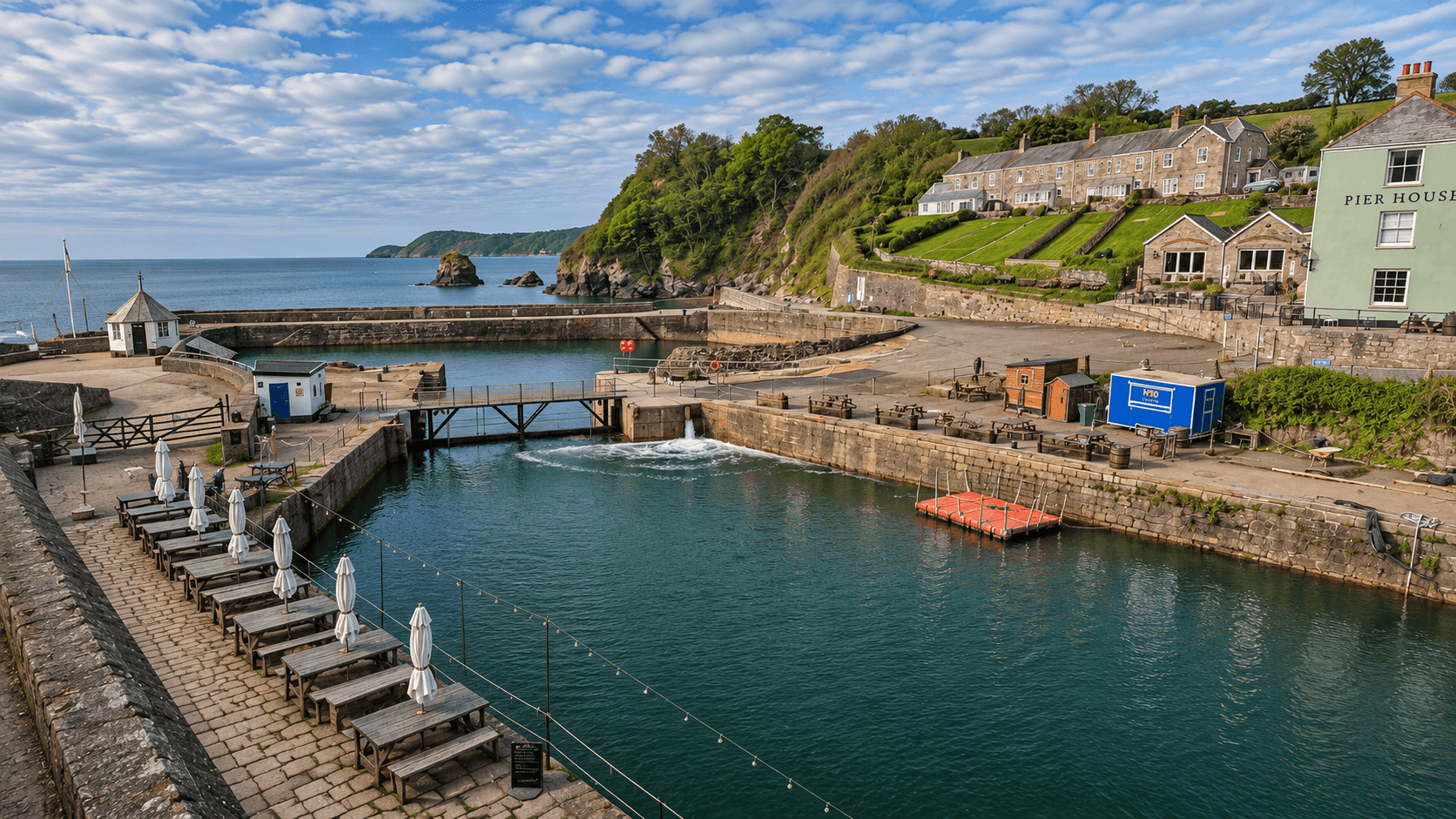
There’s a moment every autumn when Cornwall suddenly becomes easier to live in. The caravans have gone, the roads are moving again, and you can walk around St Ives harbour without feeling you’re part of an organised procession.
After the summer rush, it’s wonderful. You can visit your favourite beach without competing for a parking space, get into a café without queuing down the street and travel across Cornwall without allowing an extra hour for the holiday traffic.
But something else happens when the visitors leave. Businesses start closing for the season. Opening hours get shorter. Seasonal jobs finish. Even some of the public facilities that were available throughout summer disappear until the following year.
And that’s where the relief of having Cornwall back to ourselves meets the reality of living in a county that relies so heavily on tourism. Because the people who live here don’t pack up their lives at the end of October. We still need jobs, shops, restaurants, transport and public services. Yet in some places, the difference between summer and winter goes well beyond how many people are walking along the seafront.
We complain about the visitors, but we need their money
There’s a contradiction at the heart of Cornwall’s summer season. We complain about the caravans, the crowded roads, the beaches packed with people and the struggle to find somewhere to park. Then September arrives, the visitors leave, and businesses start wondering where all their customers have gone. It’s a difficult balance, particularly when people’s livelihoods depend on it.
Tourism supports a substantial amount of employment and spending across Cornwall. Visitors pay for hotels, holiday cottages, restaurants, attractions and activities, but the benefits spread much further. Hotels need laundry services. Holiday properties need cleaners and maintenance contractors. Restaurants need suppliers. Attractions employ staff and buy services from other local businesses. Plenty of people who never deal directly with a tourist still earn money from the work tourism creates.
The difficulty is that a large proportion of this spending is concentrated into a relatively short part of the year. Think about a busy restaurant in August. Every table is occupied, the kitchen is working flat out and the owners need enough staff to keep everything running. Come January, the building still needs heating, the rent still needs paying and the equipment still needs maintaining. But there might not be enough customers to justify opening seven days a week.
Some businesses manage to trade successfully throughout the year. Others reduce their hours or close until spring. That doesn’t automatically mean they’re struggling. Sometimes shutting for winter is simply the most sensible way to run a seasonal business.
For employees, however, the consequences can be much harder. Seasonal work suits some people perfectly. For others, especially those depending on a regular wage to pay the bills, several months without reliable employment is a serious problem.
And that is what makes Cornwall’s relationship with tourism so complicated. The same visitors who make everyday life more frustrating during summer help support thousands of jobs. We want the economic benefits, but we don’t necessarily want the crowds and pressure that come with them. Finding a better balance is much easier said than done.
St Ives loses more than the crowds
St Ives is a remarkable example of how much a Cornish town can change between seasons. During summer, its beaches, harbour, shops and galleries attract enormous numbers of visitors. The narrow streets fill up, parking becomes a challenge and a peaceful wander around the harbour can feel anything but peaceful.
By November, the town has a completely different atmosphere. There’s room to move, the beaches are quieter and the harbour becomes somewhere you can enjoy without negotiating your way through a crowd.
But one of the most revealing changes involves something considerably less glamorous than the harbour or beaches. Public toilets.
According to St Ives Town Council, there are nine public toilet facilities available during summer, compared with four during winter. Five fewer facilities once the main holiday season ends.
Now, public toilets aren’t exactly the first thing people think about when discussing Cornwall’s seasonal economy. But they’re a basic public service, and when you need one, knowing where to find an open facility becomes rather important. That’s especially true for older people, families with young children and anyone with a medical condition that makes access to toilets essential.
The council has a genuine financial problem to consider. Its published information puts the cost of maintaining public toilet provision at around £300,000 a year. That’s a considerable expense, particularly when visitor numbers drop sharply during the quieter months. Cleaning, repairs and maintenance still cost money even when fewer people are using the facilities. So reducing provision during winter has an understandable financial explanation.
But it also raises an interesting question. If a town needs nine facilities to cope with summer demand, how do we decide that four are sufficient for everyone who remains during winter?
There may be perfectly reasonable answers involving usage, location and cost. What matters is that seasonal decisions don’t overlook the people who need those facilities throughout the year.
And St Ives isn’t alone in facing that challenge. Across Cornwall, public services and facilities have to respond to enormous changes in visitor numbers. The problem is that reducing a service when tourists leave doesn’t necessarily mean the need for it has disappeared.
The beaches are empty, but the sea is still dangerous
There’s another seasonal change that deserves considerably more attention than it usually receives. Lifeguard cover.
Throughout the warmer months, RNLI lifeguards patrol many of Cornwall’s most popular beaches. They advise people about conditions, help prevent accidents and respond when swimmers and surfers get into trouble. But those patrols don’t continue throughout the winter.
In 2026, daily lifeguard cover at Fistral, Perranporth, Porthmeor and Sennen continued until 1 November. An additional fifteen Cornish beaches also received extended daily patrols during the October half-term period. Those arrangements helped keep some of Cornwall’s busiest beaches covered beyond the main summer season. But after 1 November, those scheduled patrols had finished.
The beaches remain accessible. The sea remains exactly where it was. The lifeguards, however, are no longer routinely on duty. And unfortunately, the Atlantic doesn’t become any more considerate simply because the holidaymakers have gone home.
Winter conditions can bring powerful surf, dangerous currents, colder water and rapidly changing weather. A beach that looks beautiful from the sand can become dangerous very quickly once someone enters the water.
There’s something special about a Cornish beach during winter. The sound of the waves, the space and the absence of summer crowds make it one of the best times to enjoy the coastline. But enjoying the sea and underestimating it are two very different things.
Anyone swimming, surfing or taking part in water activities should check the weather, tides, sea conditions and whether lifeguards are operating. In a coastal emergency, call 999 and ask for the Coastguard.
An empty beach might feel more peaceful, but it isn’t necessarily a safer beach. And that’s something local residents need to remember just as much as visitors.
Newquay proved November doesn’t have to be a dead month
While some seasonal changes are difficult to avoid, others can be approached differently. Newquay offers a particularly interesting example.
The town is one of Cornwall’s best-known holiday destinations, with its beaches, surfing, accommodation and attractions drawing visitors throughout the warmer months. Like many coastal towns, however, it faces a challenge when the busiest part of the year finishes. Visitor numbers drop, businesses lose trade and the town centre becomes quieter.
Cornwall Council’s Experience Newquay project explored ways of bringing more activity into the town beyond the traditional summer season. One result was the Be Newquay Festival, held across five weekends in November 2024.
Rather than trying to recreate the summer holidays, the festival offered something different: music, art, workshops, performances and activities centred on Newquay’s creative community. Local organisations and businesses were involved, with events designed to give residents as well as visitors reasons to spend time in the town centre.
And the reported results were impressive. According to Cornwall Council, nearly 2,900 local people attended festival activities, while town-centre footfall across the November weekends was, on average, 42% higher than during the equivalent weekends in 2023. That’s a considerable increase for a month usually associated with quieter streets and reduced visitor activity.
Of course, those figures don’t tell us everything. Higher footfall doesn’t automatically mean every business made more money. The council’s figures don’t establish how many additional jobs were created or exactly how much of the increase was directly attributable to the festival.
But the results do demonstrate something worthwhile. People can be encouraged to visit a Cornish town during the quieter months without relying entirely on traditional seaside tourism.
And what makes the Newquay example particularly interesting is its connection to the local community. The festival wasn’t simply about attracting another wave of holidaymakers. It supported local creativity, involved community organisations and gave residents opportunities to enjoy their own town.
That’s a rather different approach from treating November as an unsuccessful version of August. It recognises that Cornwall has culture, businesses, talented people and interesting things happening throughout the year, not just when the sun is shining and the beaches are busy.
Do we actually want Cornwall busier in winter?
This is where the argument becomes more complicated. Because while steadier employment, stronger businesses and livelier town centres all sound appealing, there’s also something worth protecting about Cornwall’s quieter months.
After the intensity of summer, being able to walk along a harbour, find a parking space or enjoy a meal without booking well in advance is part of the pleasure of living here. The working harbours, local communities and everyday routines become more noticeable once the crowds have gone. Cornwall has a different character outside the holiday season, and there’s no reason that should be sacrificed simply to increase visitor numbers.
But there’s another side. A café that opens in January needs customers. A restaurant needs enough people through the door to pay its staff. Independent shops need trade, and accommodation businesses need bookings if they’re going to provide employment beyond the summer. We can’t expect businesses to stay open all winter purely because it would be convenient for the rest of us. Someone has to spend money in them.
So attracting more activity during the quieter months could make a genuine difference, particularly if it helps businesses retain employees and provides more consistent work. The question is what kind of activity would actually benefit each community.
Newquay might benefit from more cultural festivals, live performances and creative events. Other towns could have completely different opportunities. A small fishing village might have little interest in becoming a year-round visitor destination, particularly if local infrastructure is already under pressure.
And tourism isn’t the only answer. Better transport, a stronger mix of local businesses, more secure employment outside hospitality and affordable places for people to live and work could all contribute to a healthier year-round economy.
Cornwall doesn’t need every town trying to become a miniature summer resort in November. It needs an economy that can support its communities without depending so heavily on a few exceptionally busy months.
What happens when the tourists leave tells us a lot about Cornwall
There’s a tendency to judge Cornwall’s success by how many people come here on holiday. Busy beaches, full hotels and packed attractions are often treated as signs of a thriving economy. And there’s no doubt that the money visitors bring is enormously important. But visitor numbers don’t tell us everything about the health of a place.
The people cleaning holiday cottages need somewhere affordable to live. The staff serving meals during August need employment when winter arrives. The shops and businesses that make a town worth visiting also need enough trade to keep serving the local community. And the public facilities that help tourists enjoy Cornwall during summer can be just as important to residents during the quieter months.
The seasonal reduction in St Ives’ public toilets, the end of RNLI lifeguard patrols and Newquay’s attempt to bring more activity into its town centre all demonstrate different sides of the same problem. Much of Cornwall adapts to the arrival and departure of visitors. But the people who live here need their communities to function regardless of the season.
Tourism will always be important, and there’s nothing wrong with welcoming people who want to enjoy Cornwall and spend money in local businesses. The challenge is making sure those economic benefits help sustain the places and communities visitors come to experience in the first place.
A successful summer is good for Cornwall. But so are businesses that can survive the winter, jobs that last throughout the year and towns that remain useful, welcoming places for the people who call them home. We don’t need to turn the entire year into August to achieve that.
Because when the holidaymakers go home, Cornwall doesn’t close. And a county that’s wonderful to visit should also be a decent place to live, twelve months of the year.