
Details
Address & Contact
St Ives
Cornwall
TR26 1LP
United Kingdom
Sorry, no records were found. Please adjust your search criteria and try again.
Sorry, unable to load the Maps API.
St Ives Town Guide: Beaches, Parking, Food and Things to Do
St Ives Town is one of Cornwall’s easiest places to overcomplicate. Search for things to do in St Ives and you will find a long list: beaches, Tate St Ives, the harbour, boat trips, galleries, shops, surf, coastal walks, food, ice cream, pasties, more beaches. Most of that list is right. The better question is how to use the town well.
My view is clear: I’d strongly recommend St Ives, but not as a rushed tick-box stop. It works best when you arrive sensibly, give it enough time, and let the day move between harbour, lanes, beach, art and food without trying to force everything in.
St Ives is famous for good reason. It can also be crowded, awkward to park in and slower to move through than people expect. If you are coming in peak summer, do not wing the practical bits. Parking, queues and busy streets can shape the day more than the view.
The best version of St Ives starts before you arrive: park smart, take the train, then let the town unfold on foot.
Quick verdict
St Ives is the right choice if you want one of Cornwall’s best combinations of beach, harbour, art, food and coastal scenery in a single town.
It is not the place for total quiet in August, and it is not a town I would approach by driving straight into the centre and hoping for an easy space. Handle the arrival properly and St Ives becomes far easier to enjoy.
Best things to do in St Ives Town
If you only have one day in St Ives, I would focus on these:
- Arrive via St Erth and take the St Ives Bay Line if you are driving from elsewhere.
- Start around Porthminster and the harbour rather than heading straight into the busiest lanes.
- Wander Fore Street, the Digey and the smaller side streets for shops, galleries and cafés.
- Choose one main beach properly instead of trying to rush around all of them.
- Make time for Tate St Ives, the Barbara Hepworth Museum or the Leach Pottery if art is part of the appeal.
- Use the coast or water if the weather is kind: surf, boat trip or coastal walk.
- Stay into the evening if you can, because the town often feels better once the day-tripper pressure starts to ease.
That gives you a strong St Ives day without turning it into a checklist.
Start at St Ives harbour, then leave the obvious route
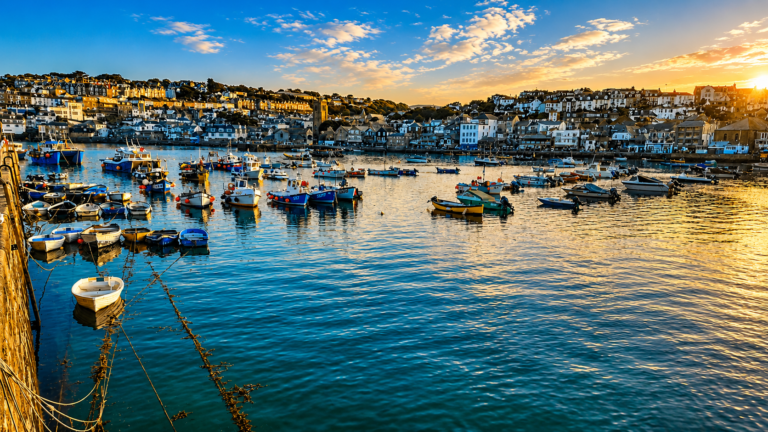
The harbour is the natural first stop. Boats, sand at low tide, old buildings tucked around the water, gulls overhead, people eating chips with more faith than caution — it is classic St Ives.
It is also where many visitors stop thinking. They see the harbour, take the photograph, buy something, then leave saying they have “done” St Ives. That misses the best of the town.
Move into the lanes. Fore Street and the Digey are good starting points, but the smaller side streets are where St Ives becomes more interesting. You will find independent galleries, ceramics, books, clothing, surf shops, gifts, food, homeware and small places that reward a slower look.
This is one of the reasons I rate St Ives for adults who want a proper wander rather than a fixed attraction route. You can spend an hour here without achieving anything obvious and still feel you have used the town well.
Best beaches in St Ives
St Ives is not a one-beach town. The coastline folds around the town in different directions, so the best beach depends on the tide, wind, crowd levels and what you want from the day.
Porthmeor Beach
Porthmeor is the Atlantic-facing beach, backed by Tate St Ives and closely tied to surf. It has the bigger-sky feel, with The Island above it and rockpools on the eastern side.
Choose Porthmeor for waves, sunsets, surf and a more dramatic edge to the day. If you are planning a surf lesson or want the beach that feels most exposed to the Atlantic, this is the one to know.
Porthminster Beach
Porthminster is broader, more sheltered and very handy if you arrive by train. It is one of the easiest beaches to build into a St Ives visit because you can step off the branch line and be near the sand almost straight away.
Choose Porthminster if you want a softer start to the day, easier access from the station, and a beach that feels more open and settled.
Porthgwidden Beach
Porthgwidden is smaller and tucked closer to The Island. It feels more contained than Porthmeor or Porthminster, which makes it useful when you want a gentler beach stop rather than a big open stretch of sand.
Harbour Beach
Harbour Beach is about setting rather than wildness. At low tide it gives you sand, boats and town life in one frame. It is not the beach I would choose for a full beach day, but it is a very St Ives place to pause.
Bamaluz Beach
Bamaluz is the small beach dog owners should know, as it is one of the St Ives beaches known for year-round dog access. It is not the big showpiece beach, but it is practical and central.
My beach advice: do not pick a beach before the day has shown you what it is doing. Look at the tide, wind and crowds, then decide.
Tate St Ives, galleries and the art scene
The art in St Ives is not decorative filler. It is one of the reasons the town feels different from a standard beach resort.
Tate St Ives is the headline, sitting above Porthmeor in a location most galleries would envy. The Barbara Hepworth Museum and Sculpture Garden gives you something more intimate in the middle of town. The Leach Pottery connects St Ives with one of its great craft legacies, while St Ives School of Painting reflects the town’s long pull for artists.
St Ives became closely linked with British Modernism after the Second World War, and that history still shapes the town’s identity. You see it in the galleries, ceramics, studios and the way St Ives talks about light, sea and landscape.
If you usually skip galleries, St Ives is a good place to make an exception. The setting does half the persuasion before you step inside.
Food, drink and shopping in St Ives
St Ives has enough food and drink choice to let you shape the day around your mood. You can keep it casual with coffee, pasties, harbour snacks and beachside stops, or make lunch or dinner a bigger part of the visit.
For a relaxed day, I would stay loose until late afternoon and be more deliberate about the evening. If you have a particular dinner place in mind during peak season, book rather than hoping the town will absorb you. Restaurants, cafés and bars set their own opening times, menus and booking rules, so treat them individually rather than assuming St Ives runs as one neat system.
The shopping is stronger than many people expect. There are visitor-facing bits, naturally, but also independent galleries, craft shops, surf shops, bookshops, clothing, ceramics and Cornish produce. The best approach is not to race through looking for “the main shopping street”. Wander the lanes and let the town open up.
Boat trips, surfing and coastal walks
St Ives is strong from the water. Boat trips from the area can include coastline tours, seal-watching, Godrevy Island, mackerel fishing, wreck fishing and glass-bottom sea safaris. Wildlife is never guaranteed, but the coastline is good enough that the trip does not depend on one perfect sighting.
Surfing is another obvious option, with Porthmeor the main beach to know. If you are new to it, use a proper surf school and take the conditions seriously. The sea is not there to flatter anyone’s confidence.
Walkers have plenty of choice. A gentle version of the day can take in the harbour, Porthmeor, The Island and the beaches close to town. A stronger walking day can push out along the South West Coast Path towards Zennor. That route changes the mood completely: less polished, more exposed, and much more West Cornwall.
Parking in St Ives and the best way to arrive
This is the part that can make or break St Ives.
If you are driving in peak season, do not build the day around finding an easy central parking space. St Ives is old, tight and busy. Town-centre parking is limited, road layouts can change, and a beautiful place can quickly feel like a bad decision if you spend the first hour circling for somewhere to leave the car.
Best overall: St Erth Park & Ride by train
The cleanest option for many visitors is to park at St Erth Station and take the St Ives Bay Line into town. St Erth has substantial parking, EV charging, and a short coastal train journey into St Ives. The line runs past Carbis Bay and Porthminster before arriving above the town, which is a far better introduction than crawling through traffic.
Other useful St Ives parking options
- Trenwith Car Park — the large car park above town, with shuttle links into the centre at busier times.
- Carbis Bay / Porthrepta — useful if you want to walk in along the coast path or take the train one stop.
- St Ives Rugby Club — a seasonal option with shuttle links in peak periods.
- Town car parks — handy in the right conditions, but not something I would gamble a summer day on.
Outside the busiest periods, driving closer can be fine. In high season, the train approach is calmer and usually more enjoyable.
Accessibility in St Ives
St Ives is beautiful, but it is not flat. The town has cobbles, hills, tight lanes and steps. Around the harbour there is more level access to many shops, cafés and bars, but individual businesses and routes vary.
For anyone with reduced mobility, think about gradients as much as distance. Close on a map does not always mean easy on foot. The harbour and Porthminster side are generally easier than repeatedly climbing between the beaches, upper streets and car parks.
The Visitor Information Centre is based at St Ives Library on Gabriel Street and is useful for local information, left luggage, box office services, maps, printing and Wi-Fi. In a town that can feel busy and maze-like on arrival, that kind of practical stop earns its place.
Dog-friendly St Ives
St Ives can work well with dogs, provided you plan around beach restrictions. The main beaches can have seasonal daytime rules, so do not assume every stretch of sand is available in summer.
Bamaluz is the key beach name to know for year-round dog access, and the St Ives Bay Line is dog-friendly. Keep the day flexible, avoid the worst heat and crowds, and build the beach part of the visit around the rules rather than fighting them.
Who St Ives suits
Choose St Ives if you want a day with several strong parts rather than one single attraction. It suits people who like to wander, eat, browse, look at art, sit by the harbour, walk the coast path or spend part of the day on the beach.
It is especially good for:
- first-time Cornwall visitors who want a proper coastal town day;
- couples or adult groups who like food, galleries and sea views;
- families who want beach choice without driving between stops;
- surfers and bodyboarders heading for Porthmeor;
- walkers who want the option of pushing beyond town;
- dog owners who are willing to plan around beach restrictions.
Think twice if your idea of a good day is empty streets, easy parking and total quiet in August. You can still enjoy St Ives in high season, but only if you accept the reality of the place and handle the practical bits properly.
A first-day route for St Ives
For a first visit, I would keep the plan simple.
Arrive by train from St Erth if you can. Start at Porthminster, then walk into the harbour before the middle of the day. Have a slow wander through the lanes around Fore Street and the Digey, then choose lunch based on where you have ended up rather than marching across town for something you saved on your phone three weeks ago.
After that, shape the afternoon around the weather and your energy:
- good surf or big skies: Porthmeor;
- shelter and easier sand: Porthminster;
- a smaller beach stop: Porthgwidden;
- culture: Tate St Ives or the Barbara Hepworth Museum;
- more movement: a boat trip or a coast path walk.
Stay into the evening if you can. St Ives is better when you are not rushing back to the car, and the town often feels calmer once the sharpest part of the day has passed.
St Ives Town FAQ
What is the best way to visit St Ives for a day trip?
For most day visitors driving from elsewhere in Cornwall, I would use St Erth Park & Ride and take the St Ives Bay Line into town. It avoids the worst parking stress and gives you a scenic arrival above Porthminster.
Which beach is best in St Ives?
Porthmeor is best for surf, sunsets and a more dramatic Atlantic feel. Porthminster is better for a gentler, more sheltered beach close to the train station. Porthgwidden is smaller and more contained. Harbour Beach is best for atmosphere at low tide rather than a full beach day.
Can you visit St Ives without a car?
Yes. In many cases, St Ives is better without one. The St Ives Bay Line connects the town with St Erth on the main line, and the train approach is one of the easiest ways to arrive. Once you are in St Ives, the harbour, beaches, shops, galleries and food spots are all close enough to explore on foot.
Is St Ives dog-friendly?
St Ives can work well with dogs, but beach restrictions matter. Some main beaches have seasonal daytime restrictions, while Bamaluz is the central beach most dog owners should know for year-round access. The St Ives Bay Line is dog-friendly, which helps if you are using the train approach.
Is St Ives suitable for visitors with limited mobility?
Parts of St Ives are manageable, especially around the harbour and Porthminster side, but the town has cobbles, hills, narrow lanes and steps. Gradients matter more than they appear on a map. Plan routes carefully and avoid assuming the shortest route will be the easiest one.
Final word
Use St Ives as a sequence of good small decisions: beach, lane, gallery, food, view. Do that, and the town makes sense as one of Cornwall’s standout days out — not because it is quiet or undiscovered, but because the good parts sit so close together.
Video Guide
St Ives Town Guide: Beaches, Parking, Food and Things to Do
St Ives Town is one of Cornwall’s easiest places to overcomplicate. Search for things to do in St Ives and you will find a long list: beaches, Tate St Ives, the harbour, boat trips, galleries, shops, surf, coastal walks, food, ice cream, pasties, more beaches. Most of that list is right. The better question is how to use the town well.
My view is clear: I’d strongly recommend St Ives, but not as a rushed tick-box stop. It works best when you arrive sensibly, give it enough time, and let the day move between harbour, lanes, beach, art and food without trying to force everything in.
St Ives is famous for good reason. It can also be crowded, awkward to park in and slower to move through than people expect. If you are coming in peak summer, do not wing the practical bits. Parking, queues and busy streets can shape the day more than the view.
The best version of St Ives starts before you arrive: park smart, take the train, then let the town unfold on foot.
Quick verdict
St Ives is the right choice if you want one of Cornwall’s best combinations of beach, harbour, art, food and coastal scenery in a single town.
It is not the place for total quiet in August, and it is not a town I would approach by driving straight into the centre and hoping for an easy space. Handle the arrival properly and St Ives becomes far easier to enjoy.
Best things to do in St Ives Town
If you only have one day in St Ives, I would focus on these:
- Arrive via St Erth and take the St Ives Bay Line if you are driving from elsewhere.
- Start around Porthminster and the harbour rather than heading straight into the busiest lanes.
- Wander Fore Street, the Digey and the smaller side streets for shops, galleries and cafés.
- Choose one main beach properly instead of trying to rush around all of them.
- Make time for Tate St Ives, the Barbara Hepworth Museum or the Leach Pottery if art is part of the appeal.
- Use the coast or water if the weather is kind: surf, boat trip or coastal walk.
- Stay into the evening if you can, because the town often feels better once the day-tripper pressure starts to ease.
That gives you a strong St Ives day without turning it into a checklist.
Start at St Ives harbour, then leave the obvious route
The harbour is the natural first stop. Boats, sand at low tide, old buildings tucked around the water, gulls overhead, people eating chips with more faith than caution — it is classic St Ives.
It is also where many visitors stop thinking. They see the harbour, take the photograph, buy something, then leave saying they have “done” St Ives. That misses the best of the town.
Move into the lanes. Fore Street and the Digey are good starting points, but the smaller side streets are where St Ives becomes more interesting. You will find independent galleries, ceramics, books, clothing, surf shops, gifts, food, homeware and small places that reward a slower look.
This is one of the reasons I rate St Ives for adults who want a proper wander rather than a fixed attraction route. You can spend an hour here without achieving anything obvious and still feel you have used the town well.
Best beaches in St Ives
St Ives is not a one-beach town. The coastline folds around the town in different directions, so the best beach depends on the tide, wind, crowd levels and what you want from the day.
Porthmeor Beach
Porthmeor is the Atlantic-facing beach, backed by Tate St Ives and closely tied to surf. It has the bigger-sky feel, with The Island above it and rockpools on the eastern side.
Choose Porthmeor for waves, sunsets, surf and a more dramatic edge to the day. If you are planning a surf lesson or want the beach that feels most exposed to the Atlantic, this is the one to know.
Porthminster Beach
Porthminster is broader, more sheltered and very handy if you arrive by train. It is one of the easiest beaches to build into a St Ives visit because you can step off the branch line and be near the sand almost straight away.
Choose Porthminster if you want a softer start to the day, easier access from the station, and a beach that feels more open and settled.
Porthgwidden Beach
Porthgwidden is smaller and tucked closer to The Island. It feels more contained than Porthmeor or Porthminster, which makes it useful when you want a gentler beach stop rather than a big open stretch of sand.
Harbour Beach
Harbour Beach is about setting rather than wildness. At low tide it gives you sand, boats and town life in one frame. It is not the beach I would choose for a full beach day, but it is a very St Ives place to pause.
Bamaluz Beach
Bamaluz is the small beach dog owners should know, as it is one of the St Ives beaches known for year-round dog access. It is not the big showpiece beach, but it is practical and central.
My beach advice: do not pick a beach before the day has shown you what it is doing. Look at the tide, wind and crowds, then decide.
Tate St Ives, galleries and the art scene
The art in St Ives is not decorative filler. It is one of the reasons the town feels different from a standard beach resort.
Tate St Ives is the headline, sitting above Porthmeor in a location most galleries would envy. The Barbara Hepworth Museum and Sculpture Garden gives you something more intimate in the middle of town. The Leach Pottery connects St Ives with one of its great craft legacies, while St Ives School of Painting reflects the town’s long pull for artists.
St Ives became closely linked with British Modernism after the Second World War, and that history still shapes the town’s identity. You see it in the galleries, ceramics, studios and the way St Ives talks about light, sea and landscape.
If you usually skip galleries, St Ives is a good place to make an exception. The setting does half the persuasion before you step inside.
Food, drink and shopping in St Ives
St Ives has enough food and drink choice to let you shape the day around your mood. You can keep it casual with coffee, pasties, harbour snacks and beachside stops, or make lunch or dinner a bigger part of the visit.
For a relaxed day, I would stay loose until late afternoon and be more deliberate about the evening. If you have a particular dinner place in mind during peak season, book rather than hoping the town will absorb you. Restaurants, cafés and bars set their own opening times, menus and booking rules, so treat them individually rather than assuming St Ives runs as one neat system.
The shopping is stronger than many people expect. There are visitor-facing bits, naturally, but also independent galleries, craft shops, surf shops, bookshops, clothing, ceramics and Cornish produce. The best approach is not to race through looking for “the main shopping street”. Wander the lanes and let the town open up.
Boat trips, surfing and coastal walks
St Ives is strong from the water. Boat trips from the area can include coastline tours, seal-watching, Godrevy Island, mackerel fishing, wreck fishing and glass-bottom sea safaris. Wildlife is never guaranteed, but the coastline is good enough that the trip does not depend on one perfect sighting.
Surfing is another obvious option, with Porthmeor the main beach to know. If you are new to it, use a proper surf school and take the conditions seriously. The sea is not there to flatter anyone’s confidence.
Walkers have plenty of choice. A gentle version of the day can take in the harbour, Porthmeor, The Island and the beaches close to town. A stronger walking day can push out along the South West Coast Path towards Zennor. That route changes the mood completely: less polished, more exposed, and much more West Cornwall.
Parking in St Ives and the best way to arrive
This is the part that can make or break St Ives.
If you are driving in peak season, do not build the day around finding an easy central parking space. St Ives is old, tight and busy. Town-centre parking is limited, road layouts can change, and a beautiful place can quickly feel like a bad decision if you spend the first hour circling for somewhere to leave the car.
Best overall: St Erth Park & Ride by train
The cleanest option for many visitors is to park at St Erth Station and take the St Ives Bay Line into town. St Erth has substantial parking, EV charging, and a short coastal train journey into St Ives. The line runs past Carbis Bay and Porthminster before arriving above the town, which is a far better introduction than crawling through traffic.
Other useful St Ives parking options
- Trenwith Car Park — the large car park above town, with shuttle links into the centre at busier times.
- Carbis Bay / Porthrepta — useful if you want to walk in along the coast path or take the train one stop.
- St Ives Rugby Club — a seasonal option with shuttle links in peak periods.
- Town car parks — handy in the right conditions, but not something I would gamble a summer day on.
Outside the busiest periods, driving closer can be fine. In high season, the train approach is calmer and usually more enjoyable.
Accessibility in St Ives
St Ives is beautiful, but it is not flat. The town has cobbles, hills, tight lanes and steps. Around the harbour there is more level access to many shops, cafés and bars, but individual businesses and routes vary.
For anyone with reduced mobility, think about gradients as much as distance. Close on a map does not always mean easy on foot. The harbour and Porthminster side are generally easier than repeatedly climbing between the beaches, upper streets and car parks.
The Visitor Information Centre is based at St Ives Library on Gabriel Street and is useful for local information, left luggage, box office services, maps, printing and Wi-Fi. In a town that can feel busy and maze-like on arrival, that kind of practical stop earns its place.
Dog-friendly St Ives
St Ives can work well with dogs, provided you plan around beach restrictions. The main beaches can have seasonal daytime rules, so do not assume every stretch of sand is available in summer.
Bamaluz is the key beach name to know for year-round dog access, and the St Ives Bay Line is dog-friendly. Keep the day flexible, avoid the worst heat and crowds, and build the beach part of the visit around the rules rather than fighting them.
Who St Ives suits
Choose St Ives if you want a day with several strong parts rather than one single attraction. It suits people who like to wander, eat, browse, look at art, sit by the harbour, walk the coast path or spend part of the day on the beach.
It is especially good for:
- first-time Cornwall visitors who want a proper coastal town day;
- couples or adult groups who like food, galleries and sea views;
- families who want beach choice without driving between stops;
- surfers and bodyboarders heading for Porthmeor;
- walkers who want the option of pushing beyond town;
- dog owners who are willing to plan around beach restrictions.
Think twice if your idea of a good day is empty streets, easy parking and total quiet in August. You can still enjoy St Ives in high season, but only if you accept the reality of the place and handle the practical bits properly.
A first-day route for St Ives
For a first visit, I would keep the plan simple.
Arrive by train from St Erth if you can. Start at Porthminster, then walk into the harbour before the middle of the day. Have a slow wander through the lanes around Fore Street and the Digey, then choose lunch based on where you have ended up rather than marching across town for something you saved on your phone three weeks ago.
After that, shape the afternoon around the weather and your energy:
- good surf or big skies: Porthmeor;
- shelter and easier sand: Porthminster;
- a smaller beach stop: Porthgwidden;
- culture: Tate St Ives or the Barbara Hepworth Museum;
- more movement: a boat trip or a coast path walk.
Stay into the evening if you can. St Ives is better when you are not rushing back to the car, and the town often feels calmer once the sharpest part of the day has passed.
St Ives Town FAQ
What is the best way to visit St Ives for a day trip?
For most day visitors driving from elsewhere in Cornwall, I would use St Erth Park & Ride and take the St Ives Bay Line into town. It avoids the worst parking stress and gives you a scenic arrival above Porthminster.
Which beach is best in St Ives?
Porthmeor is best for surf, sunsets and a more dramatic Atlantic feel. Porthminster is better for a gentler, more sheltered beach close to the train station. Porthgwidden is smaller and more contained. Harbour Beach is best for atmosphere at low tide rather than a full beach day.
Can you visit St Ives without a car?
Yes. In many cases, St Ives is better without one. The St Ives Bay Line connects the town with St Erth on the main line, and the train approach is one of the easiest ways to arrive. Once you are in St Ives, the harbour, beaches, shops, galleries and food spots are all close enough to explore on foot.
Is St Ives dog-friendly?
St Ives can work well with dogs, but beach restrictions matter. Some main beaches have seasonal daytime restrictions, while Bamaluz is the central beach most dog owners should know for year-round access. The St Ives Bay Line is dog-friendly, which helps if you are using the train approach.
Is St Ives suitable for visitors with limited mobility?
Parts of St Ives are manageable, especially around the harbour and Porthminster side, but the town has cobbles, hills, narrow lanes and steps. Gradients matter more than they appear on a map. Plan routes carefully and avoid assuming the shortest route will be the easiest one.
Final word
Use St Ives as a sequence of good small decisions: beach, lane, gallery, food, view. Do that, and the town makes sense as one of Cornwall’s standout days out — not because it is quiet or undiscovered, but because the good parts sit so close together.
Contact & Details
St Ives
Cornwall
TR26 1LP
United Kingdom
Sorry, no records were found. Please adjust your search criteria and try again.
Sorry, unable to load the Maps API.