
Details
Address & Contact
Polgooth
Cornwall
PL26 7BT
United Kingdom
Sorry, no records were found. Please adjust your search criteria and try again.
Sorry, unable to load the Maps API.
Polgooth Village Guide: pub, history and things to do near St Austell
Polgooth village is one of the quieter inland stops near St Austell, and it makes more sense when you stop expecting it to behave like a harbour town. It sits within easy reach of Mevagissey, Pentewan, Charlestown, the Lost Gardens of Heligan and the Eden Project, but the village itself is smaller, calmer and more lived-in than the better-known places around it.
I would not build a full Cornwall day around Polgooth alone. I would use it as a good pub stop, a relaxed base near the St Austell coast, or a short detour with proper mining history behind it.
Polgooth is not the headline act. It is the place that makes a south Cornwall day feel less rushed.
Polgooth at a glance
- Best for: pub stops, quiet stays, mining history and access to nearby coast and gardens
- Nearest town: St Austell
- Nearby places: Mevagissey, Pentewan, Charlestown, Heligan and Eden
- Main visitor anchor: the Polgooth Inn
- Best with a car: yes, for most visitors
- Not best for: sea views from the door, big attractions or a busy village-centre wander
Where is Polgooth?
Polgooth is in south Cornwall, close to St Austell and inland from Mevagissey and Pentewan. It is not on the coast, which matters when you are choosing where to stay. You get countryside, lanes and a village pub rather than harbour walls, beaches and sea-facing terraces.
That inland position is the main appeal. St Austell is close for practicalities, Mevagissey gives you the harbour hit, Pentewan brings you towards the beach and valley trail, and Heligan, Charlestown and Eden all sit comfortably within the wider area.
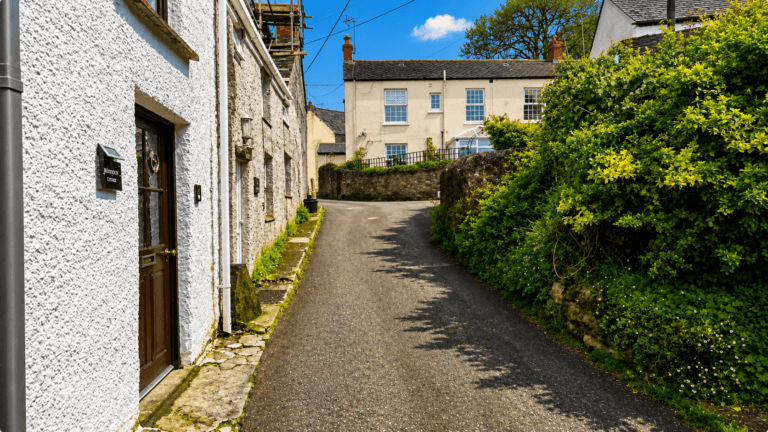
The lanes around Polgooth are narrow, green and properly Cornish. Take them steadily, especially in summer or after dark. This is not a village that rewards rushed driving.
Why Polgooth matters: tin, lanes and working Cornwall
Polgooth has a stronger history than its quiet present suggests. Its tin-mining past goes back centuries, and the village was once known for one of the richest tin mines in Cornwall.
That history explains the feel of the place. Polgooth was not designed around visitors. It grew from mining, cottages, lanes, local work and scattered settlement, which is why it does not have the neat centre some people expect from a Cornish village.
The name is often linked to the Cornish for “goose pond”, but the more interesting story is tin. Polgooth belongs to the working Cornwall around St Austell: mine country, clay country, valley routes and old transport links running down towards the coast.
The Polgooth Inn
For most visitors, the Polgooth Inn is the easiest reason to come to Polgooth. It is a sixteenth-century village pub on Ricketts Lane, set in a rural valley between St Austell and Mevagissey, with indoor tables, a beer garden, food service and garden glamping pods.
The practical details are the bit to get right:
- Food is served through the day and into the evening.
- Sunday roasts are served at lunchtime.
- Breakfast runs on selected mornings, not every morning.
- The beer garden is first come, first served.
- Dogs are welcome in dog-friendly areas, but mention them when booking.
- The main eating, drinking and toilet areas are on one level.
- The accommodation is reached by steps.
That makes the pub easy to build into a day around Heligan, Mevagissey, Pentewan, Charlestown or St Austell. I would not sell it as a secret discovery. It is a known village pub in a useful position, and that is enough.
If eating inside matters, book. If the garden matters, arrive with flexibility rather than treating an outdoor table as guaranteed.
Staying in Polgooth
Polgooth suits a stay where you want countryside, pub access and short drives to the south coast. It is less suited to anyone who wants shops, sea views and several evening options within a short wander.
The Polgooth Inn has three en-suite garden glamping pods for two people, with self-contained facilities and outdoor space. Two accept dogs, which makes the village more useful for a Cornwall break with one in tow. Read the accommodation details properly before booking, especially around access, dogs and breakfast, because those are the details that shape the stay.
The strongest argument for staying in Polgooth is rhythm. You can spend the day at Heligan, Mevagissey, Charlestown, Pentewan or Eden, then come back inland for food, a pint and a quieter night.
For a first-time Cornwall trip built around sea views, I would probably choose the coast. For a slower south Cornwall trip, Polgooth has a better case than many people realise.
Things to do near Polgooth
Polgooth itself does not need a long itinerary. Its value is in what it connects to.
Mevagissey
Mevagissey is the obvious coastal pairing: harbour, fishing boats, steep streets and that classic south-coast Cornwall feel. It is beautiful and busy, so Polgooth works well as the calmer counterweight.
Pentewan
Pentewan is useful for beach time, the valley trail and access towards the coast path. It also helps you understand this area better, because the route between St Austell and the sea has old industrial and transport links running through it.
The Lost Gardens of Heligan
Heligan pairs naturally with Polgooth. If you are spending several hours in the gardens, the village works well for lunch, dinner or a pint afterwards.
Charlestown
Charlestown gives you harbour walls, tall-ship atmosphere and a more polished heritage feel. It is an easy St Austell Bay add-on if you are already moving through the area.
The Eden Project
Eden is the bigger-ticket day out within reach. Polgooth is not next door, but it works as part of the same short break, especially if you want somewhere quieter to return to afterwards.
Walking and cycling around Polgooth
The Pentewan Trail is the most useful route to know. It follows the valley between St Austell and the coast, with wooded sections, river stretches and links towards Polgooth. For walkers and cyclists, it gives the village more than a pub-and-drive role.
I would treat the wider area as gentle valley exploring rather than dramatic cliff-edge walking. For big coastal views, head to Pentewan, Mevagissey or the South West Coast Path. For a lower-key route with St Austell valley character, stay around the trail.
Village life in Polgooth
Polgooth still has local infrastructure: a village hall on Fore Street, community groups, events and local activity. That matters because the village has not been flattened into a visitor product. It is a residential Cornish village with a pub, a mining backstory and a useful location.
Parking and road space need common sense. The lanes and residential corners were not designed for heavy visitor traffic, and there is no charm in blocking someone’s access because a pub lunch ran long.
My verdict on Polgooth village
I’d probably skip Polgooth as a standalone visit.
That is not because there is anything wrong with it. Polgooth is best for people who already understand that Cornwall is not always at its strongest when it is trying hardest. It does not need overselling.
Come for the Polgooth Inn, the mining history, the quiet base and the easy reach into the St Austell and Mevagissey side of Cornwall. Do not come expecting a full visitor village with attractions lined up for you.
Used well, Polgooth makes a south Cornwall trip feel calmer and more grounded. That is its real value.
Polgooth Village FAQs
Is Polgooth worth visiting?
Yes, if you are already near St Austell, Mevagissey, Pentewan or Heligan and want a quiet village pub stop or a small inland detour. I would not make a long journey for Polgooth alone.
Where is Polgooth in Cornwall?
Polgooth is in south Cornwall, close to St Austell and inland from Mevagissey and Pentewan.
Is Polgooth near St Austell?
Yes. Polgooth sits close to St Austell, making it useful for visitors exploring the St Austell Bay and Mevagissey side of Cornwall.
Is Polgooth on the coast?
No. Polgooth is an inland village. For beaches and coastal walks, look towards Pentewan, Mevagissey, Charlestown and the South West Coast Path.
What is Polgooth known for?
Polgooth is known for its tin-mining history and the Polgooth Inn, a long-established village pub on Ricketts Lane.
What is there to do near Polgooth?
Nearby options include Mevagissey, Pentewan, the Lost Gardens of Heligan, Charlestown, the Eden Project and the Pentewan Trail.
Can you stay in Polgooth?
Yes. The Polgooth Inn has garden glamping pods for two people, and there are other holiday stays in the surrounding area.
Is the Polgooth Inn dog-friendly?
Yes, dogs are welcome in dog-friendly areas at the Polgooth Inn. Mention your dog when booking so the right table can be allocated.
Do you need a car for Polgooth?
For most visitors, yes. Polgooth is rural, and the nearby coast, gardens and attractions are spread across lanes and villages.
Polgooth Village Guide: pub, history and things to do near St Austell
Polgooth village is one of the quieter inland stops near St Austell, and it makes more sense when you stop expecting it to behave like a harbour town. It sits within easy reach of Mevagissey, Pentewan, Charlestown, the Lost Gardens of Heligan and the Eden Project, but the village itself is smaller, calmer and more lived-in than the better-known places around it.
I would not build a full Cornwall day around Polgooth alone. I would use it as a good pub stop, a relaxed base near the St Austell coast, or a short detour with proper mining history behind it.
Polgooth is not the headline act. It is the place that makes a south Cornwall day feel less rushed.
Polgooth at a glance
- Best for: pub stops, quiet stays, mining history and access to nearby coast and gardens
- Nearest town: St Austell
- Nearby places: Mevagissey, Pentewan, Charlestown, Heligan and Eden
- Main visitor anchor: the Polgooth Inn
- Best with a car: yes, for most visitors
- Not best for: sea views from the door, big attractions or a busy village-centre wander
Where is Polgooth?
Polgooth is in south Cornwall, close to St Austell and inland from Mevagissey and Pentewan. It is not on the coast, which matters when you are choosing where to stay. You get countryside, lanes and a village pub rather than harbour walls, beaches and sea-facing terraces.
That inland position is the main appeal. St Austell is close for practicalities, Mevagissey gives you the harbour hit, Pentewan brings you towards the beach and valley trail, and Heligan, Charlestown and Eden all sit comfortably within the wider area.
The lanes around Polgooth are narrow, green and properly Cornish. Take them steadily, especially in summer or after dark. This is not a village that rewards rushed driving.
Why Polgooth matters: tin, lanes and working Cornwall
Polgooth has a stronger history than its quiet present suggests. Its tin-mining past goes back centuries, and the village was once known for one of the richest tin mines in Cornwall.
That history explains the feel of the place. Polgooth was not designed around visitors. It grew from mining, cottages, lanes, local work and scattered settlement, which is why it does not have the neat centre some people expect from a Cornish village.
The name is often linked to the Cornish for “goose pond”, but the more interesting story is tin. Polgooth belongs to the working Cornwall around St Austell: mine country, clay country, valley routes and old transport links running down towards the coast.
The Polgooth Inn
For most visitors, the Polgooth Inn is the easiest reason to come to Polgooth. It is a sixteenth-century village pub on Ricketts Lane, set in a rural valley between St Austell and Mevagissey, with indoor tables, a beer garden, food service and garden glamping pods.
The practical details are the bit to get right:
- Food is served through the day and into the evening.
- Sunday roasts are served at lunchtime.
- Breakfast runs on selected mornings, not every morning.
- The beer garden is first come, first served.
- Dogs are welcome in dog-friendly areas, but mention them when booking.
- The main eating, drinking and toilet areas are on one level.
- The accommodation is reached by steps.
That makes the pub easy to build into a day around Heligan, Mevagissey, Pentewan, Charlestown or St Austell. I would not sell it as a secret discovery. It is a known village pub in a useful position, and that is enough.
If eating inside matters, book. If the garden matters, arrive with flexibility rather than treating an outdoor table as guaranteed.
Staying in Polgooth
Polgooth suits a stay where you want countryside, pub access and short drives to the south coast. It is less suited to anyone who wants shops, sea views and several evening options within a short wander.
The Polgooth Inn has three en-suite garden glamping pods for two people, with self-contained facilities and outdoor space. Two accept dogs, which makes the village more useful for a Cornwall break with one in tow. Read the accommodation details properly before booking, especially around access, dogs and breakfast, because those are the details that shape the stay.
The strongest argument for staying in Polgooth is rhythm. You can spend the day at Heligan, Mevagissey, Charlestown, Pentewan or Eden, then come back inland for food, a pint and a quieter night.
For a first-time Cornwall trip built around sea views, I would probably choose the coast. For a slower south Cornwall trip, Polgooth has a better case than many people realise.
Things to do near Polgooth
Polgooth itself does not need a long itinerary. Its value is in what it connects to.
Mevagissey
Mevagissey is the obvious coastal pairing: harbour, fishing boats, steep streets and that classic south-coast Cornwall feel. It is beautiful and busy, so Polgooth works well as the calmer counterweight.
Pentewan
Pentewan is useful for beach time, the valley trail and access towards the coast path. It also helps you understand this area better, because the route between St Austell and the sea has old industrial and transport links running through it.
The Lost Gardens of Heligan
Heligan pairs naturally with Polgooth. If you are spending several hours in the gardens, the village works well for lunch, dinner or a pint afterwards.
Charlestown
Charlestown gives you harbour walls, tall-ship atmosphere and a more polished heritage feel. It is an easy St Austell Bay add-on if you are already moving through the area.
The Eden Project
Eden is the bigger-ticket day out within reach. Polgooth is not next door, but it works as part of the same short break, especially if you want somewhere quieter to return to afterwards.
Walking and cycling around Polgooth
The Pentewan Trail is the most useful route to know. It follows the valley between St Austell and the coast, with wooded sections, river stretches and links towards Polgooth. For walkers and cyclists, it gives the village more than a pub-and-drive role.
I would treat the wider area as gentle valley exploring rather than dramatic cliff-edge walking. For big coastal views, head to Pentewan, Mevagissey or the South West Coast Path. For a lower-key route with St Austell valley character, stay around the trail.
Village life in Polgooth
Polgooth still has local infrastructure: a village hall on Fore Street, community groups, events and local activity. That matters because the village has not been flattened into a visitor product. It is a residential Cornish village with a pub, a mining backstory and a useful location.
Parking and road space need common sense. The lanes and residential corners were not designed for heavy visitor traffic, and there is no charm in blocking someone’s access because a pub lunch ran long.
My verdict on Polgooth village
I’d probably skip Polgooth as a standalone visit.
That is not because there is anything wrong with it. Polgooth is best for people who already understand that Cornwall is not always at its strongest when it is trying hardest. It does not need overselling.
Come for the Polgooth Inn, the mining history, the quiet base and the easy reach into the St Austell and Mevagissey side of Cornwall. Do not come expecting a full visitor village with attractions lined up for you.
Used well, Polgooth makes a south Cornwall trip feel calmer and more grounded. That is its real value.
Polgooth Village FAQs
Is Polgooth worth visiting?
Yes, if you are already near St Austell, Mevagissey, Pentewan or Heligan and want a quiet village pub stop or a small inland detour. I would not make a long journey for Polgooth alone.
Where is Polgooth in Cornwall?
Polgooth is in south Cornwall, close to St Austell and inland from Mevagissey and Pentewan.
Is Polgooth near St Austell?
Yes. Polgooth sits close to St Austell, making it useful for visitors exploring the St Austell Bay and Mevagissey side of Cornwall.
Is Polgooth on the coast?
No. Polgooth is an inland village. For beaches and coastal walks, look towards Pentewan, Mevagissey, Charlestown and the South West Coast Path.
What is Polgooth known for?
Polgooth is known for its tin-mining history and the Polgooth Inn, a long-established village pub on Ricketts Lane.
What is there to do near Polgooth?
Nearby options include Mevagissey, Pentewan, the Lost Gardens of Heligan, Charlestown, the Eden Project and the Pentewan Trail.
Can you stay in Polgooth?
Yes. The Polgooth Inn has garden glamping pods for two people, and there are other holiday stays in the surrounding area.
Is the Polgooth Inn dog-friendly?
Yes, dogs are welcome in dog-friendly areas at the Polgooth Inn. Mention your dog when booking so the right table can be allocated.
Do you need a car for Polgooth?
For most visitors, yes. Polgooth is rural, and the nearby coast, gardens and attractions are spread across lanes and villages.
Contact & Details
Polgooth
Cornwall
PL26 7BT
United Kingdom
Sorry, no records were found. Please adjust your search criteria and try again.
Sorry, unable to load the Maps API.