
Details
Address & Contact
Lostwithiel
Cornwall
PL22 0DY
United Kingdom
Sorry, no records were found. Please adjust your search criteria and try again.
Sorry, unable to load the Maps API.
Lostwithiel, Cornwall: Things to Do, Parking and My Honest Verdict
Lostwithiel is one of the Cornish towns I’d recommend when the fit is right. It has old streets, riverside walks, antiques, independent shops, easy rail access and enough nearby places to turn a gentle visit into a proper day out. What it does not have is a harbour-front spectacle, a broad sandy beach beside the car park, or the glossy confidence of Cornwall’s bigger resort towns.
Good. That is not what Lostwithiel is for.
Lostwithiel suits people who like to wander, browse, eat, walk and let a place reveal itself without too much fuss. If you want the sea to do all the work, choose somewhere coastal. If you want a lived-in Cornish town with history in the walls and good reach into south east Cornwall, Lostwithiel is worth your time.
Lostwithiel is best treated as a town to use well, not a sight to tick off.
Is Lostwithiel worth visiting?
Yes, if you like historic Cornish towns, antiques, riverside walks, independent shops and quieter places with a strong local feel. I would not put Lostwithiel first for a beach-focused trip, a big night out, or a day that needs obvious entertainment from start to finish.
I’d put it on your Cornwall list if you like:
- medieval streets and old buildings
- antiques, markets and independent shops
- gentle walks by the River Fowey
- arriving by train
- pairing a town visit with Restormel Castle, Lanhydrock, Fowey, Lerryn or the south coast
I would choose somewhere else if you want:
- a classic beach day
- a busy evening scene
- big family attractions in the town centre
- dramatic coastal views without moving on afterwards
That is the honest shape of it. Lostwithiel is smaller, older and less polished than Cornwall’s loudest places. For the right visitor, that is exactly the appeal.
Best things to do in Lostwithiel
Lostwithiel works best when you give it a few unhurried hours rather than rushing in for one photograph. The town centre is compact, the river is close, and the best bits join together easily on foot.
The strongest things to do in Lostwithiel are:
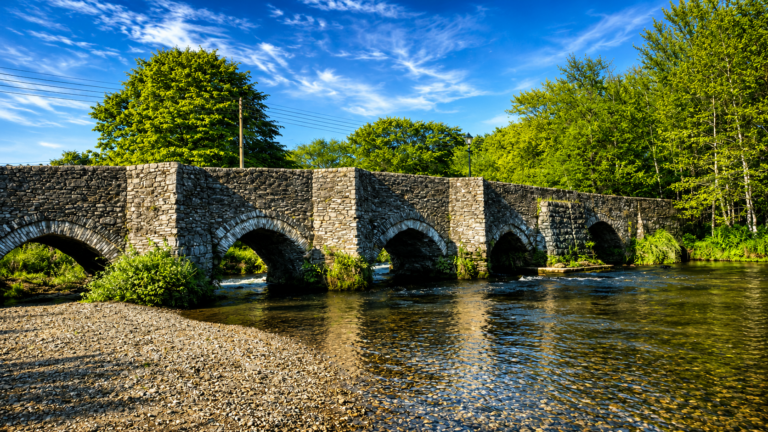
- cross the medieval bridge over the River Fowey
- browse the antiques shops and independent businesses
- walk by the river around Coulson Park and Shirehall Moor
- visit Lostwithiel Museum when it is open
- look for St Bartholomew’s Church and the remains of the Duchy Palace
- walk or drive up to Restormel Castle
- time your visit around a market, fair or local event if the dates work
Do not over-plan it. Lostwithiel is better with room left for rummaging, nosing into side streets and changing your mind.
A town with more history than it shouts about
Lostwithiel sits in the Fowey valley, on the River Fowey, between St Austell and Liskeard. It was once far more important than its size now suggests, with deep links to Cornwall’s tin trade, medieval administration and the Duchy of Cornwall.
You still feel that history, but not in a packaged way. It is in the medieval bridge, the street pattern, St Bartholomew’s Church, the remains of the Duchy Palace, the museum, the quay and the route up towards Restormel Castle. There are information plaques around the town too, which help if you like a self-guided wander rather than a formal tour.
Restormel Castle sits above Lostwithiel rather than in the middle of it, and it gives the day a stronger shape: town first, castle after, food either side. The castle is the obvious historic add-on, with views across the Fowey valley and enough presence to make the climb feel worthwhile if you are up for it.
How I’d spend a few hours in Lostwithiel
Start near the centre, cross the medieval bridge, look back over the river, then drift through the older streets instead of treating Fore Street as the whole town.
A simple Lostwithiel plan:
- browse the centre and independent shops
- cross the medieval bridge
- walk down towards the quay and Coulson Park
- call into the museum if it is open
- add Restormel Castle if you want the views
- finish with a café, pub or takeaway depending on the day
That gives you a good feel for the town without turning the visit into a checklist. If you have longer, add Lanhydrock, Lerryn, Fowey or one of the nearby south coast beaches.
Antiques, markets and independent shops
Lostwithiel has long had a reputation for antiques, and that still gives the town a distinct pull. This is not glossy lifestyle shopping where every window looks styled for Instagram. The pleasure is in browsing, finding something odd, and letting the streets lead you into small places you might otherwise miss.
There are markets and fairs through the year, including produce, craft, flea-market and antiques events. Some are centred around local venues such as the Community Centre and Scout Hut. Event details can shift, so I would not make one market the whole reason for travelling unless the date is already pinned down. For a normal visit, though, you do not need a special event. Lostwithiel has enough shops, galleries and places to browse to make a slow potter worthwhile.
This is where the town has an edge over some prettier Cornish stops. It still feels used. People are buying food, walking dogs, going to the station, heading to the park, setting up stalls, meeting friends. That gives Lostwithiel a bit of everyday grit, in a good way.
Food and drink in Lostwithiel
For food and drink, think small-town Cornwall rather than resort abundance. Lostwithiel has pubs, cafés, restaurants, takeaways and food producers in and around the town, but I would keep plans flexible outside busier periods.
This is not a place I’d frame around one famous must-book meal. Food works better as part of the rhythm of the day: coffee while browsing, lunch after the river, a drink after Restormel, or something easy to take towards the water.
If eating somewhere specific matters to your day, do not leave that decision until the last minute. Opening patterns in smaller Cornish towns can shift by season, staffing and day of the week.
Walks, river and green space
The easiest walk in Lostwithiel is the riverside. Coulson Park and Shirehall Moor give you a gentle stretch close to town, with the River Fowey doing the heavy lifting. It is the sort of route that suits a mixed day: fresh air, a bit of scenery, then back into town for food or shops.
If you want more, the routes widen out properly. You can walk towards Restormel Castle, Lanhydrock, Lerryn, woodland, fields and the Fowey valley. Some routes are gentle; others involve hills, lanes or farmland.
Wear shoes for the walk you are actually doing, not the Cornwall you imagined when you packed. Inland paths can be muddy, uneven or steeper than they look on a map.
Dog owners will get more from Lostwithiel than from many tight, crowded resort towns. The riverside, parks and surrounding walks make it a sensible choice, though individual pubs, cafés, beaches and attractions set their own rules.
Beaches near Lostwithiel
Lostwithiel is close enough to the south coast to pair with a beach, but it is not a beach town. There is a small shingle beach by the river at low tide near the medieval bridge, which is a nice local detail rather than your main beach plan.
For proper sea time, look towards places such as Polkerris, Readymoney Cove, Polridmouth or Lantic Bay. They are south-coast coves rather than big, surfy north-coast beaches, and they vary in access, parking and effort. Match the beach to the day. Do not assume they all suit the same group.
The stronger plan is simple: Lostwithiel for the inland half, coast later.
Getting to Lostwithiel by train or car
Lostwithiel is one of Cornwall’s easier small towns to reach. It sits on the A390 between St Austell and Liskeard, around five miles south of the A30 at Bodmin, and the railway station is close to the centre.
Practical pointers:
- By train: the station makes a car-free visit realistic, though not every train stops here.
- By car: the A390 approach is straightforward by Cornish standards.
- Parking: town parking is available around the Community Centre, the quay and Coulson Park areas.
- Facilities: central services, public toilets and parks make it easier than a remote village stop.
- Best use of time: allow a few hours for the town, then add a walk, castle visit, garden, beach or nearby village if you want a fuller day.
Is Lostwithiel good on a rainy day?
Lostwithiel holds up fairly well in mixed weather. You can browse antiques, sit in a café, visit the museum if it is open, walk the river in a coat, or move out to nearby woodland and valley routes. I would not oversell it as a full wet-weather attraction on its own, but it is useful when the forecast is undecided.
That matters in Cornwall. A place does not need to rescue the whole day to be worth knowing; sometimes it only needs to give you good options when the sky cannot make up its mind.
What to do near Lostwithiel
Lostwithiel’s position is one of its biggest strengths. You can use it as a base or as the quieter inland part of a bigger south east Cornwall day.
Good nearby pairings include:
- Restormel Castle for history and views above the town
- Lanhydrock for gardens, estate walks and a bigger day out
- Lerryn for riverside walking and village scenery
- Fowey for harbour views, boat trips and a more coastal feel
- Polkerris, Readymoney Cove, Polridmouth or Lantic Bay for south-coast beach time
- The Eden Project if you want a major attraction within reach
This is where Lostwithiel makes most sense. It gives you the old-town atmosphere, then leaves you well placed for the coast, countryside and bigger attractions nearby.
FAQs about visiting Lostwithiel
What is Lostwithiel best known for?
Lostwithiel is best known for its medieval history, antiques, markets, riverside setting and nearby Restormel Castle. It was once an important Cornish town connected with the Duchy of Cornwall and the tin trade.
Can you visit Lostwithiel without a car?
Yes. Lostwithiel has a railway station close to the town centre, so it is one of the more realistic small Cornish towns to visit by train. A car gives you more freedom for nearby beaches, Lanhydrock, Lerryn and Fowey.
Where can you park in Lostwithiel?
There is town parking around the Community Centre, Quay Street and Coulson Park areas. For a normal visit, I would aim to park once and explore the centre, bridge and riverside on foot.
How long do you need in Lostwithiel?
A few hours is enough for the town centre, bridge, river, shops and a food stop. Allow longer if you want to add Restormel Castle, a market, a countryside walk or a nearby beach.
Is Lostwithiel near the sea?
Lostwithiel is inland, on the River Fowey, but the south coast is close enough for a combined day. For proper beach time, look towards nearby coves rather than expecting a beach-town setup in Lostwithiel itself.
Final verdict
Lostwithiel is not the Cornish town I’d send someone to for spectacle. I’d send them for old streets, river air, antiques, useful walks and a better feel for inland Cornwall.
Use it slowly. Give yourself time to browse, cross the bridge, follow the river and add one nearby stop. Done that way, Lostwithiel becomes far more than a pretty place on the road between bigger names.
Lostwithiel, Cornwall: Things to Do, Parking and My Honest Verdict
Lostwithiel is one of the Cornish towns I’d recommend when the fit is right. It has old streets, riverside walks, antiques, independent shops, easy rail access and enough nearby places to turn a gentle visit into a proper day out. What it does not have is a harbour-front spectacle, a broad sandy beach beside the car park, or the glossy confidence of Cornwall’s bigger resort towns.
Good. That is not what Lostwithiel is for.
Lostwithiel suits people who like to wander, browse, eat, walk and let a place reveal itself without too much fuss. If you want the sea to do all the work, choose somewhere coastal. If you want a lived-in Cornish town with history in the walls and good reach into south east Cornwall, Lostwithiel is worth your time.
Lostwithiel is best treated as a town to use well, not a sight to tick off.
Is Lostwithiel worth visiting?
Yes, if you like historic Cornish towns, antiques, riverside walks, independent shops and quieter places with a strong local feel. I would not put Lostwithiel first for a beach-focused trip, a big night out, or a day that needs obvious entertainment from start to finish.
I’d put it on your Cornwall list if you like:
- medieval streets and old buildings
- antiques, markets and independent shops
- gentle walks by the River Fowey
- arriving by train
- pairing a town visit with Restormel Castle, Lanhydrock, Fowey, Lerryn or the south coast
I would choose somewhere else if you want:
- a classic beach day
- a busy evening scene
- big family attractions in the town centre
- dramatic coastal views without moving on afterwards
That is the honest shape of it. Lostwithiel is smaller, older and less polished than Cornwall’s loudest places. For the right visitor, that is exactly the appeal.
Best things to do in Lostwithiel
Lostwithiel works best when you give it a few unhurried hours rather than rushing in for one photograph. The town centre is compact, the river is close, and the best bits join together easily on foot.
The strongest things to do in Lostwithiel are:
- cross the medieval bridge over the River Fowey
- browse the antiques shops and independent businesses
- walk by the river around Coulson Park and Shirehall Moor
- visit Lostwithiel Museum when it is open
- look for St Bartholomew’s Church and the remains of the Duchy Palace
- walk or drive up to Restormel Castle
- time your visit around a market, fair or local event if the dates work
Do not over-plan it. Lostwithiel is better with room left for rummaging, nosing into side streets and changing your mind.
A town with more history than it shouts about
Lostwithiel sits in the Fowey valley, on the River Fowey, between St Austell and Liskeard. It was once far more important than its size now suggests, with deep links to Cornwall’s tin trade, medieval administration and the Duchy of Cornwall.
You still feel that history, but not in a packaged way. It is in the medieval bridge, the street pattern, St Bartholomew’s Church, the remains of the Duchy Palace, the museum, the quay and the route up towards Restormel Castle. There are information plaques around the town too, which help if you like a self-guided wander rather than a formal tour.
Restormel Castle sits above Lostwithiel rather than in the middle of it, and it gives the day a stronger shape: town first, castle after, food either side. The castle is the obvious historic add-on, with views across the Fowey valley and enough presence to make the climb feel worthwhile if you are up for it.
How I’d spend a few hours in Lostwithiel
Start near the centre, cross the medieval bridge, look back over the river, then drift through the older streets instead of treating Fore Street as the whole town.
A simple Lostwithiel plan:
- browse the centre and independent shops
- cross the medieval bridge
- walk down towards the quay and Coulson Park
- call into the museum if it is open
- add Restormel Castle if you want the views
- finish with a café, pub or takeaway depending on the day
That gives you a good feel for the town without turning the visit into a checklist. If you have longer, add Lanhydrock, Lerryn, Fowey or one of the nearby south coast beaches.
Antiques, markets and independent shops
Lostwithiel has long had a reputation for antiques, and that still gives the town a distinct pull. This is not glossy lifestyle shopping where every window looks styled for Instagram. The pleasure is in browsing, finding something odd, and letting the streets lead you into small places you might otherwise miss.
There are markets and fairs through the year, including produce, craft, flea-market and antiques events. Some are centred around local venues such as the Community Centre and Scout Hut. Event details can shift, so I would not make one market the whole reason for travelling unless the date is already pinned down. For a normal visit, though, you do not need a special event. Lostwithiel has enough shops, galleries and places to browse to make a slow potter worthwhile.
This is where the town has an edge over some prettier Cornish stops. It still feels used. People are buying food, walking dogs, going to the station, heading to the park, setting up stalls, meeting friends. That gives Lostwithiel a bit of everyday grit, in a good way.
Food and drink in Lostwithiel
For food and drink, think small-town Cornwall rather than resort abundance. Lostwithiel has pubs, cafés, restaurants, takeaways and food producers in and around the town, but I would keep plans flexible outside busier periods.
This is not a place I’d frame around one famous must-book meal. Food works better as part of the rhythm of the day: coffee while browsing, lunch after the river, a drink after Restormel, or something easy to take towards the water.
If eating somewhere specific matters to your day, do not leave that decision until the last minute. Opening patterns in smaller Cornish towns can shift by season, staffing and day of the week.
Walks, river and green space
The easiest walk in Lostwithiel is the riverside. Coulson Park and Shirehall Moor give you a gentle stretch close to town, with the River Fowey doing the heavy lifting. It is the sort of route that suits a mixed day: fresh air, a bit of scenery, then back into town for food or shops.
If you want more, the routes widen out properly. You can walk towards Restormel Castle, Lanhydrock, Lerryn, woodland, fields and the Fowey valley. Some routes are gentle; others involve hills, lanes or farmland.
Wear shoes for the walk you are actually doing, not the Cornwall you imagined when you packed. Inland paths can be muddy, uneven or steeper than they look on a map.
Dog owners will get more from Lostwithiel than from many tight, crowded resort towns. The riverside, parks and surrounding walks make it a sensible choice, though individual pubs, cafés, beaches and attractions set their own rules.
Beaches near Lostwithiel
Lostwithiel is close enough to the south coast to pair with a beach, but it is not a beach town. There is a small shingle beach by the river at low tide near the medieval bridge, which is a nice local detail rather than your main beach plan.
For proper sea time, look towards places such as Polkerris, Readymoney Cove, Polridmouth or Lantic Bay. They are south-coast coves rather than big, surfy north-coast beaches, and they vary in access, parking and effort. Match the beach to the day. Do not assume they all suit the same group.
The stronger plan is simple: Lostwithiel for the inland half, coast later.
Getting to Lostwithiel by train or car
Lostwithiel is one of Cornwall’s easier small towns to reach. It sits on the A390 between St Austell and Liskeard, around five miles south of the A30 at Bodmin, and the railway station is close to the centre.
Practical pointers:
- By train: the station makes a car-free visit realistic, though not every train stops here.
- By car: the A390 approach is straightforward by Cornish standards.
- Parking: town parking is available around the Community Centre, the quay and Coulson Park areas.
- Facilities: central services, public toilets and parks make it easier than a remote village stop.
- Best use of time: allow a few hours for the town, then add a walk, castle visit, garden, beach or nearby village if you want a fuller day.
Is Lostwithiel good on a rainy day?
Lostwithiel holds up fairly well in mixed weather. You can browse antiques, sit in a café, visit the museum if it is open, walk the river in a coat, or move out to nearby woodland and valley routes. I would not oversell it as a full wet-weather attraction on its own, but it is useful when the forecast is undecided.
That matters in Cornwall. A place does not need to rescue the whole day to be worth knowing; sometimes it only needs to give you good options when the sky cannot make up its mind.
What to do near Lostwithiel
Lostwithiel’s position is one of its biggest strengths. You can use it as a base or as the quieter inland part of a bigger south east Cornwall day.
Good nearby pairings include:
- Restormel Castle for history and views above the town
- Lanhydrock for gardens, estate walks and a bigger day out
- Lerryn for riverside walking and village scenery
- Fowey for harbour views, boat trips and a more coastal feel
- Polkerris, Readymoney Cove, Polridmouth or Lantic Bay for south-coast beach time
- The Eden Project if you want a major attraction within reach
This is where Lostwithiel makes most sense. It gives you the old-town atmosphere, then leaves you well placed for the coast, countryside and bigger attractions nearby.
FAQs about visiting Lostwithiel
What is Lostwithiel best known for?
Lostwithiel is best known for its medieval history, antiques, markets, riverside setting and nearby Restormel Castle. It was once an important Cornish town connected with the Duchy of Cornwall and the tin trade.
Can you visit Lostwithiel without a car?
Yes. Lostwithiel has a railway station close to the town centre, so it is one of the more realistic small Cornish towns to visit by train. A car gives you more freedom for nearby beaches, Lanhydrock, Lerryn and Fowey.
Where can you park in Lostwithiel?
There is town parking around the Community Centre, Quay Street and Coulson Park areas. For a normal visit, I would aim to park once and explore the centre, bridge and riverside on foot.
How long do you need in Lostwithiel?
A few hours is enough for the town centre, bridge, river, shops and a food stop. Allow longer if you want to add Restormel Castle, a market, a countryside walk or a nearby beach.
Is Lostwithiel near the sea?
Lostwithiel is inland, on the River Fowey, but the south coast is close enough for a combined day. For proper beach time, look towards nearby coves rather than expecting a beach-town setup in Lostwithiel itself.
Final verdict
Lostwithiel is not the Cornish town I’d send someone to for spectacle. I’d send them for old streets, river air, antiques, useful walks and a better feel for inland Cornwall.
Use it slowly. Give yourself time to browse, cross the bridge, follow the river and add one nearby stop. Done that way, Lostwithiel becomes far more than a pretty place on the road between bigger names.
Contact & Details
Lostwithiel
Cornwall
PL22 0DY
United Kingdom
Sorry, no records were found. Please adjust your search criteria and try again.
Sorry, unable to load the Maps API.