
Details
Address & Contact
St Austell Bay
Cornwall
PL26 6BJ
United Kingdom
Sorry, no records were found. Please adjust your search criteria and try again.
Sorry, unable to load the Maps API.
Hallane Beach, Cornwall: honest guide to the waterfall cove near Pentewan
Hallane Beach is one of those small Cornish coves that looks better the less you know about the practicalities. It has a waterfall, a tucked-away spot near Pentewan, a mix of rock, shingle and sand, and the quiet feel people often want when they start hunting for “hidden” beaches in Cornwall.
I understand the appeal. I also think Hallane Beach is better as a scenic stop on a coast walk than a beach day in its own right.
That is the fairest way to judge it. Hallane is not a bad beach. It is a small, awkward, facility-free cove with a lovely setting and limited comfort. If you are walking light, visiting at lower tide, or want a quiet place with rock pools and a waterfall, it may suit you. If you want easy sand, toilets, food nearby and a relaxed swim, I would choose somewhere else.
Hallane is a beach I like knowing about, but I would not ask most people to go out of their way for it.
Quick verdict: is Hallane Beach worth visiting?
Best for: coastal walkers, quiet-cove hunters, rock-pooling, confident explorers, and dogs that prefer shallow pools to long sandy runs.
Not best for: family beach days, buggies, lots of kit, soft-sand lounging, casual swimming, food-and-drink convenience, or anyone who wants an easy few hours by the sea.
Best time to go: lower tide, when there is more beach, more shape to the cove and better access to the rocky edges.
Bring: shoes with grip, water, snacks, and a bag you do not mind carrying back uphill.
Where is Hallane Beach?
Hallane Beach sits on the south coast of Cornwall near St Austell Bay, north-east of Pentewan and west of Black Head. It is close to better-known places like Pentewan Sands, Porthpean and Charlestown, but it has a quieter, rougher feel.
The usual route is from the Trenarren side, walking down towards Hallane Mill before taking steps down to the shore. That approach gives the place some of its charm. It also filters out anyone hoping for a simple park-and-plonk beach.
The walk-in access shapes the whole visit. Going down can feel easy when the idea of a quiet cove is doing the selling. Coming back up with wet towels, beach gear and hungry people is where Hallane becomes less romantic.
Hallane Beach parking and access
Parking for Hallane Beach is not beside the sand. The usual approach starts from the Trenarren side, then continues on foot towards Hallane Mill and down the steps to the cove.
That makes Hallane a poor choice for heavy beach kit. I would not drag chairs, windbreaks, bodyboards and a cool box down here unless you enjoy making life harder than it needs to be.
The access is manageable for walkers, but it is not the sort of beach I would recommend for buggies, mobility issues, or anyone who wants a quick, flat route from car to sea. Treat the walk as part of the visit, not an inconvenience you can ignore.
What Hallane Beach is actually like
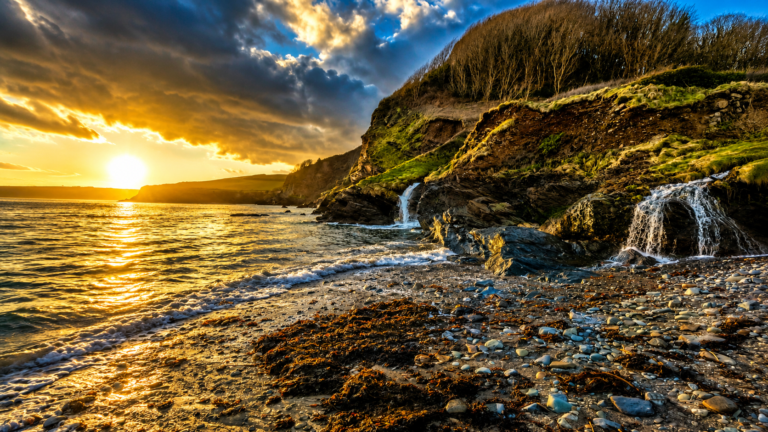
Hallane is a small, south-facing cove with a mix of shingle, stone and some sand. At higher water it can feel tight and stony. As the tide drops, more of the beach opens up, with rocky platforms, pools and offshore rocks becoming part of the scene.
The waterfall is the feature people remember. It drops on the right-hand side of the beach near a natural arch, giving Hallane more character than many small coves along this stretch. On a calm, bright day, it is a lovely place to sit for a while.
The trade-off is comfort. This is not a soft, easy, barefoot beach. The rocks around the shoreline, arch and waterfall can be slippery, and the cove feels more rugged than restful. That is fine for a short explore. It is less appealing if your plan is to stretch out for half a day.
Facilities at Hallane Beach
Hallane Beach has no facilities at the beach. No toilets, no café, no kiosk, no shop, no bins, and no easy fallback if you arrive underprepared.
The practical details worth knowing are:
- Access is on foot, with steps down to the beach below Hallane Mill.
- Parking is not beside the beach, so pack light.
- The beach surface is mixed, with shingle, stones, rocks and some sand depending on tide.
- Lower tide gives you more room and better rock-pooling.
- Food and drink need to come with you, then leave with you.
- The cove is sheltered but uneven, so footwear matters more than it does on a broad sandy beach.
I would not sell Hallane as an easy swimming beach. Some confident swimmers may enjoy it in the right conditions, but rocks, tide and the lack of beach facilities make it a poor choice for casual “let’s have a dip” planning.
Hallane Beach waterfall and rock pools
The waterfall is the main reason Hallane Beach gets attention. It gives the cove a slightly secretive feel, especially when the tide is low enough to make the rocky edges more interesting.
At low tide, the beach is better for rock-pooling and exploring. The natural arch and waterfall area are the most memorable parts, but they are also where the footing can be slick. I would enjoy the view rather than turning it into a clambering mission.
If you are visiting for photography, lower tide and settled weather will give you the best chance of seeing the cove at its most interesting. In wet weather, Hallane loses some of its charm quickly because the rocks and paths become less forgiving.
Is Hallane Beach dog friendly?
Hallane often gets talked about as a dog-friendly beach, and it suits certain dogs well: the ones that like shallow water, stones, rock pools and a bit of sniffing about. It is not a huge sandy racecourse, so dogs that need a long, flat sprint may have a better time elsewhere.
For owners, the practical side matters more than the view. There are no facilities, the access is on foot, and the return walk is part of the visit. Bring water, bags, and enough sense to keep the dog away from slippery rocks if conditions are poor.
When Hallane Beach works well
Hallane makes sense when it is part of a walk.
If you are heading around the coast between Pentewan, Black Head, Porthpean or Charlestown, it can be a rewarding pause. Sit for a bit, look at the waterfall, let the dog nose around the pools, have a drink, then carry on. Used like that, Hallane feels like a find.
It also suits people who actively prefer quieter, rougher coves. Some visitors would rather have stones and solitude than a broad beach with a car park and a queue for ice cream. Hallane is for that mood.
Better nearby beaches and alternatives
I would skip Hallane if the beach is meant to carry the whole day.
For a broader, easier sandy beach nearby, Pentewan Sands is the more practical choice. For a more conventional sit-and-swim beach, Porthpean gives you a simpler day. For harbour atmosphere, food, drink and a proper wander, Charlestown is usually a better use of your time. If you want a mooch with views and lunch rather than a beach mission, Mevagissey has more to work with.
That is the real comparison. Hallane wins on quiet character. The others win on ease.
Best way to visit Hallane Beach
The best version of Hallane is a light, lower-tide visit folded into a walk.
Do not drag a full beach-day setup down there. Wear decent shoes, take water, pack something small to eat, and keep the visit flexible. If the tide, weather or footing look uninviting, move on rather than trying to force it.
Dry, settled weather suits Hallane best. In wet weather, the rocks and paths become less forgiving, and the lack of comfort becomes the thing you notice most.
FAQ
Can you park at Hallane Beach?
Not beside the beach. The usual approach is from the Trenarren side, then on foot towards Hallane Mill and down the steps to the cove. Pack light rather than treating it like a car-park beach.
Are there toilets at Hallane Beach?
No. Hallane Beach has no toilets or beach facilities, so it works better as a short stop than a long stay.
Is Hallane Beach sandy?
Partly, depending on the tide, but it is not a soft sandy beach in the easy, spread-out sense. Expect shingle, stones, rocks and some sand.
Is Hallane Beach good for swimming?
I would be cautious. The cove is sheltered, but there are rocks, uneven entry points and no facilities. Confident swimmers may judge it differently on the day, but I would not recommend it as an easy casual swim spot.
What is the best tide for Hallane Beach?
Lower tide is usually best. You get more beach, more rock pools and a better look at the waterfall and natural arch area.
Final verdict
Hallane Beach is attractive, tucked away and memorable in a small way. The waterfall and cove setting give it more personality than many easier beaches.
But I would not build a day around it. Use it as a quiet stop on a coast walk, or as a short visit if you are nearby and travelling light. For most people, that is where Hallane makes sense: not as the headline, but as a pretty little footnote on a better-planned day.
Video Guide
Hallane Beach, Cornwall: honest guide to the waterfall cove near Pentewan
Hallane Beach is one of those small Cornish coves that looks better the less you know about the practicalities. It has a waterfall, a tucked-away spot near Pentewan, a mix of rock, shingle and sand, and the quiet feel people often want when they start hunting for “hidden” beaches in Cornwall.
I understand the appeal. I also think Hallane Beach is better as a scenic stop on a coast walk than a beach day in its own right.
That is the fairest way to judge it. Hallane is not a bad beach. It is a small, awkward, facility-free cove with a lovely setting and limited comfort. If you are walking light, visiting at lower tide, or want a quiet place with rock pools and a waterfall, it may suit you. If you want easy sand, toilets, food nearby and a relaxed swim, I would choose somewhere else.
Hallane is a beach I like knowing about, but I would not ask most people to go out of their way for it.
Quick verdict: is Hallane Beach worth visiting?
Best for: coastal walkers, quiet-cove hunters, rock-pooling, confident explorers, and dogs that prefer shallow pools to long sandy runs.
Not best for: family beach days, buggies, lots of kit, soft-sand lounging, casual swimming, food-and-drink convenience, or anyone who wants an easy few hours by the sea.
Best time to go: lower tide, when there is more beach, more shape to the cove and better access to the rocky edges.
Bring: shoes with grip, water, snacks, and a bag you do not mind carrying back uphill.
Where is Hallane Beach?
Hallane Beach sits on the south coast of Cornwall near St Austell Bay, north-east of Pentewan and west of Black Head. It is close to better-known places like Pentewan Sands, Porthpean and Charlestown, but it has a quieter, rougher feel.
The usual route is from the Trenarren side, walking down towards Hallane Mill before taking steps down to the shore. That approach gives the place some of its charm. It also filters out anyone hoping for a simple park-and-plonk beach.
The walk-in access shapes the whole visit. Going down can feel easy when the idea of a quiet cove is doing the selling. Coming back up with wet towels, beach gear and hungry people is where Hallane becomes less romantic.
Hallane Beach parking and access
Parking for Hallane Beach is not beside the sand. The usual approach starts from the Trenarren side, then continues on foot towards Hallane Mill and down the steps to the cove.
That makes Hallane a poor choice for heavy beach kit. I would not drag chairs, windbreaks, bodyboards and a cool box down here unless you enjoy making life harder than it needs to be.
The access is manageable for walkers, but it is not the sort of beach I would recommend for buggies, mobility issues, or anyone who wants a quick, flat route from car to sea. Treat the walk as part of the visit, not an inconvenience you can ignore.
What Hallane Beach is actually like
Hallane is a small, south-facing cove with a mix of shingle, stone and some sand. At higher water it can feel tight and stony. As the tide drops, more of the beach opens up, with rocky platforms, pools and offshore rocks becoming part of the scene.
The waterfall is the feature people remember. It drops on the right-hand side of the beach near a natural arch, giving Hallane more character than many small coves along this stretch. On a calm, bright day, it is a lovely place to sit for a while.
The trade-off is comfort. This is not a soft, easy, barefoot beach. The rocks around the shoreline, arch and waterfall can be slippery, and the cove feels more rugged than restful. That is fine for a short explore. It is less appealing if your plan is to stretch out for half a day.
Facilities at Hallane Beach
Hallane Beach has no facilities at the beach. No toilets, no café, no kiosk, no shop, no bins, and no easy fallback if you arrive underprepared.
The practical details worth knowing are:
- Access is on foot, with steps down to the beach below Hallane Mill.
- Parking is not beside the beach, so pack light.
- The beach surface is mixed, with shingle, stones, rocks and some sand depending on tide.
- Lower tide gives you more room and better rock-pooling.
- Food and drink need to come with you, then leave with you.
- The cove is sheltered but uneven, so footwear matters more than it does on a broad sandy beach.
I would not sell Hallane as an easy swimming beach. Some confident swimmers may enjoy it in the right conditions, but rocks, tide and the lack of beach facilities make it a poor choice for casual “let’s have a dip” planning.
Hallane Beach waterfall and rock pools
The waterfall is the main reason Hallane Beach gets attention. It gives the cove a slightly secretive feel, especially when the tide is low enough to make the rocky edges more interesting.
At low tide, the beach is better for rock-pooling and exploring. The natural arch and waterfall area are the most memorable parts, but they are also where the footing can be slick. I would enjoy the view rather than turning it into a clambering mission.
If you are visiting for photography, lower tide and settled weather will give you the best chance of seeing the cove at its most interesting. In wet weather, Hallane loses some of its charm quickly because the rocks and paths become less forgiving.
Is Hallane Beach dog friendly?
Hallane often gets talked about as a dog-friendly beach, and it suits certain dogs well: the ones that like shallow water, stones, rock pools and a bit of sniffing about. It is not a huge sandy racecourse, so dogs that need a long, flat sprint may have a better time elsewhere.
For owners, the practical side matters more than the view. There are no facilities, the access is on foot, and the return walk is part of the visit. Bring water, bags, and enough sense to keep the dog away from slippery rocks if conditions are poor.
When Hallane Beach works well
Hallane makes sense when it is part of a walk.
If you are heading around the coast between Pentewan, Black Head, Porthpean or Charlestown, it can be a rewarding pause. Sit for a bit, look at the waterfall, let the dog nose around the pools, have a drink, then carry on. Used like that, Hallane feels like a find.
It also suits people who actively prefer quieter, rougher coves. Some visitors would rather have stones and solitude than a broad beach with a car park and a queue for ice cream. Hallane is for that mood.
Better nearby beaches and alternatives
I would skip Hallane if the beach is meant to carry the whole day.
For a broader, easier sandy beach nearby, Pentewan Sands is the more practical choice. For a more conventional sit-and-swim beach, Porthpean gives you a simpler day. For harbour atmosphere, food, drink and a proper wander, Charlestown is usually a better use of your time. If you want a mooch with views and lunch rather than a beach mission, Mevagissey has more to work with.
That is the real comparison. Hallane wins on quiet character. The others win on ease.
Best way to visit Hallane Beach
The best version of Hallane is a light, lower-tide visit folded into a walk.
Do not drag a full beach-day setup down there. Wear decent shoes, take water, pack something small to eat, and keep the visit flexible. If the tide, weather or footing look uninviting, move on rather than trying to force it.
Dry, settled weather suits Hallane best. In wet weather, the rocks and paths become less forgiving, and the lack of comfort becomes the thing you notice most.
FAQ
Can you park at Hallane Beach?
Not beside the beach. The usual approach is from the Trenarren side, then on foot towards Hallane Mill and down the steps to the cove. Pack light rather than treating it like a car-park beach.
Are there toilets at Hallane Beach?
No. Hallane Beach has no toilets or beach facilities, so it works better as a short stop than a long stay.
Is Hallane Beach sandy?
Partly, depending on the tide, but it is not a soft sandy beach in the easy, spread-out sense. Expect shingle, stones, rocks and some sand.
Is Hallane Beach good for swimming?
I would be cautious. The cove is sheltered, but there are rocks, uneven entry points and no facilities. Confident swimmers may judge it differently on the day, but I would not recommend it as an easy casual swim spot.
What is the best tide for Hallane Beach?
Lower tide is usually best. You get more beach, more rock pools and a better look at the waterfall and natural arch area.
Final verdict
Hallane Beach is attractive, tucked away and memorable in a small way. The waterfall and cove setting give it more personality than many easier beaches.
But I would not build a day around it. Use it as a quiet stop on a coast walk, or as a short visit if you are nearby and travelling light. For most people, that is where Hallane makes sense: not as the headline, but as a pretty little footnote on a better-planned day.
Contact & Details
St Austell Bay
Cornwall
PL26 6BJ
United Kingdom
Sorry, no records were found. Please adjust your search criteria and try again.
Sorry, unable to load the Maps API.