
Details
Address & Contact
Charlestown
Cornwall
PL25 3NJ
United Kingdom
Sorry, no records were found. Please adjust your search criteria and try again.
Sorry, unable to load the Maps API.
Charlestown Cornwall: Honest Guide to the Harbour, Beach and Food
Charlestown Cornwall is one of the easiest places in mid-Cornwall to recommend, as long as you come with the right expectation. It is not a huge day out, and I would not pretend otherwise. It is a compact harbour village near St Austell with good views, a proper maritime feel, places to eat and drink, and enough to make a relaxed stop feel worthwhile.
Quick answer: Charlestown is worth visiting if you want a scenic harbour wander, food by the water, a short beach pause and a bit of South Coast atmosphere. I’d build it into a wider mid-Cornwall day rather than make it the whole plan.
Charlestown is small, but it has working-harbour bones — and that is what keeps it interesting.
Where is Charlestown in Cornwall?
Charlestown sits on the south coast of Cornwall, close to St Austell and St Austell Bay. It works well if you are staying near St Austell, visiting the Eden Project, heading towards Fowey, or linking together a few places along this stretch of coast.
That location is part of its appeal. You do not need to make Charlestown carry the whole day. It is strongest as a harbour stop with food, views and a bit of history, especially when paired with somewhere nearby.
Why Charlestown Harbour is the main reason to go
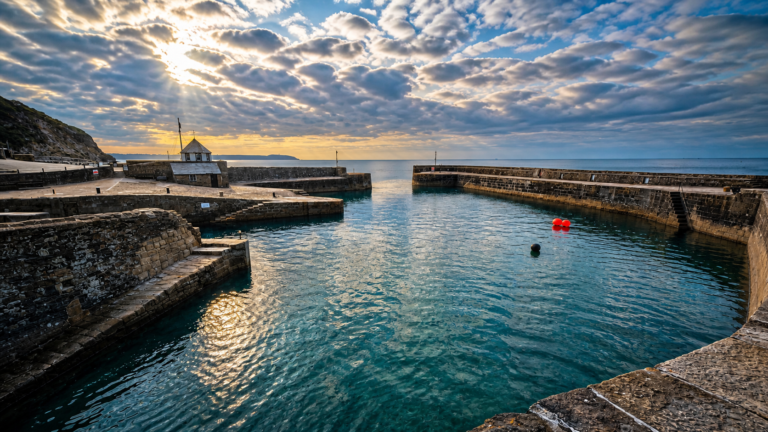
Charlestown Harbour is the heart of the place. The village is attractive, but the harbour gives Charlestown its weight.
It is the last open 18th-century Georgian harbour in the UK and part of the Cornwall and West Devon Mining Landscape UNESCO World Heritage Site. That history matters because Charlestown was not built as a decorative seaside scene. It grew around the China clay industry near St Austell, with the harbour developed in the late 1700s and early 1800s to serve a working coast.
You can still feel that in the layout. The quays, lock gates, cobbles, ropes, vessels and uneven harbour edges stop the place becoming too tidy. It is good-looking, but not bland.
Charlestown Harbour has also appeared in film and TV productions including Poldark, Taboo, The Three Musketeers, The Personal History of David Copperfield and BAIT. That screen connection gives the harbour a familiar look, but I would not make it the whole reason to visit. Charlestown is better when you treat it as a harbour first.
Things to do in Charlestown Cornwall
Charlestown is not about cramming in a long list. The best visit is simple: walk the harbour, pause by the water, eat or drink something, and give yourself enough time not to rush it.
Walk around Charlestown Harbour
Start with the quays. Look back towards the village, then out across St Austell Bay. If tall ships or classic vessels are in the harbour, they lift the whole scene.
The Inner Harbour is generally open seasonally and free to enter when open, though access can change because this is still a working harbour. I would treat that as part of the character rather than a problem.
Spend a little time on Charlestown beach
Charlestown has two pebble and shingle beaches beside the harbour. They are good for sitting, rockpooling and taking in the view, but I would not pitch Charlestown as a full beach-day choice.
If you want a long sandy beach day, look wider around St Austell Bay. If you want a harbour visit with a bit of shoreline attached, Charlestown fits well.
Walk part of the South West Coast Path
Charlestown sits on the South West Coast Path between Duporth and Carlyon Bay. This is one of the best ways to use the village: arrive on foot, stop for a drink or something to eat, then carry on with the coast doing the hard work for you.
Use the Shipwreck Treasure Museum as an indoor add-on
The Shipwreck Treasure Museum gives Charlestown a useful wet-weather option and adds more maritime context if you want more than the harbour itself. I would treat it as an extra, not the main event, but it helps make the village more rounded.
Food and drink in Charlestown
Charlestown is much better when you leave time to sit down. Treat it as a ten-minute photo stop and it can feel thin. Treat it as a harbour pause and it starts to make sense.
Around the Inner Harbour, seasonal pop-ups usually bring extra food and drink to the quays from spring into autumn. The mix can include seafood, fish and chips, harbour bars, coffee, cream teas, cakes and ice cream. Names associated with the harbour include Smugglers on the Harbour, Charlestown Fish Co, Scuttlebutt Tavern and The Deck.
The quayside pop-ups are seasonal and weather-sensitive, so do not build the whole day around one specific counter being open. Build the day around Charlestown Harbour itself, then use whatever food and drink options are working well when you arrive.
The village has more established places too, including The Longstore, The Pier House, Springtide, The Boathouse and Tall Ships Creamery. That makes Charlestown useful in a way some scenic stops are not: you can walk, eat, drink and browse without needing a heavy plan.
Parking and getting to Charlestown
Charlestown is close to St Austell and well signposted from the A390. By car, it is a short drive from St Austell and roughly 20 minutes from Fowey.
Do not wing the parking in peak summer. There is some on-road parking and a public car park close to the harbour, but this is a compact village. Parking can shape the mood of the day more than anyone wants to admit.
St Austell is the nearest railway station. From there, Charlestown is a short taxi ride or around a 20-minute walk. There is also a bus route between Newquay and Fowey via St Austell and Charlestown, with the village stop only a short walk downhill from the harbour.
Dogs and accessibility in Charlestown
Dogs are welcome around the Inner Harbour and outer quays, but they need to stay on leads. From 1 April to 31 October, dogs are not permitted on the beaches.
Accessibility is mixed in the way old working harbours often are. The Outer Harbour and Inner Harbour can be reached via slipways, but expect cobbles, uneven ground, cleats, ropes and other harbour hazards. This is not a smooth modern promenade.
How I’d fit Charlestown into a day
Charlestown works best when it has company. I would pair it with one of these:
- Eden Project and Charlestown for a big attraction plus a coastal pause
- Charlestown and Carlyon Bay for harbour, food and beach time
- Charlestown and Mevagissey for two different harbour moods
- Charlestown and Fowey for a fuller south coast day
- A South West Coast Path walk with Charlestown as the food-and-drink stop
That is the sweet spot. Let Charlestown do what it does well, then move on before you start trying to stretch it.
FAQ: Charlestown Cornwall
Is Charlestown Cornwall worth visiting?
Yes, if you want a scenic harbour stop with history, food, coastal views and a relaxed wander. It is best as part of a mid-Cornwall day rather than the sole reason for the day.
How long do you need in Charlestown?
For most people, allow a couple of unhurried hours. Add more time if you are eating, walking part of the coast path, visiting the Shipwreck Treasure Museum or spending time on the beach.
Is Charlestown Harbour free to visit?
The Inner Harbour is generally free to enter when it is open seasonally. Because Charlestown is still a working harbour, access can change for weather, safety or harbour operations.
Can dogs go on Charlestown beach?
Dogs are welcome around the Inner Harbour and outer quays on leads. Dogs are not permitted on the beaches from 1 April to 31 October.
Is Charlestown good for a beach day?
Not as a main beach day. Charlestown’s beaches are pebble and shingle, and they work best as part of a harbour visit. For a longer beach day, I would look elsewhere around St Austell Bay.
What is Charlestown Cornwall known for?
Charlestown is known for its historic Georgian harbour, tall ships, China clay history, film and TV locations, pebble beaches and food and drink around the harbour.
My verdict
I’d happily recommend Charlestown, especially if you are already in mid-Cornwall or staying near St Austell. Go for the quays, the boats, the view, a drink, something to eat and a bit of sea air. Let Charlestown be compact, handsome and useful. That is where it is at its best.
Video Guide
Charlestown Cornwall: Honest Guide to the Harbour, Beach and Food
Charlestown Cornwall is one of the easiest places in mid-Cornwall to recommend, as long as you come with the right expectation. It is not a huge day out, and I would not pretend otherwise. It is a compact harbour village near St Austell with good views, a proper maritime feel, places to eat and drink, and enough to make a relaxed stop feel worthwhile.
Quick answer: Charlestown is worth visiting if you want a scenic harbour wander, food by the water, a short beach pause and a bit of South Coast atmosphere. I’d build it into a wider mid-Cornwall day rather than make it the whole plan.
Charlestown is small, but it has working-harbour bones — and that is what keeps it interesting.
Where is Charlestown in Cornwall?
Charlestown sits on the south coast of Cornwall, close to St Austell and St Austell Bay. It works well if you are staying near St Austell, visiting the Eden Project, heading towards Fowey, or linking together a few places along this stretch of coast.
That location is part of its appeal. You do not need to make Charlestown carry the whole day. It is strongest as a harbour stop with food, views and a bit of history, especially when paired with somewhere nearby.
Why Charlestown Harbour is the main reason to go
Charlestown Harbour is the heart of the place. The village is attractive, but the harbour gives Charlestown its weight.
It is the last open 18th-century Georgian harbour in the UK and part of the Cornwall and West Devon Mining Landscape UNESCO World Heritage Site. That history matters because Charlestown was not built as a decorative seaside scene. It grew around the China clay industry near St Austell, with the harbour developed in the late 1700s and early 1800s to serve a working coast.
You can still feel that in the layout. The quays, lock gates, cobbles, ropes, vessels and uneven harbour edges stop the place becoming too tidy. It is good-looking, but not bland.
Charlestown Harbour has also appeared in film and TV productions including Poldark, Taboo, The Three Musketeers, The Personal History of David Copperfield and BAIT. That screen connection gives the harbour a familiar look, but I would not make it the whole reason to visit. Charlestown is better when you treat it as a harbour first.
Things to do in Charlestown Cornwall
Charlestown is not about cramming in a long list. The best visit is simple: walk the harbour, pause by the water, eat or drink something, and give yourself enough time not to rush it.
Walk around Charlestown Harbour
Start with the quays. Look back towards the village, then out across St Austell Bay. If tall ships or classic vessels are in the harbour, they lift the whole scene.
The Inner Harbour is generally open seasonally and free to enter when open, though access can change because this is still a working harbour. I would treat that as part of the character rather than a problem.
Spend a little time on Charlestown beach
Charlestown has two pebble and shingle beaches beside the harbour. They are good for sitting, rockpooling and taking in the view, but I would not pitch Charlestown as a full beach-day choice.
If you want a long sandy beach day, look wider around St Austell Bay. If you want a harbour visit with a bit of shoreline attached, Charlestown fits well.
Walk part of the South West Coast Path
Charlestown sits on the South West Coast Path between Duporth and Carlyon Bay. This is one of the best ways to use the village: arrive on foot, stop for a drink or something to eat, then carry on with the coast doing the hard work for you.
Use the Shipwreck Treasure Museum as an indoor add-on
The Shipwreck Treasure Museum gives Charlestown a useful wet-weather option and adds more maritime context if you want more than the harbour itself. I would treat it as an extra, not the main event, but it helps make the village more rounded.
Food and drink in Charlestown
Charlestown is much better when you leave time to sit down. Treat it as a ten-minute photo stop and it can feel thin. Treat it as a harbour pause and it starts to make sense.
Around the Inner Harbour, seasonal pop-ups usually bring extra food and drink to the quays from spring into autumn. The mix can include seafood, fish and chips, harbour bars, coffee, cream teas, cakes and ice cream. Names associated with the harbour include Smugglers on the Harbour, Charlestown Fish Co, Scuttlebutt Tavern and The Deck.
The quayside pop-ups are seasonal and weather-sensitive, so do not build the whole day around one specific counter being open. Build the day around Charlestown Harbour itself, then use whatever food and drink options are working well when you arrive.
The village has more established places too, including The Longstore, The Pier House, Springtide, The Boathouse and Tall Ships Creamery. That makes Charlestown useful in a way some scenic stops are not: you can walk, eat, drink and browse without needing a heavy plan.
Parking and getting to Charlestown
Charlestown is close to St Austell and well signposted from the A390. By car, it is a short drive from St Austell and roughly 20 minutes from Fowey.
Do not wing the parking in peak summer. There is some on-road parking and a public car park close to the harbour, but this is a compact village. Parking can shape the mood of the day more than anyone wants to admit.
St Austell is the nearest railway station. From there, Charlestown is a short taxi ride or around a 20-minute walk. There is also a bus route between Newquay and Fowey via St Austell and Charlestown, with the village stop only a short walk downhill from the harbour.
Dogs and accessibility in Charlestown
Dogs are welcome around the Inner Harbour and outer quays, but they need to stay on leads. From 1 April to 31 October, dogs are not permitted on the beaches.
Accessibility is mixed in the way old working harbours often are. The Outer Harbour and Inner Harbour can be reached via slipways, but expect cobbles, uneven ground, cleats, ropes and other harbour hazards. This is not a smooth modern promenade.
How I’d fit Charlestown into a day
Charlestown works best when it has company. I would pair it with one of these:
- Eden Project and Charlestown for a big attraction plus a coastal pause
- Charlestown and Carlyon Bay for harbour, food and beach time
- Charlestown and Mevagissey for two different harbour moods
- Charlestown and Fowey for a fuller south coast day
- A South West Coast Path walk with Charlestown as the food-and-drink stop
That is the sweet spot. Let Charlestown do what it does well, then move on before you start trying to stretch it.
FAQ: Charlestown Cornwall
Is Charlestown Cornwall worth visiting?
Yes, if you want a scenic harbour stop with history, food, coastal views and a relaxed wander. It is best as part of a mid-Cornwall day rather than the sole reason for the day.
How long do you need in Charlestown?
For most people, allow a couple of unhurried hours. Add more time if you are eating, walking part of the coast path, visiting the Shipwreck Treasure Museum or spending time on the beach.
Is Charlestown Harbour free to visit?
The Inner Harbour is generally free to enter when it is open seasonally. Because Charlestown is still a working harbour, access can change for weather, safety or harbour operations.
Can dogs go on Charlestown beach?
Dogs are welcome around the Inner Harbour and outer quays on leads. Dogs are not permitted on the beaches from 1 April to 31 October.
Is Charlestown good for a beach day?
Not as a main beach day. Charlestown’s beaches are pebble and shingle, and they work best as part of a harbour visit. For a longer beach day, I would look elsewhere around St Austell Bay.
What is Charlestown Cornwall known for?
Charlestown is known for its historic Georgian harbour, tall ships, China clay history, film and TV locations, pebble beaches and food and drink around the harbour.
My verdict
I’d happily recommend Charlestown, especially if you are already in mid-Cornwall or staying near St Austell. Go for the quays, the boats, the view, a drink, something to eat and a bit of sea air. Let Charlestown be compact, handsome and useful. That is where it is at its best.
Contact & Details
Charlestown
Cornwall
PL25 3NJ
United Kingdom
Sorry, no records were found. Please adjust your search criteria and try again.
Sorry, unable to load the Maps API.