
Details
Address & Contact
Looe
Cornwall
PL13 1HH
United Kingdom
Sorry, no records were found. Please adjust your search criteria and try again.
Sorry, unable to load the Maps API.
Looe, Cornwall: Things to Do, Parking, Beaches and My Honest Verdict
Looe is one of the more useful towns in South East Cornwall for a proper day out, especially if you want harbour atmosphere, beach time, food stops and a bit of local texture without building the whole trip around one place. Give it a few unhurried hours and it works well: East Looe for the beach and bustle, West Looe for the quay and harbour history, and Hannafore for sea views, rock pools and a slower finish.
My line is simple: I’d make time for Looe. I would not oversell it as the single reason to travel across Cornwall, but if you are already planning time around Polperro, Fowey, the Looe Valley Line, the South West Coast Path or this corner of the coast, Looe is a strong addition.
The town’s appeal is in the mix. It has a working fishing harbour, sandy beach, narrow streets, boat trips, local history, fish-and-chip ease, and Looe Island sitting offshore. Use those parts well and Looe becomes much more than a quick look from the quay.
Looe is at its best when you let it be a harbour town first and a beach town second.
Quick Pasties & Pints verdict on Looe
Best for: harbour wandering, East Looe Beach, boat trips, fish and chips, local history, railway arrivals, rock pooling, coast path walks and South East Cornwall day trips.
Less good for: effortless summer parking, empty streets, doorstep access to the beach from the main car parks, or a polished resort feel.
My best use of Looe: arrive by train or park at Millpool, walk in through West Looe, spend time around the harbour and East Looe, then head towards Hannafore for space, sea views and a calmer finish.
Do not wing: parking, tide, weather or boat timings. Those four things can shape the day more than any tidy itinerary.
Why Looe works as a Cornwall day out
Looe is not carried by one big attraction. It works because several useful parts sit close together.
East Looe has the beach, shops, food stops and the busier seaside-town feel. West Looe gives you the quay, heritage, the Millpool side of town and a calmer look back across the river. Hannafore changes the mood again, with rock pools, benches, open sea views and Looe Island sitting offshore.
That variety matters. Some Cornish places are beautiful but thin once you have taken in the view. Looe has more to work with. You can keep the visit simple — harbour, food, beach, wander — or add a museum, boat trip, coastal walk or Looe Island plan if you want the day to stretch.
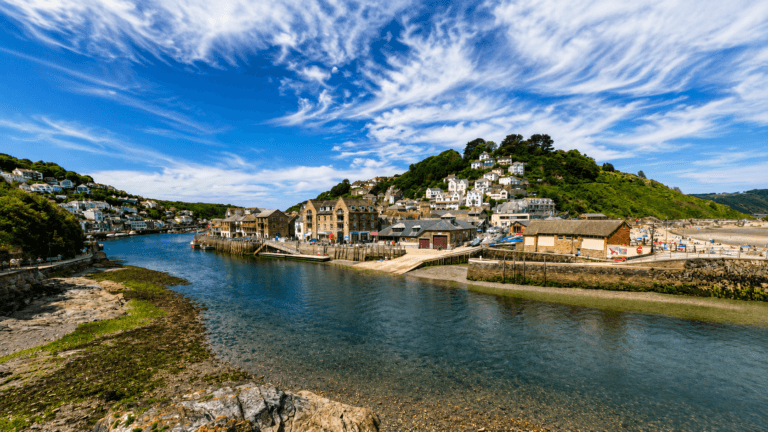
The working harbour helps. Looe is clearly a visitor town, especially in season, but it still has enough of its own life to avoid feeling staged. The boats, quays, river and old harbour buildings give the place texture. Cornwall is better when a town still feels like itself.
Start with Looe Harbour
The harbour is the right place to understand Looe. The river, quays and split between East and West Looe give the town its shape, and the visit feels more natural if you start there rather than marching straight for the sand.
If you arrive at Millpool, the walk in from West Looe is part of the day rather than dead time. You come in beside the water, with the harbour opening up ahead and East Looe pulling you across. It is a better introduction than fighting for the closest possible parking space and arriving already irritated.
This is also the moment to read the town. If East Looe looks packed, stay looser. Take the West Looe side slowly, keep Hannafore in mind, and do not force the busiest streets at the busiest time. If the centre feels manageable, cross over and let the town do what it does best: beach, shops, harbour, food, repeat as needed.
Looe does not need a checklist. It suits a wander with a rough shape.
East Looe Beach: the easy seaside option
East Looe is where most visitors naturally end up. The beach is close to the town, which is a large part of the appeal. East Looe Beach sits in a sheltered bay protected by Banjo Pier, with golden sand, gentle waves and rock pools at low tide. Cafés, bakeries, fish and chip shops and ice cream stops are close by, which makes it far easier than a more remote beach day.
The convenience is the main selling point. You can move between sand, harbour and food without turning the day into a logistical exercise. For families, that can make Looe easier than some prettier but less practical beach stops. For couples or groups, it keeps the day casual: beach for a while, wander through town, eat when appetite catches up.
The practical details are worth getting right:
- Dogs are not permitted on East Looe Beach.
- There is no lifeguard listed for East Looe Beach, so treat it as unlifeguarded unless local signs say otherwise on the day.
- The main parking is not directly beside the beach.
- Buller Quay is around a 10-minute walk from the beach; Millpool is around 20 minutes.
- There are seafront toilets, which may carry a small charge.
None of that makes East Looe Beach difficult. It does mean you should arrive prepared to walk, rather than expecting to unload everything straight onto the sand.
West Looe: quieter streets and harbour history
West Looe is easy to underuse. Many visitors cross straight into East Looe and stay there, which is understandable but a bit of a waste.
The Looe Harbour Heritage Centre, based at The Old Sardine Factory on the quay, is a good example of why the West Looe side matters. Its focus sits exactly where it should: the harbour, river, bridges, sardines, fishing, boats and people connected with the town’s working life. That kind of context helps Looe feel less like scenery and more like a place with its own story.
Across the water, the Old Guildhall Museum & Gaol adds another layer. It is housed in a 15th-century listed building and covers fishing, boatbuilding, smuggling, Looe Island, the Looe Valley Railway, tourism, wartime history and courtroom life. The building still has medieval features, old cells and the raised magistrates’ bench, so the setting carries plenty of atmosphere before you even get into the displays.
I would not tell every visitor to build the day around the museums. That would be too neat. But if the weather turns, or if you like understanding a town rather than only looking at it, they make Looe feel more rounded.
Hannafore Beach: rock pools, Looe Island views and more breathing room
Hannafore is where I would go when the centre feels too full. It is not far from the heart of Looe, but the mood changes quickly: more open, more sea-facing, less squeezed.
At low tide, Hannafore is known for rock pools, with Looe Island sitting across the water. At high tide, the sea can reach the sea wall and cover the small shingle bays, so tide matters here. This is not a beach where conditions are the same all day. Time it well and it gives you a quieter, more spacious version of Looe.
Hannafore is also useful for practical reasons. Roadside parking is available behind the beach, there are toilets, and there is disabled access to the beach with disabled toilets. It is dog friendly year round, which makes it the better call if East Looe Beach is ruled out for you. Refreshments are available at Hannafore Kiosk throughout the year, with Island View Cafe listed seasonally.
The western end links with the South West Coast Path towards Polperro, around five miles away. That gives Looe a proper walking angle. You can keep the visit gentle, or you can use the town as the start or finish of a bigger coastal day.
Looe Island and boat trips
Looe Island gives the bay a stronger identity. You see it from Hannafore, you feel it sitting offshore, and it adds a slightly wilder edge to what could otherwise be a straightforward harbour-and-beach town.
Access is by organised boat from Hannafore Beach, and the island has clear restrictions: no dogs, no drones and no fishing. It is part of the Looe Bay Marine Conservation Zone, with rocky reefs, woodland and wildflower grassland.
You do not have to land on the island for Looe to work. For many people, the view from Hannafore will be enough. But if you like wildlife, boat trips or a visit with a bit more shape, it is one of Looe’s better extras.
The wider water-based offer is also strong. Local options include boat trips, fishing trips, self-drive boat hire, glass-bottom boats, sea safari trips, diving, beach activities and kayak hire. Availability will depend on operator, weather, season and sea conditions, so I would not build the whole visit around a vague hope of “doing a boat later”.
If the boat trip matters, plan that first. Let the rest of Looe sit around it.
Parking in Looe and getting there
This is the part to get right, especially in peak summer. Millpool in West Looe is the most sensible default for most day visitors. It is the largest car park, long stay, pay and display, with public toilets, and it puts you about five minutes’ walk from town. The beach is another five to ten minutes beyond that, depending on your route and pace.
Riverbank in East Looe is short stay, three hours or less, with no return within three hours. Kilminorth Woods is long stay. Buller Quay and West Looe Quay are operated separately by Looe Harbour Commission. Cornwall Council also lists Riverbank as the short-stay option, with Millpool and Kilminorth Woods as long-stay car parks in the Looe area.
The main point is simple: do not judge Looe by how close you can get the car to the beach. That is not the best way to use the town. Park sensibly, walk in, and let the approach become part of the visit.
Rail is a very good alternative. Looe connects with Liskeard on the Looe Valley Line, with the route passing through a wooded valley before opening towards the estuary and town. For a day trip, that train link is a genuine advantage. Many Cornish coastal places are easier to admire than to reach; Looe gives you a way in that can make the journey feel like part of the outing.
Toilets and useful facilities in Looe
Looe has public toilets on both sides of town, which matters more than people admit when they are planning a beach-and-harbour day. In East Looe, toilets are listed at the seafront promenade and at Guildhall on Fore Street. In West Looe, toilets are listed at Millpool Car Park, Hannafore on Marine Drive and Pennyland near St Nicholas Church. Opening times vary by season, and accessible toilets require a RADAR key.
That makes the Millpool arrival easier than it first looks. You can park, use the facilities, walk into West Looe, and then decide whether East Looe, Hannafore or the harbour should take the lead.
Food and drink in Looe
Looe is easy from a Pasties & Pints point of view because the food-and-drink side does not depend on one perfect choice. Around East Looe Beach and the centre, you have the classic seaside mix: cafés, bakeries, fish and chips, ice cream and places to sit down when the weather or appetite demands it.
I would keep the plan flexible unless you already have a specific booking in mind. Looe suits a looser food day: something by the harbour, a pasty on the move, fish and chips if that is where the mood lands, or a longer pause if the weather turns and you want to sit inside.
Peak lunchtime in a compact harbour town can be a grind. I would rather eat early or late than spend the best part of the visit standing in the first obvious queue. That is not a Looe-specific criticism; it is how busy Cornish seaside towns work when the sun is out and everyone has the same idea at once.
My ideal Looe itinerary for a first visit
For a first visit, I would keep the route clean:
- Arrive by train or park at Millpool.
- Walk in through West Looe and start with the harbour.
- Cross into East Looe for the beach, shops and food.
- Use low tide for rock pools if that is part of the day.
- Head to Hannafore when you want space, Looe Island views or a quieter finish.
- Add a museum or boat trip only if it improves the day, not because you feel obliged.
That gives you the best of Looe without making it feel over-managed. You get the harbour, the busier side, the quieter side and enough flexibility to let weather and tide make some of the decisions.
If you have longer, the bigger version is obvious: add a boat trip, Looe Island access if available, more time at Hannafore, or the coast path towards Polperro. If the weather is poor, lean into the harbour, museums, food stops and railway instead.
Who Looe suits
Looe suits people who like a proper Cornish harbour town with several things close at hand. It is good for a mixed day: beach without committing to a full beach day, food without too much searching, history without a heavy itinerary, and a waterfront that gives the place a clear centre.
It is a good fit for families who are happy to walk in from the car park, couples wanting an easy South East Cornwall stop, rail travellers, boat-trip people, rock-poolers, coast-path walkers and anyone who prefers towns with a bit of working-harbour grit.
It is less suited to people who want silence, empty streets, instant parking beside the sand or a resort that smooths out every awkward edge. Looe has pinch points, especially in high season. That does not spoil it, but it does mean the best visits are the ones with realistic expectations.
FAQs about visiting Looe, Cornwall
Is Looe worth visiting?
Yes. Looe is worth visiting as a strong South East Cornwall stop, especially if you give it time for the harbour, East Looe Beach, food stops and Hannafore rather than rushing through.
What are the best things to do in Looe?
The best things to do in Looe are to walk the harbour, visit East Looe Beach, explore both East and West Looe, head to Hannafore at low tide, consider a boat trip, and add the museums if you want more local history.
Which is better, East Looe or West Looe?
East Looe is better for the beach, shops and busier seaside feel. West Looe is better for a calmer arrival, harbour views and local history. I would not choose one and ignore the other; Looe works better when you cross between both.
Is Looe good for a beach day?
Looe is good for an easy beach stop rather than a remote, all-day beach escape. East Looe Beach is sandy, sheltered and close to town, but the main parking is a walk away and dogs are not permitted.
Where is the best place to park in Looe?
Millpool in West Looe is the best default for most day visitors because it is the largest car park and gives you a sensible walk into town. If you are heading for the beach, pack with the walk in mind.
Can you visit Looe by train?
Yes. Looe has its own station and connects with Liskeard on the Looe Valley Line. For a day trip, arriving by rail can be much less stressful than chasing parking in peak season.
Is Looe dog friendly?
Parts of Looe are more dog friendly than others. East Looe Beach does not allow dogs, while Hannafore is dog friendly year round. For a dog-friendly visit, I would build the day more around Hannafore than East Looe Beach.
Can you visit Looe Island?
Yes, but access is by organised boat and depends on the right conditions. Dogs, drones and fishing are not allowed on the island, so plan it as a protected nature visit rather than a casual beach add-on.
Final verdict
Looe earns its place as a strong stop, a half-day with substance, or a useful anchor for a South East Cornwall outing. The harbour gives it character, the beach gives it ease, Hannafore gives it breathing room, and the rail link makes it more practical than many coastal towns.
Plan the practical bits, keep the tide in mind, and do not reduce it to a quick look from the quay. Looe has more to offer than that.
Looe, Cornwall: Things to Do, Parking, Beaches and My Honest Verdict
Looe is one of the more useful towns in South East Cornwall for a proper day out, especially if you want harbour atmosphere, beach time, food stops and a bit of local texture without building the whole trip around one place. Give it a few unhurried hours and it works well: East Looe for the beach and bustle, West Looe for the quay and harbour history, and Hannafore for sea views, rock pools and a slower finish.
My line is simple: I’d make time for Looe. I would not oversell it as the single reason to travel across Cornwall, but if you are already planning time around Polperro, Fowey, the Looe Valley Line, the South West Coast Path or this corner of the coast, Looe is a strong addition.
The town’s appeal is in the mix. It has a working fishing harbour, sandy beach, narrow streets, boat trips, local history, fish-and-chip ease, and Looe Island sitting offshore. Use those parts well and Looe becomes much more than a quick look from the quay.
Looe is at its best when you let it be a harbour town first and a beach town second.
Quick Pasties & Pints verdict on Looe
Best for: harbour wandering, East Looe Beach, boat trips, fish and chips, local history, railway arrivals, rock pooling, coast path walks and South East Cornwall day trips.
Less good for: effortless summer parking, empty streets, doorstep access to the beach from the main car parks, or a polished resort feel.
My best use of Looe: arrive by train or park at Millpool, walk in through West Looe, spend time around the harbour and East Looe, then head towards Hannafore for space, sea views and a calmer finish.
Do not wing: parking, tide, weather or boat timings. Those four things can shape the day more than any tidy itinerary.
Why Looe works as a Cornwall day out
Looe is not carried by one big attraction. It works because several useful parts sit close together.
East Looe has the beach, shops, food stops and the busier seaside-town feel. West Looe gives you the quay, heritage, the Millpool side of town and a calmer look back across the river. Hannafore changes the mood again, with rock pools, benches, open sea views and Looe Island sitting offshore.
That variety matters. Some Cornish places are beautiful but thin once you have taken in the view. Looe has more to work with. You can keep the visit simple — harbour, food, beach, wander — or add a museum, boat trip, coastal walk or Looe Island plan if you want the day to stretch.
The working harbour helps. Looe is clearly a visitor town, especially in season, but it still has enough of its own life to avoid feeling staged. The boats, quays, river and old harbour buildings give the place texture. Cornwall is better when a town still feels like itself.
Start with Looe Harbour
The harbour is the right place to understand Looe. The river, quays and split between East and West Looe give the town its shape, and the visit feels more natural if you start there rather than marching straight for the sand.
If you arrive at Millpool, the walk in from West Looe is part of the day rather than dead time. You come in beside the water, with the harbour opening up ahead and East Looe pulling you across. It is a better introduction than fighting for the closest possible parking space and arriving already irritated.
This is also the moment to read the town. If East Looe looks packed, stay looser. Take the West Looe side slowly, keep Hannafore in mind, and do not force the busiest streets at the busiest time. If the centre feels manageable, cross over and let the town do what it does best: beach, shops, harbour, food, repeat as needed.
Looe does not need a checklist. It suits a wander with a rough shape.
East Looe Beach: the easy seaside option
East Looe is where most visitors naturally end up. The beach is close to the town, which is a large part of the appeal. East Looe Beach sits in a sheltered bay protected by Banjo Pier, with golden sand, gentle waves and rock pools at low tide. Cafés, bakeries, fish and chip shops and ice cream stops are close by, which makes it far easier than a more remote beach day.
The convenience is the main selling point. You can move between sand, harbour and food without turning the day into a logistical exercise. For families, that can make Looe easier than some prettier but less practical beach stops. For couples or groups, it keeps the day casual: beach for a while, wander through town, eat when appetite catches up.
The practical details are worth getting right:
- Dogs are not permitted on East Looe Beach.
- There is no lifeguard listed for East Looe Beach, so treat it as unlifeguarded unless local signs say otherwise on the day.
- The main parking is not directly beside the beach.
- Buller Quay is around a 10-minute walk from the beach; Millpool is around 20 minutes.
- There are seafront toilets, which may carry a small charge.
None of that makes East Looe Beach difficult. It does mean you should arrive prepared to walk, rather than expecting to unload everything straight onto the sand.
West Looe: quieter streets and harbour history
West Looe is easy to underuse. Many visitors cross straight into East Looe and stay there, which is understandable but a bit of a waste.
The Looe Harbour Heritage Centre, based at The Old Sardine Factory on the quay, is a good example of why the West Looe side matters. Its focus sits exactly where it should: the harbour, river, bridges, sardines, fishing, boats and people connected with the town’s working life. That kind of context helps Looe feel less like scenery and more like a place with its own story.
Across the water, the Old Guildhall Museum & Gaol adds another layer. It is housed in a 15th-century listed building and covers fishing, boatbuilding, smuggling, Looe Island, the Looe Valley Railway, tourism, wartime history and courtroom life. The building still has medieval features, old cells and the raised magistrates’ bench, so the setting carries plenty of atmosphere before you even get into the displays.
I would not tell every visitor to build the day around the museums. That would be too neat. But if the weather turns, or if you like understanding a town rather than only looking at it, they make Looe feel more rounded.
Hannafore Beach: rock pools, Looe Island views and more breathing room
Hannafore is where I would go when the centre feels too full. It is not far from the heart of Looe, but the mood changes quickly: more open, more sea-facing, less squeezed.
At low tide, Hannafore is known for rock pools, with Looe Island sitting across the water. At high tide, the sea can reach the sea wall and cover the small shingle bays, so tide matters here. This is not a beach where conditions are the same all day. Time it well and it gives you a quieter, more spacious version of Looe.
Hannafore is also useful for practical reasons. Roadside parking is available behind the beach, there are toilets, and there is disabled access to the beach with disabled toilets. It is dog friendly year round, which makes it the better call if East Looe Beach is ruled out for you. Refreshments are available at Hannafore Kiosk throughout the year, with Island View Cafe listed seasonally.
The western end links with the South West Coast Path towards Polperro, around five miles away. That gives Looe a proper walking angle. You can keep the visit gentle, or you can use the town as the start or finish of a bigger coastal day.
Looe Island and boat trips
Looe Island gives the bay a stronger identity. You see it from Hannafore, you feel it sitting offshore, and it adds a slightly wilder edge to what could otherwise be a straightforward harbour-and-beach town.
Access is by organised boat from Hannafore Beach, and the island has clear restrictions: no dogs, no drones and no fishing. It is part of the Looe Bay Marine Conservation Zone, with rocky reefs, woodland and wildflower grassland.
You do not have to land on the island for Looe to work. For many people, the view from Hannafore will be enough. But if you like wildlife, boat trips or a visit with a bit more shape, it is one of Looe’s better extras.
The wider water-based offer is also strong. Local options include boat trips, fishing trips, self-drive boat hire, glass-bottom boats, sea safari trips, diving, beach activities and kayak hire. Availability will depend on operator, weather, season and sea conditions, so I would not build the whole visit around a vague hope of “doing a boat later”.
If the boat trip matters, plan that first. Let the rest of Looe sit around it.
Parking in Looe and getting there
This is the part to get right, especially in peak summer. Millpool in West Looe is the most sensible default for most day visitors. It is the largest car park, long stay, pay and display, with public toilets, and it puts you about five minutes’ walk from town. The beach is another five to ten minutes beyond that, depending on your route and pace.
Riverbank in East Looe is short stay, three hours or less, with no return within three hours. Kilminorth Woods is long stay. Buller Quay and West Looe Quay are operated separately by Looe Harbour Commission. Cornwall Council also lists Riverbank as the short-stay option, with Millpool and Kilminorth Woods as long-stay car parks in the Looe area.
The main point is simple: do not judge Looe by how close you can get the car to the beach. That is not the best way to use the town. Park sensibly, walk in, and let the approach become part of the visit.
Rail is a very good alternative. Looe connects with Liskeard on the Looe Valley Line, with the route passing through a wooded valley before opening towards the estuary and town. For a day trip, that train link is a genuine advantage. Many Cornish coastal places are easier to admire than to reach; Looe gives you a way in that can make the journey feel like part of the outing.
Toilets and useful facilities in Looe
Looe has public toilets on both sides of town, which matters more than people admit when they are planning a beach-and-harbour day. In East Looe, toilets are listed at the seafront promenade and at Guildhall on Fore Street. In West Looe, toilets are listed at Millpool Car Park, Hannafore on Marine Drive and Pennyland near St Nicholas Church. Opening times vary by season, and accessible toilets require a RADAR key.
That makes the Millpool arrival easier than it first looks. You can park, use the facilities, walk into West Looe, and then decide whether East Looe, Hannafore or the harbour should take the lead.
Food and drink in Looe
Looe is easy from a Pasties & Pints point of view because the food-and-drink side does not depend on one perfect choice. Around East Looe Beach and the centre, you have the classic seaside mix: cafés, bakeries, fish and chips, ice cream and places to sit down when the weather or appetite demands it.
I would keep the plan flexible unless you already have a specific booking in mind. Looe suits a looser food day: something by the harbour, a pasty on the move, fish and chips if that is where the mood lands, or a longer pause if the weather turns and you want to sit inside.
Peak lunchtime in a compact harbour town can be a grind. I would rather eat early or late than spend the best part of the visit standing in the first obvious queue. That is not a Looe-specific criticism; it is how busy Cornish seaside towns work when the sun is out and everyone has the same idea at once.
My ideal Looe itinerary for a first visit
For a first visit, I would keep the route clean:
- Arrive by train or park at Millpool.
- Walk in through West Looe and start with the harbour.
- Cross into East Looe for the beach, shops and food.
- Use low tide for rock pools if that is part of the day.
- Head to Hannafore when you want space, Looe Island views or a quieter finish.
- Add a museum or boat trip only if it improves the day, not because you feel obliged.
That gives you the best of Looe without making it feel over-managed. You get the harbour, the busier side, the quieter side and enough flexibility to let weather and tide make some of the decisions.
If you have longer, the bigger version is obvious: add a boat trip, Looe Island access if available, more time at Hannafore, or the coast path towards Polperro. If the weather is poor, lean into the harbour, museums, food stops and railway instead.
Who Looe suits
Looe suits people who like a proper Cornish harbour town with several things close at hand. It is good for a mixed day: beach without committing to a full beach day, food without too much searching, history without a heavy itinerary, and a waterfront that gives the place a clear centre.
It is a good fit for families who are happy to walk in from the car park, couples wanting an easy South East Cornwall stop, rail travellers, boat-trip people, rock-poolers, coast-path walkers and anyone who prefers towns with a bit of working-harbour grit.
It is less suited to people who want silence, empty streets, instant parking beside the sand or a resort that smooths out every awkward edge. Looe has pinch points, especially in high season. That does not spoil it, but it does mean the best visits are the ones with realistic expectations.
FAQs about visiting Looe, Cornwall
Is Looe worth visiting?
Yes. Looe is worth visiting as a strong South East Cornwall stop, especially if you give it time for the harbour, East Looe Beach, food stops and Hannafore rather than rushing through.
What are the best things to do in Looe?
The best things to do in Looe are to walk the harbour, visit East Looe Beach, explore both East and West Looe, head to Hannafore at low tide, consider a boat trip, and add the museums if you want more local history.
Which is better, East Looe or West Looe?
East Looe is better for the beach, shops and busier seaside feel. West Looe is better for a calmer arrival, harbour views and local history. I would not choose one and ignore the other; Looe works better when you cross between both.
Is Looe good for a beach day?
Looe is good for an easy beach stop rather than a remote, all-day beach escape. East Looe Beach is sandy, sheltered and close to town, but the main parking is a walk away and dogs are not permitted.
Where is the best place to park in Looe?
Millpool in West Looe is the best default for most day visitors because it is the largest car park and gives you a sensible walk into town. If you are heading for the beach, pack with the walk in mind.
Can you visit Looe by train?
Yes. Looe has its own station and connects with Liskeard on the Looe Valley Line. For a day trip, arriving by rail can be much less stressful than chasing parking in peak season.
Is Looe dog friendly?
Parts of Looe are more dog friendly than others. East Looe Beach does not allow dogs, while Hannafore is dog friendly year round. For a dog-friendly visit, I would build the day more around Hannafore than East Looe Beach.
Can you visit Looe Island?
Yes, but access is by organised boat and depends on the right conditions. Dogs, drones and fishing are not allowed on the island, so plan it as a protected nature visit rather than a casual beach add-on.
Final verdict
Looe earns its place as a strong stop, a half-day with substance, or a useful anchor for a South East Cornwall outing. The harbour gives it character, the beach gives it ease, Hannafore gives it breathing room, and the rail link makes it more practical than many coastal towns.
Plan the practical bits, keep the tide in mind, and do not reduce it to a quick look from the quay. Looe has more to offer than that.
Contact & Details
Looe
Cornwall
PL13 1HH
United Kingdom
Sorry, no records were found. Please adjust your search criteria and try again.
Sorry, unable to load the Maps API.