
Details
Address & Contact
Newquay
Cornwall
TR7 1FS
United Kingdom
Sorry, no records were found. Please adjust your search criteria and try again.
Sorry, unable to load the Maps API.
East Pentire Headland, Newquay: parking, views and why I’d make time for it
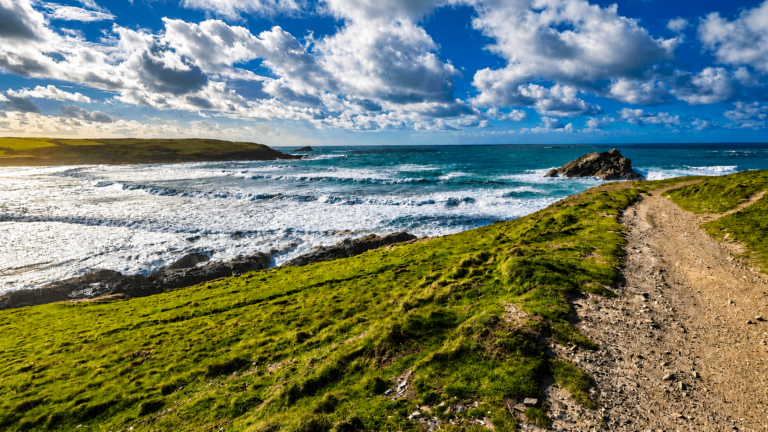
East Pentire Headland is one of the best ways to enjoy the Newquay coast without taking on the full Newquay noise. It sits on the southern edge of town, between Fistral and Crantock, with open clifftop, Atlantic views and enough space to make the place feel wilder than its postcode suggests.
I’d strongly recommend it if you want a proper coastal walk rather than another busy beach stop. East Pentire Headland is not a polished attraction and should not be judged like one. Its strength is the mix of views, wildlife, prehistoric depth and easy access from Newquay.
East Pentire works because it does not try to entertain you. It gives you space, weather, history and a hard edge of sea.
Quick verdict: is East Pentire Headland worth visiting?
Yes. East Pentire Headland is absolutely worth visiting if you are staying in Newquay, heading towards Fistral, or looking for a quieter coastal walk near Crantock.
I would put it high on the list for walkers, birdwatchers, photographers and anyone who wants a less packaged bit of coastline close to town. It is not the right choice if you want smooth paths, lots of shelter, on-site food and a tidy visitor-attraction setup. That is not a criticism. It is the reason the place works.
Where is East Pentire Headland?
East Pentire Headland is on the Newquay side of the coast, between Fistral Beach and Crantock. That position is a big part of its value. You can be close to surf beaches, car parks, cafés and town energy, then step out onto open ground and feel the pace drop.
For clarity, this is East Pentire Headland in Newquay, not the National Trust Pentire near Polzeath, and not West Pentire over by Crantock and Polly Joke. Cornwall has a habit of reusing names in ways that make search results more confusing than they need to be.
Useful location details:
- Area: southern edge of Newquay
- Nearby beaches: Fistral and Crantock
- Address: Newquay, TR7 1QD
- what3words: ///culminate.elect.globe
Why I’d send people here
The best reason to visit East Pentire is not one single feature. It is the way the place gathers several good Cornish things into a simple walk: sea views, bird life, ancient remains, weather, space and a quick escape from the busier side of Newquay.
There is evidence of human activity here going back more than 8,000 years, including Bronze Age barrows. That gives the headland a bit of weight. You do not need to turn the walk into a history lesson, but knowing the land has been used and noticed for that long changes how it feels.
East Pentire is also a strong wildlife spot. It is a County Wildlife Site, known for bird life and mosses. Skylarks are part of the character of the place, and kestrels, stonechat, ravens and peregrine falcons are also associated with the headland. Seals and dolphins may be seen along the nearby shoreline, with whales also recorded in the area.
None of that should be sold as guaranteed spectacle. The better approach is slower: walk, stop, scan the water, listen for birds, and let the place do what it does.
What to expect from the East Pentire Headland walk
Expect open clifftop rather than a managed visitor attraction. The ground can be uneven, the wind can be lively, and the views do most of the talking.
East Pentire works well as:
- A morning walk before Newquay gets busy
- A late-afternoon head-clearer
- A quieter alternative to another beach session
- A scenic link in a wider Fistral or Crantock day
- A good choice for birdwatching, photography or a no-fuss coastal stretch
I would not over-plan it. Give yourself time, wear footwear that can cope with grass and paths, and bring water if you are walking for a while. If the weather is rough, be sensible rather than heroic. This is exposed coastline, not a sheltered garden path.
Can you combine East Pentire with Fistral or Crantock?
Yes, and that is one of the best ways to use it. East Pentire sits neatly between the Fistral side of Newquay and the Crantock side of the coast, so it works well as the quieter middle section of a broader day.
I would use it in one of three ways:
- Fistral first, East Pentire after: good if you want beach energy followed by open headland.
- East Pentire first, food after: my preferred version if you want the walk to set up the rest of the day.
- Crantock and East Pentire together: a stronger option if you want a more coastal, spacious feel.
Tides and weather can shape coastal plans quickly around this part of Newquay, so I would not make a day depend on a beach crossing unless you already know the local conditions.
East Pentire Headland parking
The headland itself is free to access all year round. The adjoining car park supports the care of East Pentire and other historic sites managed by Cornwall Heritage Trust.
Parking details to know:
- Payment: ticket machine or RingGo
- Parking management: ANPR cameras are in use
- Charging season: daytime charges currently apply from 1 April to 31 October
- Current published charges: from £2.50 for up to 1 hour to £11.50 for 24 hours
- Free periods currently listed: evenings/overnight and 1 November to 31 March
- Parking charges are reviewed annually, so the signage in the car park matters
Do not be casual with the parking. With ANPR in place, the dull practical bit can become the thing that spoils the day if you ignore it.
There is also a free parking exemption scheme for qualifying adapted vehicles. It is linked to the vehicle registration, handled electronically, and needs arranging in advance. The published processing time is 10 working days. A Blue Badge alone does not currently give free parking unless the vehicle meets the exemption criteria.
Food, drink and facilities near East Pentire Headland
I would treat East Pentire as the walk, not the lunch stop. Build the food and drink around nearby Newquay, Fistral or Crantock instead.
That makes for a better day anyway. Do the headland first, then head for a pasty, pub, café or beach-side drink afterwards. East Pentire gives you the appetite; the surrounding area can handle the rest.
This is also the cleaner way to plan it. You are not trying to force the headland into being something it is not. Let it be the coastal part of the day and let Newquay or Crantock take care of the pint afterwards.
Best time to visit East Pentire Headland
Early morning and late afternoon are the strongest times. The light is better, the paths are usually calmer, and the headland feels less like somewhere you are passing through.
Spring and summer bring more life and colour, but East Pentire is not a fair-weather-only place. Autumn and winter can be excellent if the conditions are clear enough. Wind and rain change the calculation quickly, though. If the forecast is filthy, save it for another window.
Is East Pentire Headland dog-friendly?
I would not make a fixed dog-policy claim without current on-site signage in front of me. If you bring a dog, keep it close around wildlife, other walkers and cliff edges, and follow whatever signage is in place on the day.
The same common sense applies to children and anyone less steady on rough ground. East Pentire is open coast. That is the point, but it does ask for a bit of care.
FAQs about East Pentire Headland
Is East Pentire Headland free to visit?
Yes. East Pentire Headland is free to access all year round. The car park is separate and has seasonal daytime charges.
Where do you park for East Pentire Headland?
Use the adjoining East Pentire Headland car park in Newquay. Payment is currently available by ticket machine or RingGo, and ANPR cameras are in use.
How long do you need at East Pentire Headland?
I’d allow at least an hour if you want more than a quick look. Give it longer if you are walking slowly, watching wildlife, taking photos or linking it with Fistral or Crantock.
Is East Pentire Headland good for wildlife?
Yes. It is a good place for birdwatching, and marine wildlife may be seen offshore. I would bring binoculars if you have them, especially on a clear day.
Is East Pentire Headland the same as Pentire near Polzeath?
No. East Pentire Headland is in Newquay, between Fistral and Crantock. The National Trust Pentire near Polzeath is a different place.
Are there cafés or toilets on East Pentire Headland?
I would not plan the visit around on-site facilities. Treat it as an open headland walk and use nearby Newquay, Fistral or Crantock for food, drink and facilities around the walk.
My verdict
East Pentire Headland is one of the strongest low-fuss coastal stops around Newquay. It is easy to reach, free to access, rich in history, good for wildlife and far calmer than its location suggests.
Do not treat it as a quick tick-off. Give it an hour or two, watch the weather move across the water, and let the headland earn its place in the day.
Video Guide
East Pentire Headland, Newquay: parking, views and why I’d make time for it
East Pentire Headland is one of the best ways to enjoy the Newquay coast without taking on the full Newquay noise. It sits on the southern edge of town, between Fistral and Crantock, with open clifftop, Atlantic views and enough space to make the place feel wilder than its postcode suggests.
I’d strongly recommend it if you want a proper coastal walk rather than another busy beach stop. East Pentire Headland is not a polished attraction and should not be judged like one. Its strength is the mix of views, wildlife, prehistoric depth and easy access from Newquay.
East Pentire works because it does not try to entertain you. It gives you space, weather, history and a hard edge of sea.
Quick verdict: is East Pentire Headland worth visiting?
Yes. East Pentire Headland is absolutely worth visiting if you are staying in Newquay, heading towards Fistral, or looking for a quieter coastal walk near Crantock.
I would put it high on the list for walkers, birdwatchers, photographers and anyone who wants a less packaged bit of coastline close to town. It is not the right choice if you want smooth paths, lots of shelter, on-site food and a tidy visitor-attraction setup. That is not a criticism. It is the reason the place works.
Where is East Pentire Headland?
East Pentire Headland is on the Newquay side of the coast, between Fistral Beach and Crantock. That position is a big part of its value. You can be close to surf beaches, car parks, cafés and town energy, then step out onto open ground and feel the pace drop.
For clarity, this is East Pentire Headland in Newquay, not the National Trust Pentire near Polzeath, and not West Pentire over by Crantock and Polly Joke. Cornwall has a habit of reusing names in ways that make search results more confusing than they need to be.
Useful location details:
- Area: southern edge of Newquay
- Nearby beaches: Fistral and Crantock
- Address: Newquay, TR7 1QD
- what3words: ///culminate.elect.globe
Why I’d send people here
The best reason to visit East Pentire is not one single feature. It is the way the place gathers several good Cornish things into a simple walk: sea views, bird life, ancient remains, weather, space and a quick escape from the busier side of Newquay.
There is evidence of human activity here going back more than 8,000 years, including Bronze Age barrows. That gives the headland a bit of weight. You do not need to turn the walk into a history lesson, but knowing the land has been used and noticed for that long changes how it feels.
East Pentire is also a strong wildlife spot. It is a County Wildlife Site, known for bird life and mosses. Skylarks are part of the character of the place, and kestrels, stonechat, ravens and peregrine falcons are also associated with the headland. Seals and dolphins may be seen along the nearby shoreline, with whales also recorded in the area.
None of that should be sold as guaranteed spectacle. The better approach is slower: walk, stop, scan the water, listen for birds, and let the place do what it does.
What to expect from the East Pentire Headland walk
Expect open clifftop rather than a managed visitor attraction. The ground can be uneven, the wind can be lively, and the views do most of the talking.
East Pentire works well as:
- A morning walk before Newquay gets busy
- A late-afternoon head-clearer
- A quieter alternative to another beach session
- A scenic link in a wider Fistral or Crantock day
- A good choice for birdwatching, photography or a no-fuss coastal stretch
I would not over-plan it. Give yourself time, wear footwear that can cope with grass and paths, and bring water if you are walking for a while. If the weather is rough, be sensible rather than heroic. This is exposed coastline, not a sheltered garden path.
Can you combine East Pentire with Fistral or Crantock?
Yes, and that is one of the best ways to use it. East Pentire sits neatly between the Fistral side of Newquay and the Crantock side of the coast, so it works well as the quieter middle section of a broader day.
I would use it in one of three ways:
- Fistral first, East Pentire after: good if you want beach energy followed by open headland.
- East Pentire first, food after: my preferred version if you want the walk to set up the rest of the day.
- Crantock and East Pentire together: a stronger option if you want a more coastal, spacious feel.
Tides and weather can shape coastal plans quickly around this part of Newquay, so I would not make a day depend on a beach crossing unless you already know the local conditions.
East Pentire Headland parking
The headland itself is free to access all year round. The adjoining car park supports the care of East Pentire and other historic sites managed by Cornwall Heritage Trust.
Parking details to know:
- Payment: ticket machine or RingGo
- Parking management: ANPR cameras are in use
- Charging season: daytime charges currently apply from 1 April to 31 October
- Current published charges: from £2.50 for up to 1 hour to £11.50 for 24 hours
- Free periods currently listed: evenings/overnight and 1 November to 31 March
- Parking charges are reviewed annually, so the signage in the car park matters
Do not be casual with the parking. With ANPR in place, the dull practical bit can become the thing that spoils the day if you ignore it.
There is also a free parking exemption scheme for qualifying adapted vehicles. It is linked to the vehicle registration, handled electronically, and needs arranging in advance. The published processing time is 10 working days. A Blue Badge alone does not currently give free parking unless the vehicle meets the exemption criteria.
Food, drink and facilities near East Pentire Headland
I would treat East Pentire as the walk, not the lunch stop. Build the food and drink around nearby Newquay, Fistral or Crantock instead.
That makes for a better day anyway. Do the headland first, then head for a pasty, pub, café or beach-side drink afterwards. East Pentire gives you the appetite; the surrounding area can handle the rest.
This is also the cleaner way to plan it. You are not trying to force the headland into being something it is not. Let it be the coastal part of the day and let Newquay or Crantock take care of the pint afterwards.
Best time to visit East Pentire Headland
Early morning and late afternoon are the strongest times. The light is better, the paths are usually calmer, and the headland feels less like somewhere you are passing through.
Spring and summer bring more life and colour, but East Pentire is not a fair-weather-only place. Autumn and winter can be excellent if the conditions are clear enough. Wind and rain change the calculation quickly, though. If the forecast is filthy, save it for another window.
Is East Pentire Headland dog-friendly?
I would not make a fixed dog-policy claim without current on-site signage in front of me. If you bring a dog, keep it close around wildlife, other walkers and cliff edges, and follow whatever signage is in place on the day.
The same common sense applies to children and anyone less steady on rough ground. East Pentire is open coast. That is the point, but it does ask for a bit of care.
FAQs about East Pentire Headland
Is East Pentire Headland free to visit?
Yes. East Pentire Headland is free to access all year round. The car park is separate and has seasonal daytime charges.
Where do you park for East Pentire Headland?
Use the adjoining East Pentire Headland car park in Newquay. Payment is currently available by ticket machine or RingGo, and ANPR cameras are in use.
How long do you need at East Pentire Headland?
I’d allow at least an hour if you want more than a quick look. Give it longer if you are walking slowly, watching wildlife, taking photos or linking it with Fistral or Crantock.
Is East Pentire Headland good for wildlife?
Yes. It is a good place for birdwatching, and marine wildlife may be seen offshore. I would bring binoculars if you have them, especially on a clear day.
Is East Pentire Headland the same as Pentire near Polzeath?
No. East Pentire Headland is in Newquay, between Fistral and Crantock. The National Trust Pentire near Polzeath is a different place.
Are there cafés or toilets on East Pentire Headland?
I would not plan the visit around on-site facilities. Treat it as an open headland walk and use nearby Newquay, Fistral or Crantock for food, drink and facilities around the walk.
My verdict
East Pentire Headland is one of the strongest low-fuss coastal stops around Newquay. It is easy to reach, free to access, rich in history, good for wildlife and far calmer than its location suggests.
Do not treat it as a quick tick-off. Give it an hour or two, watch the weather move across the water, and let the headland earn its place in the day.
Contact & Details
Newquay
Cornwall
TR7 1FS
United Kingdom
Sorry, no records were found. Please adjust your search criteria and try again.
Sorry, unable to load the Maps API.