Cream Tea in Cornwall: What to Expect and When to Have One
A cream tea in Cornwall is worth doing, but only if you put it in the right slot. Done well, it feels like a proper pause in the day: a sit-down after a walk, a break between stops, something that gives shape to an afternoon. Done badly, it is just a heavy plate of scone and cream at the wrong time, and you end up too full to enjoy the rest of the day.
What catches people out is not the ordering. It is the timing. A cream tea is not a full lunch, not a rushed snack, and not something I would wedge into the day just because I felt I ought to.
What a cream tea in Cornwall actually is
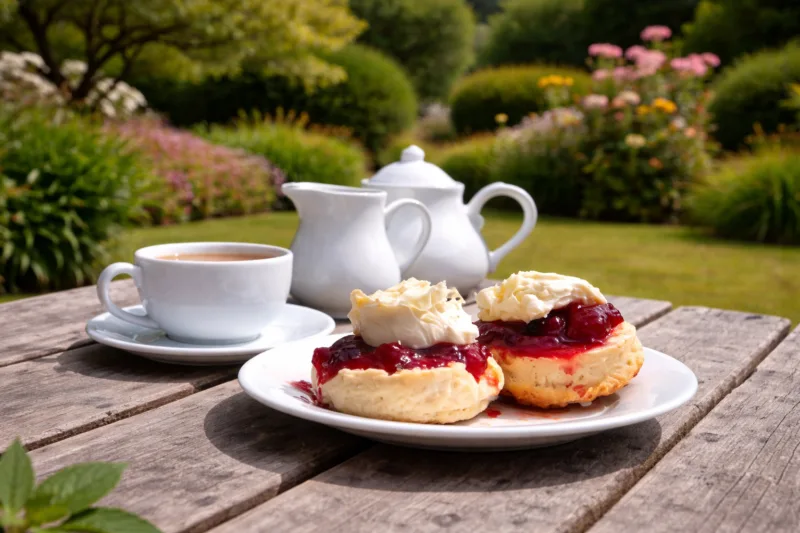
At its simplest, a cream tea in Cornwall is scones, jam, Cornish clotted cream, and tea. Usually that means one or two scones per person, served with enough jam and cream to feel generous rather than meanly rationed.
It is sweeter and richer than some people expect. Clotted cream has real weight to it, so if you order one when you are already full, it can feel like too much very quickly.
And in Cornwall, there is a right order. It is jam first, then clotted cream on top. That is the Cornish way.
What makes a good cream tea in Cornwall
A good cream tea is not just about getting fed. It depends on the ingredients being right.
The cream should be proper Cornish clotted cream. Rodda’s is the name most people will recognise, and plenty of places use it. You may also come across other Cornish dairies. What matters is that the cream is local, thick, rich, and served generously enough to do the job properly.
The jam matters too, though in a quieter way. Strawberry is still the standard one I would expect, but the real test is whether it tastes of fruit rather than just sugar. A decent local jam lifts the whole thing. A flat, overly sweet one makes even a good scone feel ordinary.
Then there is the scone, which is where you can tell very quickly whether the place takes the whole thing seriously. Plain and fruit scones are the standard options, with fruit usually meaning sultana. I would take a fresh plain scone or a lightly fruited one over an oversized dry one every time. Bigger is not better if the texture is wrong. What you want is a scone that is soft in the middle, not crumbly, and still a little warm if you are lucky.
What a cream tea in Cornwall feels like in real life
When a cream tea works, it feels like a pause rather than an event. You stop moving for a bit, sit down properly, and let the day slow down.
That is why it suits Cornwall so well. So many days out here already have a natural lull in them: after a beach morning, after a walk on the coast path, after a garden visit, after a wander round a harbour or town. If you have spent the morning in sea air, or come in with a bit of wind still on you after a cliff walk, a cream tea can feel exactly right. It lands better then than it ever does as a random extra in the middle of an already overfed day.
The good versions feel unhurried. The tea comes in a proper pot, the scones feel fresh rather than bought in, and the table does not feel like it is needed back in twenty minutes. The weak versions feel tourist-led: a dry scone, a token portion of cream, little plastic jam tubs, and the sense that you are being moved through rather than looked after.
How to order one without overthinking it
Most places keep it simple. You will usually just see “cream tea” on the menu, sometimes with a choice of one or two scones, and sometimes with the option to add cake or turn it into more of an afternoon tea.
You do not need to make a fuss over it. A simple rule of thumb is:
- One each if you are reasonably hungry
- Share one if you have already eaten or just want a taste
Tea is the standard drink, for obvious reasons, but yes, you can usually have coffee instead. Most cafés and tearooms will offer that without any fuss. I would treat it as a practical swap rather than the classic version. Tea suits the pace of the thing better and cuts through the richness properly, but if you prefer coffee, order coffee.
If there is a choice of scone, I usually go plain unless I know the fruit scones are especially good. A fresh plain scone lets the cream and jam do the work.
When to have a cream tea in Cornwall
Mid-afternoon is usually best. Not straight after lunch, and not so late that it blunts dinner. Somewhere in that middle stretch of the day, when you have already done something and want a proper break, is where it works.
It tends to fit best:
- after a coastal walk
- after a beach morning
- during or after a garden visit
- on a wet or grey day when you want somewhere warm to stop without committing to another full meal
I think of cream tea as a bridge in the day. It gives you a chance to reset before driving on, heading back to where you are staying, or going out again later.
When I would skip it
There are plenty of times when I would not bother.
If I had already had a full lunch, I would leave it. A cream tea too soon after eating is just excess, and you do not enjoy it properly.
If I had dinner booked a couple of hours later, I would probably leave it then as well. It spoils your appetite in a way that makes the evening meal feel slightly wasted.
On very hot days, I am less interested in it. Clotted cream is rich, and there are days when something colder and lighter is simply the better choice.
I would also be wary of the busiest tourist-centre cafés at peak times in summer. That is where you are most likely to pay strong money for something average, eaten at a pace that does not suit it.
What makes one feel worth the money
The difference between a good cream tea in Cornwall and a forgettable one is obvious the moment it lands on the table.
What I look for is fairly simple:
- fresh scones, ideally still slightly warm
- proper Cornish clotted cream
- enough cream to be generous
- jam that tastes of fruit
- a setting where you can actually sit and enjoy it
If the scones are dry or clearly made earlier and left sitting, the whole plate starts to feel poor value straight away.
The cream should be proper Cornish clotted cream, and there should be enough of it. A token spoonful ruins the balance. You should not be scraping at the last edge of it halfway through the first scone.
The jam should taste of fruit. It does not need to be fancy, but it should not just be there for sweetness and colour.
Then there is the setting. Somewhere with room to sit, a bit of calm, maybe a garden or a decent view, always makes it feel more worth having. You are paying for the pause as much as the plate.
Where a cream tea in Cornwall usually works best
You do not need the most famous place in Cornwall to have a good cream tea. In fact, I would often avoid the most obvious names unless I was going at a quiet time.
Garden cafés and rural tearooms are usually the safest bet. They are set up for exactly this kind of stop. The pace is slower, the surroundings do half the work, and the whole thing feels less like a production line.
Farm shops with cafés can be good too. They often care more about ingredients than image, which is exactly what a cream tea needs.
Harbour cafés and town-centre spots are more mixed. Some are excellent, but a lot depend heavily on passing trade, and you can feel that. The location may be strong, but the cream tea itself can be fairly average.
Hotel lounges and more formal tea rooms can work if you want a polished version, but you are often paying for the setting as much as the food.
A few places I would point people towards
If someone wanted named suggestions, I would match them to the kind of day they were already having rather than send them chasing the most famous name.
- Rosemergy, near Morvah in West Penwith if you want an old-fashioned rural stop in the middle of a drive or walk-heavy day
- The Peacock Café at Pencarrow, near Bodmin if you are already building the day around a house-and-gardens visit
- Charlotte’s Teahouse in Truro if you want a proper town tea-room stop rather than a generic café break
I would still choose by timing and setting before anything else.
My rule of thumb
I treat a cream tea as something that should improve the day, not interrupt it.
I want it after I have done something, when I have time to sit, when I am actually hungry enough to enjoy it, and when the setting makes sense for a pause. That is the version worth having.
I would not force one in just because I was in Cornwall and felt I should. There is nothing more disappointing than a mediocre cream tea taken at the wrong time in the wrong place. Better to leave it than to have a forgettable one.
If I were advising a friend, I would say this:
- have one mid-afternoon
- choose somewhere relaxed rather than overly obvious
- make sure the cream is properly Cornish
- pay as much attention to the scone as you do to the view
Get those things right, and it usually earns its place.
FAQ
Is there a right way to build a scone in Cornwall?
Yes. In Cornwall, it is jam first, then clotted cream on top.
Can you have coffee instead of tea?
Yes. Most places will offer it. Tea is the traditional choice, but coffee is a normal swap.
What is usually included in a cream tea in Cornwall?
Usually a pot of tea, one or two scones, jam, and Cornish clotted cream.
Does the cream need to be Cornish?
For me, yes. That is a big part of what makes it a proper Cornish cream tea.
What kind of jam is usually served?
Usually strawberry. The better versions taste properly fruity rather than just sweet.
What types of scones are common?
Plain and fruit are the standard choices. Fruit usually means sultana.
Is a cream tea enough for lunch?
It can be, especially if you have it later in the day or you are not very hungry. But it is still a sweet stop rather than a balanced meal.
Do I need to book?
Often no, but it depends on the place. More formal afternoon tea versions sometimes need booking, while standard café cream teas are often more flexible. If timing matters, check ahead.
When is the best time to have one?
Mid-afternoon is usually best. That is when it feels like a proper break rather than an ill-timed extra meal.