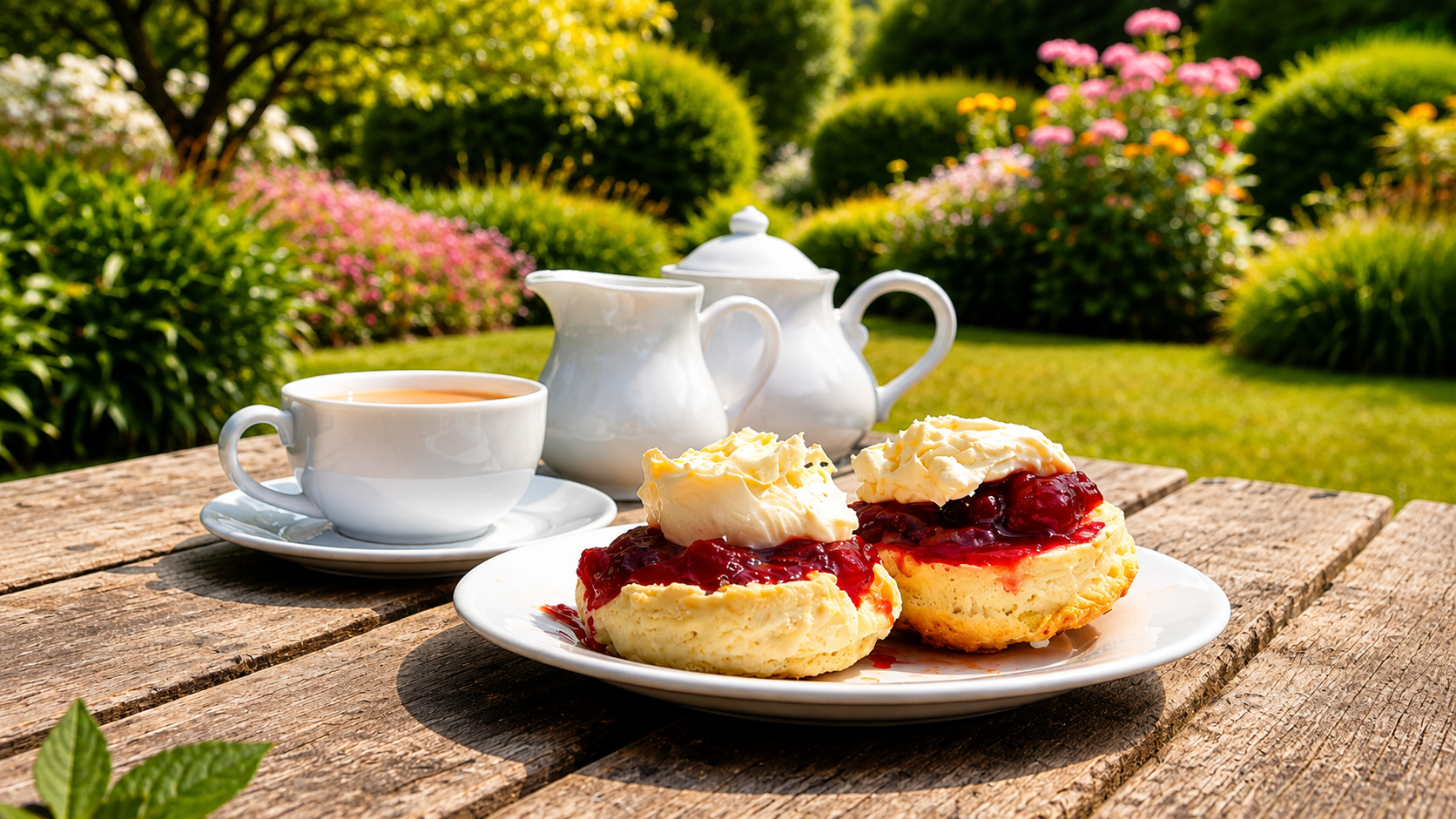
A classic Cornish cream tea served jam first with clotted cream and tea.
Cornish Cream Tea: Jam First, Proper Cream, No Fuss
A Cornish cream tea should be simple: a decent scone, strawberry jam, Cornish clotted cream and a pot of tea. No tower of cakes. No overworked presentation. No long explanation before you eat it.
That simplicity is why it is so easy to judge. If the scone is dry, you know. If the cream is mean, you know. If the whole thing has been dressed up for tourists but the basics are weak, you know that too.
For me, the best Cornish cream tea is fresh, generous and done in the right order: jam first, cream second.
A Cornish cream tea is not meant to be fancy. It is meant to be done properly.
Quick answer: what is a Cornish cream tea?
A Cornish cream tea is usually made up of:
- A split scone
- Strawberry jam
- Cornish clotted cream
- A pot of tea
The Cornish method is jam first, then clotted cream on top. That is the bit people argue about, but the real test is whether the whole plate feels fresh, balanced and properly Cornish.
What makes it Cornish?
The cream matters most.
Cornish clotted cream is thick, rich and spoonable. It is not whipped cream, pouring cream or a soft substitute. It should have enough body to sit on the jam rather than disappearing into the scone.
That is where the cream tea earns its Cornish identity. Cornish clotted cream has protected status, which ties the name to Cornwall and to the way the cream is produced. This is not just a regional flourish. The place is part of the food.
A good café or tearoom does not need to turn that into a lecture. It just needs to use the proper cream and serve it well.
Jam first or cream first?
In Cornwall, the jam goes on first. The clotted cream goes on top.
Devon does it the other way round, with cream first and jam second. That is their argument to have. If I am having a Cornish cream tea, I want it the Cornish way.
There is practical sense behind it too. Jam spreads cleanly across the scone. Clotted cream works better as the top layer because it is thick, rich and closer to a finish than a base. Treating clotted cream like butter misses the point.
The order is simple:
- Split the scone.
- Spread the jam.
- Add the clotted cream.
- Eat it before it turns into a landslide.
That is all the ceremony it needs.
Cornish cream tea vs Devon cream tea
The main difference between a Cornish cream tea and a Devon cream tea is the order of the toppings.
Cornish cream tea: jam first, cream second.
Devon cream tea: cream first, jam second.
The ingredients are broadly the same: scones, jam, clotted cream and tea. The argument is about method, pride and local identity.
I am not going to pretend the order changes the laws of food, but local customs matter. They are part of what makes a place feel like itself. If you are in Cornwall, jam first is the standard.
What makes a good Cornish cream tea?
A cream tea is simple enough that small weaknesses stand out quickly.
The scone should feel fresh. Warm is good, but freshness matters more. A warm dry scone is still a dry scone.
The jam should bring sharpness. Strawberry is the classic because it gives fruit and sweetness without fighting the cream.
The cream should be generous. Not ridiculous, not piled up for a photo, but enough that you are not rationing it across both halves of the scone.
The tea should have enough backbone. Weak tea makes the whole thing feel unfinished.
The plate should not be overdesigned. I do not need edible flowers, novelty sauces, slate boards or extra fuss. The classic is strong enough when the basics are right.
Where cream teas go wrong
The worst cream teas usually fail in boring ways.
The scone is dry. The cream portion is stingy. The jam tastes flat. The tea is an afterthought. Or the presentation is doing more work than the food.
That is the bit I’d be ruthless about. A Cornish cream tea is not hard to understand, so there is no excuse for making it feel careless.
The biggest warning sign is when the extras are louder than the essentials. If the menu is shouting about the view, the décor or the “experience”, I still want to know one thing first: is the scone any good?
Cream tea vs afternoon tea
A cream tea and afternoon tea are not the same thing.
A cream tea is the focused version: scone, jam, clotted cream and tea.
An afternoon tea is the bigger spread: usually sandwiches, cakes, pastries and scones, often in a more formal setting.
Both can be good, but they are different moods. If I want the full occasion, afternoon tea makes sense. If I want something more Cornish, more direct and easier to judge honestly, I’d choose a cream tea.
Afternoon tea can hide behind variety. A cream tea cannot. It lives or dies on the scone, jam, cream and tea.
When I’d choose a cream tea in Cornwall
A cream tea works best as a pause in the day rather than the whole plan.
It fits after a coastal walk, halfway through a slow afternoon, after a wander around a harbour town, or when the weather has pushed you indoors and you want something properly Cornish without committing to a full meal.
That is why it suits Cornwall so well. It can sit neatly inside a day out and make that day better.
I would not treat every cream tea as equal, though. Some places serve them because visitors expect them. Better places serve them because they understand the tradition and care enough to get the small details right.
FAQs about Cornish cream tea
What goes first on a Cornish cream tea?
Jam goes first, then Cornish clotted cream on top. That is the Cornish way.
What is the difference between Cornish and Devon cream tea?
A Cornish cream tea is served jam first, then cream. A Devon cream tea is usually served cream first, then jam.
Is a cream tea the same as afternoon tea?
No. A cream tea is usually scones, jam, clotted cream and tea. Afternoon tea is a larger spread with sandwiches, cakes, pastries and often scones as part of it.
Does a Cornish cream tea have to use Cornish clotted cream?
For me, yes. If it is being sold as a Cornish cream tea, proper Cornish clotted cream is the ingredient that gives it real place and meaning.
What jam is used in a Cornish cream tea?
Strawberry jam is the classic choice. It works because the fruit and sweetness balance the richness of the clotted cream.
Final verdict
A Cornish cream tea should not be complicated.
The strong version is fresh, generous and properly Cornish. It uses real Cornish clotted cream, respects the jam-first order, and trusts the classic instead of smothering it with gimmicks.
If I’m choosing one, I want the basics done well: jam first, proper cream, a good scone and tea with enough backbone.
That is the standard.