
Details
Address & Contact
Falmouth
Cornwall
TR11 4NE
United Kingdom
Sorry, no records were found. Please adjust your search criteria and try again.
Sorry, unable to load the Maps API.
Castle Beach Falmouth Guide: Rockpooling, Parking, Dogs and Café
Castle Beach Falmouth is the beach I’d choose for a light, tide-aware visit: rockpools at low tide, a sea-view coffee, a careful swim in calm conditions, or a stop while walking around Pendennis. I would not choose it for a big sandy beach day where everything needs to be easy.
That is not a criticism. It is the shape of the place. Castle Beach has charm, but it does not suit every trip. The tide has a real say, the rocks give it character, and the practical set-up is more modest than at Falmouth’s bigger beaches.
Castle Beach is not Falmouth’s easiest beach, but it is a good one when the plan is light and the tide is on your side.
Castle Beach Falmouth at a glance
Best for:
- low-tide rockpooling
- a short beach stop near Pendennis
- a café visit with a sea view
- snorkelling or swimming in calm conditions
- a quieter alternative to Falmouth’s busier beach scene
Less good for:
- lifeguarded swimming
- a full family beach day with lots of kit
- guaranteed sand all afternoon
- easy dedicated parking
- visitors who need a very straightforward beach set-up
Key practical details:
- Lifeguards: no lifeguard service
- Parking: no dedicated beach car park
- Food and drink: Castle Beach Café opens seasonally from Easter to September
- Dogs: summer daytime restriction currently applies from 1 July to 31 August, 10am to 6pm
- Tide: lower tide gives you more beach and better rockpooling
What Castle Beach is actually like
Castle Beach sits at the northern end of Falmouth’s beaches, below the Pendennis side of town. It feels different from Gyllyngvase, which is broader, sandier and more obviously built for a classic beach day. Castle is smaller, rockier and more changeable.
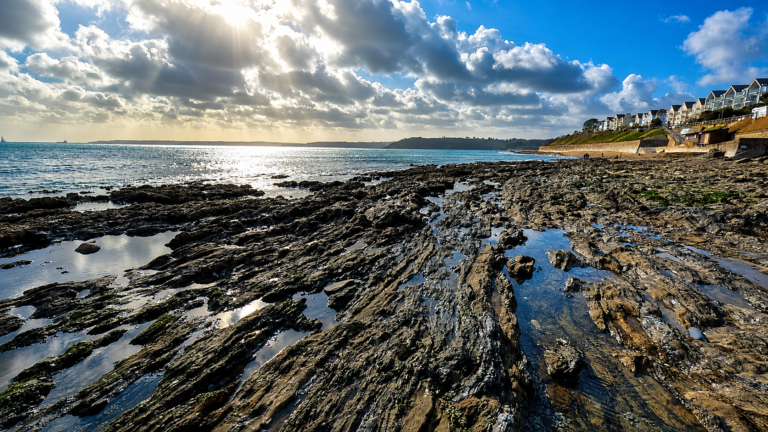
At low tide, the beach opens up into the thing it does best: rockpools, shingle, exposed rocky shelves and pockets of sand. Walk away from the Pendennis Point end and the beach softens, eventually joining Tunnel Beach when the tide is out. That stretch gives you more to explore than a plain strip of sand, especially if you like a beach with edges and detail.
At high tide, much of Castle Beach can be covered. That single fact should shape how you use it. I would not arrive here with windbreaks, chairs, beach games and a plan to stay put all day unless I had timed it carefully. This is a beach that rewards a bit of judgement.
Is Castle Beach good for rockpooling?
Rockpooling is the strongest reason to choose Castle Beach. The rocky sections are not an afterthought; they are the character of the place. At low tide, there is enough exposed shoreline to keep children, curious adults and anyone with a patient eye occupied.
It is a good beach for slowing down. You are not marching across acres of sand to claim a patch. You are looking into pools, stepping carefully over weeded rocks, watching the tide line and taking the place as it comes.
For families, that can be more memorable than a simpler sandy beach, but it does require the right sort of children and the right sort of adult patience. A group wanting flat sand, easy paddling and lots of room to spread out will probably be happier at Gyllyngvase or Maenporth.
Can you swim or snorkel at Castle Beach?
Castle Beach can be lovely for a swim or snorkel when the sea is calm, but I would not treat it casually. There is no lifeguard service at Castle Beach, and the rocky nature of the shore makes conditions and confidence matter.
That does not make it unsuitable. It means the beach is better for people who can read the day in front of them rather than relying on the place to do the work. On a settled morning, it can feel inviting. In rougher conditions, or with anyone unsure in the water, I’d head elsewhere.
For a more managed Falmouth swim, Gyllyngvase is the obvious comparison. It has seasonal RNLI lifeguard cover, a wider sandy beach and more of the infrastructure people often expect from a main resort beach.
Castle Beach Café
Castle Beach Café is a big reason the beach works so well as a shorter stop. It serves hot and cold drinks, ice creams, pasties, paninis, sandwiches and light meals, with a sundeck, tables and chairs. The shop also sells beach basics such as balls, buckets and spades.
That makes the visit less brittle. If the tide is too high for much beach time, you can still sit with a drink and a view. If the rockpooling goes well, the café gives you an easy place to regroup. If you are walking around Pendennis, it turns Castle Beach into a natural pause rather than a separate outing.
The café is seasonal, opening from Easter to September, so I would not build a winter walk around finding it open.
Castle Beach parking and public transport
Castle Beach is close enough to central Falmouth to work well without a car. The Maritime Line connects Falmouth with Truro, and both Falmouth Docks and Falmouth Town stations put you within a short walk of the beaches along Castle Drive.
Driving is less tidy. Castle Beach does not have its own dedicated car park. There is road parking nearby, and the nearest car park is along Pendennis Point, but this is not the kind of beach where you can bank on unloading beside the sand.
That makes a difference. With a towel, a bottle of water and a loose plan, it is fine. With a car full of beach kit and children already asking how far it is, Gyllyngvase, Swanpool or Maenporth may suit the day better.
Are dogs allowed on Castle Beach Falmouth?
Castle Beach is currently listed under Cornwall Council’s summer daytime dog restriction: dogs are prohibited from 1 July to 31 August, 10am to 6pm.
Outside that restriction, it can be a useful beach for dog walkers, especially as part of a broader Pendennis-side walk. During the restricted summer window, do not treat it as an all-day dog beach. The timing is the difference between a workable plan and a frustrating one.
Castle Beach compared with other Falmouth beaches
Castle Beach should not be judged as a weaker version of Gyllyngvase. It is doing something else.
Choose Gyllyngvase for a bigger sandy beach, seasonal lifeguard cover, easier facilities and the most straightforward Falmouth beach day.
Choose Swanpool for a more activity-led visit, watersports and a different family feel.
Choose Maenporth when you want a sandy cove outside the centre of town and more space to settle into the day.
Choose Castle Beach when you want rockpools, a shorter stop, a café above the shore and a beach that still feels shaped by the tide rather than polished flat for convenience.
A good way to use Castle Beach
The best Castle Beach plan is simple: arrive light, aim for lower tide, and link it with the Pendennis side of Falmouth.
I’d use it like this: start with a walk around Pendennis Point or along Castle Drive, drop down to the beach for rockpooling or a sea-air pause, then use the café if it is open. That gives Castle Beach room to be itself rather than asking it to compete with Falmouth’s larger beaches.
Used that way, it is a rewarding little beach: rocky, useful, scenic and close to town without feeling quite as obvious as the main Falmouth favourites.
Castle Beach Falmouth FAQ
Is Castle Beach Falmouth sandy?
Castle Beach has some sand, especially away from the Pendennis Point end and at lower tide, but it is not a broad sandy beach in the same way as Gyllyngvase. Expect rocks, shingle, rockpools and tide-dependent patches of sand.
Does Castle Beach have lifeguards?
No. Castle Beach does not have a lifeguard service. For a Falmouth beach with seasonal RNLI lifeguard cover, Gyllyngvase is the better option.
Is Castle Beach good for families?
It can be good for families who want rockpooling and a shorter visit. It is less suited to families wanting lots of sand, lifeguards, easy parking and a full day with plenty of kit.
Is there parking at Castle Beach?
There is no dedicated Castle Beach car park. Nearby road parking may be available, and the nearest car park is along Pendennis Point.
When is the best time to visit Castle Beach?
Lower tide is best for rockpooling and seeing more of the beach. High tide can cover much of the shore, so the visit feels very different depending on the tide.
Castle Beach Falmouth Guide: Rockpooling, Parking, Dogs and Café
Castle Beach Falmouth is the beach I’d choose for a light, tide-aware visit: rockpools at low tide, a sea-view coffee, a careful swim in calm conditions, or a stop while walking around Pendennis. I would not choose it for a big sandy beach day where everything needs to be easy.
That is not a criticism. It is the shape of the place. Castle Beach has charm, but it does not suit every trip. The tide has a real say, the rocks give it character, and the practical set-up is more modest than at Falmouth’s bigger beaches.
Castle Beach is not Falmouth’s easiest beach, but it is a good one when the plan is light and the tide is on your side.
Castle Beach Falmouth at a glance
Best for:
- low-tide rockpooling
- a short beach stop near Pendennis
- a café visit with a sea view
- snorkelling or swimming in calm conditions
- a quieter alternative to Falmouth’s busier beach scene
Less good for:
- lifeguarded swimming
- a full family beach day with lots of kit
- guaranteed sand all afternoon
- easy dedicated parking
- visitors who need a very straightforward beach set-up
Key practical details:
- Lifeguards: no lifeguard service
- Parking: no dedicated beach car park
- Food and drink: Castle Beach Café opens seasonally from Easter to September
- Dogs: summer daytime restriction currently applies from 1 July to 31 August, 10am to 6pm
- Tide: lower tide gives you more beach and better rockpooling
What Castle Beach is actually like
Castle Beach sits at the northern end of Falmouth’s beaches, below the Pendennis side of town. It feels different from Gyllyngvase, which is broader, sandier and more obviously built for a classic beach day. Castle is smaller, rockier and more changeable.
At low tide, the beach opens up into the thing it does best: rockpools, shingle, exposed rocky shelves and pockets of sand. Walk away from the Pendennis Point end and the beach softens, eventually joining Tunnel Beach when the tide is out. That stretch gives you more to explore than a plain strip of sand, especially if you like a beach with edges and detail.
At high tide, much of Castle Beach can be covered. That single fact should shape how you use it. I would not arrive here with windbreaks, chairs, beach games and a plan to stay put all day unless I had timed it carefully. This is a beach that rewards a bit of judgement.
Is Castle Beach good for rockpooling?
Rockpooling is the strongest reason to choose Castle Beach. The rocky sections are not an afterthought; they are the character of the place. At low tide, there is enough exposed shoreline to keep children, curious adults and anyone with a patient eye occupied.
It is a good beach for slowing down. You are not marching across acres of sand to claim a patch. You are looking into pools, stepping carefully over weeded rocks, watching the tide line and taking the place as it comes.
For families, that can be more memorable than a simpler sandy beach, but it does require the right sort of children and the right sort of adult patience. A group wanting flat sand, easy paddling and lots of room to spread out will probably be happier at Gyllyngvase or Maenporth.
Can you swim or snorkel at Castle Beach?
Castle Beach can be lovely for a swim or snorkel when the sea is calm, but I would not treat it casually. There is no lifeguard service at Castle Beach, and the rocky nature of the shore makes conditions and confidence matter.
That does not make it unsuitable. It means the beach is better for people who can read the day in front of them rather than relying on the place to do the work. On a settled morning, it can feel inviting. In rougher conditions, or with anyone unsure in the water, I’d head elsewhere.
For a more managed Falmouth swim, Gyllyngvase is the obvious comparison. It has seasonal RNLI lifeguard cover, a wider sandy beach and more of the infrastructure people often expect from a main resort beach.
Castle Beach Café
Castle Beach Café is a big reason the beach works so well as a shorter stop. It serves hot and cold drinks, ice creams, pasties, paninis, sandwiches and light meals, with a sundeck, tables and chairs. The shop also sells beach basics such as balls, buckets and spades.
That makes the visit less brittle. If the tide is too high for much beach time, you can still sit with a drink and a view. If the rockpooling goes well, the café gives you an easy place to regroup. If you are walking around Pendennis, it turns Castle Beach into a natural pause rather than a separate outing.
The café is seasonal, opening from Easter to September, so I would not build a winter walk around finding it open.
Castle Beach parking and public transport
Castle Beach is close enough to central Falmouth to work well without a car. The Maritime Line connects Falmouth with Truro, and both Falmouth Docks and Falmouth Town stations put you within a short walk of the beaches along Castle Drive.
Driving is less tidy. Castle Beach does not have its own dedicated car park. There is road parking nearby, and the nearest car park is along Pendennis Point, but this is not the kind of beach where you can bank on unloading beside the sand.
That makes a difference. With a towel, a bottle of water and a loose plan, it is fine. With a car full of beach kit and children already asking how far it is, Gyllyngvase, Swanpool or Maenporth may suit the day better.
Are dogs allowed on Castle Beach Falmouth?
Castle Beach is currently listed under Cornwall Council’s summer daytime dog restriction: dogs are prohibited from 1 July to 31 August, 10am to 6pm.
Outside that restriction, it can be a useful beach for dog walkers, especially as part of a broader Pendennis-side walk. During the restricted summer window, do not treat it as an all-day dog beach. The timing is the difference between a workable plan and a frustrating one.
Castle Beach compared with other Falmouth beaches
Castle Beach should not be judged as a weaker version of Gyllyngvase. It is doing something else.
Choose Gyllyngvase for a bigger sandy beach, seasonal lifeguard cover, easier facilities and the most straightforward Falmouth beach day.
Choose Swanpool for a more activity-led visit, watersports and a different family feel.
Choose Maenporth when you want a sandy cove outside the centre of town and more space to settle into the day.
Choose Castle Beach when you want rockpools, a shorter stop, a café above the shore and a beach that still feels shaped by the tide rather than polished flat for convenience.
A good way to use Castle Beach
The best Castle Beach plan is simple: arrive light, aim for lower tide, and link it with the Pendennis side of Falmouth.
I’d use it like this: start with a walk around Pendennis Point or along Castle Drive, drop down to the beach for rockpooling or a sea-air pause, then use the café if it is open. That gives Castle Beach room to be itself rather than asking it to compete with Falmouth’s larger beaches.
Used that way, it is a rewarding little beach: rocky, useful, scenic and close to town without feeling quite as obvious as the main Falmouth favourites.
Castle Beach Falmouth FAQ
Is Castle Beach Falmouth sandy?
Castle Beach has some sand, especially away from the Pendennis Point end and at lower tide, but it is not a broad sandy beach in the same way as Gyllyngvase. Expect rocks, shingle, rockpools and tide-dependent patches of sand.
Does Castle Beach have lifeguards?
No. Castle Beach does not have a lifeguard service. For a Falmouth beach with seasonal RNLI lifeguard cover, Gyllyngvase is the better option.
Is Castle Beach good for families?
It can be good for families who want rockpooling and a shorter visit. It is less suited to families wanting lots of sand, lifeguards, easy parking and a full day with plenty of kit.
Is there parking at Castle Beach?
There is no dedicated Castle Beach car park. Nearby road parking may be available, and the nearest car park is along Pendennis Point.
When is the best time to visit Castle Beach?
Lower tide is best for rockpooling and seeing more of the beach. High tide can cover much of the shore, so the visit feels very different depending on the tide.
Contact & Details
Falmouth
Cornwall
TR11 4NE
United Kingdom
Sorry, no records were found. Please adjust your search criteria and try again.
Sorry, unable to load the Maps API.