
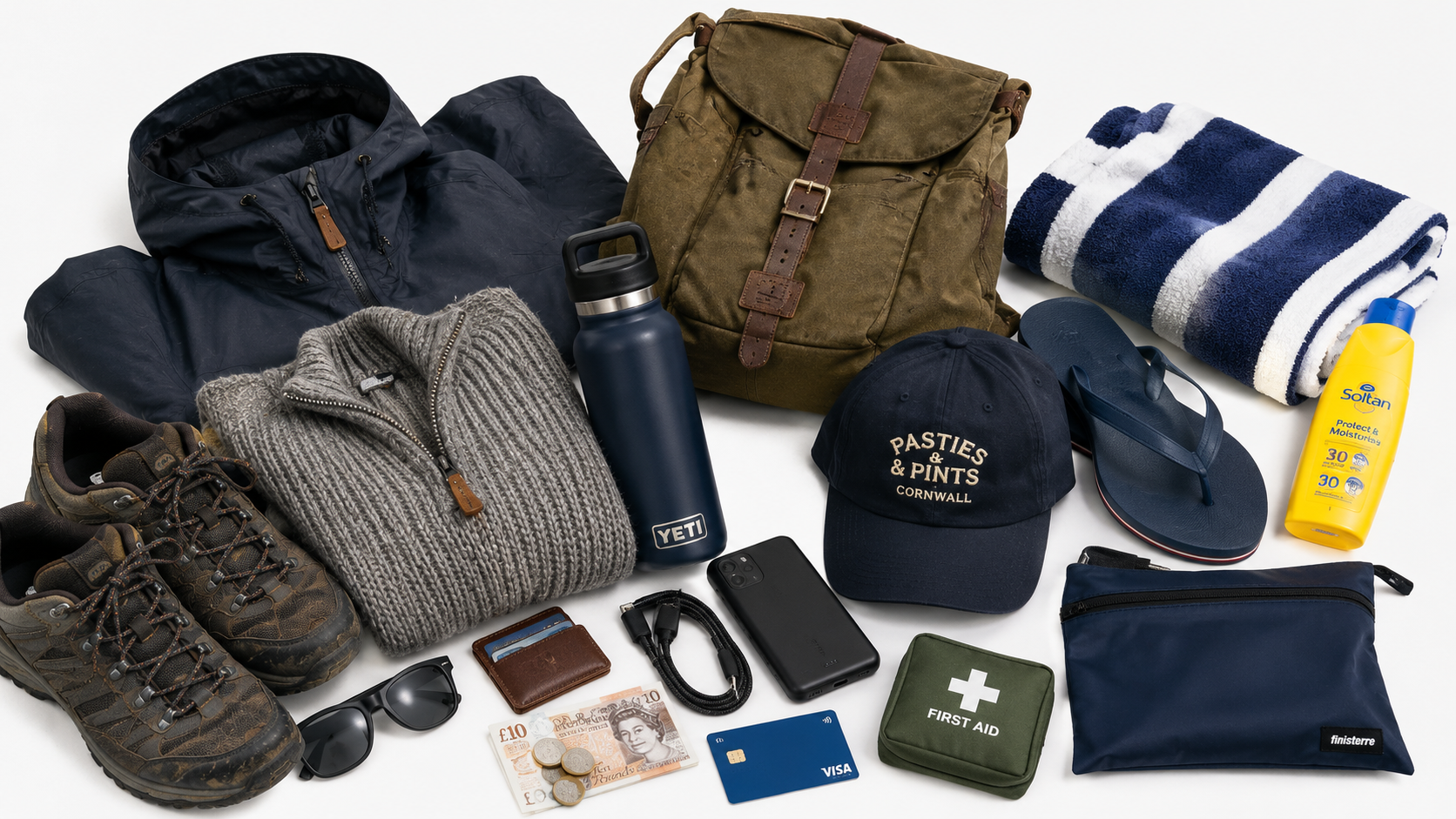
Practical packing essentials for Cornwall’s changeable weather, coast paths, beaches and pub stops.
What To Pack For A Week In Cornwall
Packing for Cornwall is not the same as packing for a guaranteed beach holiday.
You might get blue skies, warm sand, and calm evenings. You might also get sideways rain, thick mist, muddy lanes, sudden wind, and a car park machine that decides to make your day difficult. Sometimes you get all of that before lunch.
For most visitors, the essentials are simple: layers, a proper waterproof, grippy shoes, beach basics, a warm jumper, reusable water bottle, power bank, parking apps, a bank card, a little cash, and clothes that can survive sand, salt, mud, and pub gardens.
This is a practical Cornwall packing list for people who want to enjoy the place properly: coast paths, rain, wind, beaches, pubs, narrow lanes, local shops, dogs, kids, and everything in between.
Quick Cornwall Packing List
For a week in Cornwall, pack:
Clothing
Waterproof jacket
Warm jumper or fleece
T-shirts and long-sleeve tops
Jeans or casual trousers
Shorts or lighter trousers
One smart-casual outfit if needed
Shoes
Comfortable walking shoes or grippy trainers
Sandals, sliders, or flip-flops
Beach
Swimwear
Beach towel
Sun cream
Sunglasses
Hat
Practical
Small backpack
Reusable water bottle
Phone charger
Car charger
Power bank
Parking apps
Bank card
Small amount of cash
Wet bag or spare bag for sandy clothes
Extras
Dog kit if relevant
Family kit if relevant
That is the simple version. The detail matters because Cornwall is changeable, and packing badly can turn a good day into an awkward one.
The One-Bag Day Out Kit
Once you are here, the easiest habit is to keep one small day bag ready.
For most Cornwall days out, pack:
Waterproof jacket
Warm layer
Reusable water bottle
Snack
Sun cream
Phone power bank
Bank card and a little cash
Swimwear or small towel if you might end up near the sea
Wet bag or spare carrier bag for sandy or damp clothes
Dog bowl, poo bags, or child’s spare layer if relevant
That bag will cover most situations: a sunny beach stop, a wet walk, a chilly harbour, a pub garden, a delayed car park faff, or an unplanned detour.
Cornwall rewards flexible people. The best days are often the ones where you start with one plan and end up somewhere better.
Pack For Four Seasons In One Day
The main rule is simple: do not trust one weather forecast too much.
Cornwall’s weather can change quickly because of the coast, wind, and exposed ground. One side of Cornwall can feel calm and bright while another is grey, damp, and blowing a hoolie.
Even in summer, evenings can turn chilly, especially near the sea. A warm beach afternoon can easily become a cold walk back to the car or a breezy pint outside a pub.
Pack for layers, not extremes.
You want clothes that can handle a warm beach hour, a wet walk, a breezy harbour, and a cosy pub without needing a full outfit change every time.
Clothes To Bring For A Week In Cornwall
Pack practical clothes first and “nice” clothes second.
Bring a waterproof jacket that actually works, not just something that looks outdoorsy. Add a warm jumper or fleece for evenings, boat trips, coastal walks, and pub gardens.
Take T-shirts or lighter tops, plus long sleeves for cooler days. Jeans or casual trousers are useful for pubs, towns, and meals out. Shorts or lighter trousers are worth bringing in warmer months.
Also pack something you do not mind getting muddy. This is especially useful if you are walking, staying rural, visiting farms, exploring lanes, or bringing a dog.
Do not pack like you are going to Marbella for seven days. Cornwall has beaches, yes, but it is still Cornwall. You can be sunburnt and cold in the same afternoon.
Shoes For Cornwall
Shoes are one of the things visitors get wrong.
Cornwall has coast paths, steep streets, muddy lanes, wet rocks, uneven car parks, beaches, harbours, fields, and old village lanes. If you plan to explore properly, you need something with grip.
For most trips, bring comfortable walking shoes or grippy trainers. If you are planning proper coastal walks, bring walking boots or stronger walking shoes.
Bring sandals, sliders, or flip-flops for beach days, campsites, showers, and quick trips outside.
Clean white fashion trainers are fine for a town stroll. They are less useful on a wet coast path, a muddy lane, or a slippery harbour edge.
Beach Gear, But Don’t Overdo It
If you are planning beach days, bring the basics, but do not pack half a beach shop.
You will want swimwear, a beach towel, sun cream, sunglasses, a hat, and a decent beach bag. Even when the air feels cool, the sun can still catch you, especially if you are walking, surfing, paddling, or sitting on the beach longer than planned.
A picnic blanket or beach mat is useful. A windbreak can be worth bringing if you have space, especially for family beach days. Cornwall’s beaches can be breezy even when the weather looks calm.
For swimming, bodyboarding, surfing, paddleboarding, or anything further out, be sensible. Bring the right kit, check conditions, and use lifeguarded beaches where possible. The RNLI advises swimming and bodyboarding between the red-and-yellow flags on lifeguarded beaches, and says a red flag means dangerous conditions: do not enter the water.
Walking And Coast Path Kit
Even if you are not coming for a walking holiday, you will probably walk more than expected.
Cornwall is full of places where the best view, beach, pub, harbour, or cove involves a slope, a narrow path, or uneven ground.
Bring a small backpack for water, snacks, layers, sun cream, and a waterproof. A reusable water bottle is essential. You will save money, reduce waste, and avoid buying plastic bottles every time someone gets thirsty.
A power bank is also worth packing if you use your phone for maps, parking apps, photos, tide checks, and restaurant bookings.
Cornwall has plenty of areas where signal is patchy, so download maps or save directions before heading somewhere remote.
Rainy Day Kit
You do not need to fear the rain. You just need to be ready for it.
Pack a proper waterproof jacket, a spare pair of shoes if possible, and a bag for wet clothes or sandy towels.
A small umbrella can be useful in towns, but coastal wind can make umbrellas fairly pointless in some places.
Save a few indoor backup ideas before you travel. Good rainy-day options include cafés, pubs, farm shops, museums, galleries, local shops, markets, breweries, cider farms, and food stops.
Rain does not ruin a Cornwall trip. Sometimes it improves it. A wet walk followed by a good pub, a pasty, a farm shop stop, or a harbour in moody weather can be just as memorable as a beach day.
The mistake is arriving with only beach clothes and then acting shocked when Cornwall behaves like Cornwall.
Things To Download Before You Arrive
A bit of phone preparation will save you hassle.
Before you arrive, download or save:
Offline maps for the area you are staying in
Parking apps you are likely to need
A tide app or tide times website
A reliable weather app
Restaurant, pub, or activity booking details
Beach safety information
Accommodation directions
A few rainy-day backup ideas
Screenshots of key addresses or booking references
Do not rely on perfect signal. Some of the best parts of Cornwall are also the places where your phone decides it has had enough.
Parking Apps, Cash And Phone Battery
This is where people get caught out.
Bring a phone charger, a car charger, and a portable power bank. You will probably use your phone for maps, photos, parking, tide times, pub bookings, weather checks, and finding somewhere to eat.
Have a few parking apps ready. Different car parks use different systems, and some are still awkward. You may need apps, coins, contactless, or patience.
Bring a bank card, but also keep a small amount of cash. Most places take card, but cash can still be useful for small rural car parks, charity stalls, honesty boxes, markets, and the odd place where signal or machines are playing up.
Do not assume every village has easy parking. Some places have narrow lanes, limited spaces, residents trying to live their lives, and roads that were not designed for heavy visitor traffic.
Park properly, do not block gateways, and do not treat working villages like theme parks.
Packing For Cornwall In Summer
For summer in Cornwall, add more beach gear, sun cream, hats, sunglasses, and patience.
Traffic can be slower, car parks can fill earlier, and popular places can get busy quickly. Bring water, snacks, spare layers, and a flexible plan.
Even in summer, do not skip the waterproof or warm jumper. You may not need them every day, but when you do, you will be glad they are in the bag.
For families, pack extra towels and spare clothes. Children have a special talent for getting soaked five minutes after you say, “Don’t go in too deep.”
Packing For Cornwall In Winter
Winter Cornwall is underrated, but it needs different packing.
Bring proper waterproofs, warmer layers, grippy shoes or boots, and clothes that can handle rain, mud, wind, and shorter daylight hours.
A torch can be useful if you are staying somewhere rural or walking back from a pub along darker lanes. A flask is not a bad idea either if you are doing coastal walks or storm-watching safely from sensible places.
Winter is also a good time to support pubs, cafés, shops, farm shops, and local businesses that stay open outside the summer rush.
Cornwall is not only a summer product. Pack well, and winter can be one of the best times to see the place properly.
What To Pack If You’re Bringing Children
If you are coming with children, pack for flexibility.
Bring beach clothes, spare clothes, wet wipes, snacks, water bottles, sun hats, waterproofs, layers, and something to keep them occupied if the rain comes in.
Rock pooling shoes or old trainers can be useful on stony beaches, but be careful on slippery rocks. A bucket and spade are easy enough to buy locally if you forget them.
Do not plan every day too tightly. Cornwall travel can take longer than expected, especially in summer. A “quick drive” across Cornwall can become slow because of traffic, tractors, narrow roads, campervans, parking, and everyone else having the same idea.
What To Pack If You’re Bringing A Dog
If you are bringing a dog, check beach rules before you go.
Dog restrictions vary by beach and season. Cornwall Council lists current beach-by-beach restrictions, including many summer restrictions between 10am and 6pm, with dates varying by beach. Cornwall Council also notes that some privately owned beaches may have their own restrictions.
Pack a lead, spare lead, dog towels, water bowl, poo bags, dog food, a blanket for pubs or cafés, and a tick remover.
Something to protect the car from sand and mud is also useful.
Do not assume every beach, pub, café, or accommodation is dog-friendly. Many are, but not all.
Cornwall has livestock, cliffs, narrow paths, nesting birds, busy towns, and working harbours. Keep dogs under control, especially around farms, coast paths, wildlife, and other people.
Cornwall Packing Mistakes Locals See Every Summer
A few mistakes come up again and again.
People bring only beachwear and no warm layers.
They wear clean white trainers on coast paths, wet lanes, or muddy fields.
They forget a waterproof because the forecast looked fine three days ago.
They rely on phone signal for everything, then end up stuck when signal drops in a rural car park, beach valley, or narrow lane.
They arrive at a popular beach at midday and expect easy parking.
They forget a power bank, then use their phone all day for maps, photos, parking, and bookings.
They bring a dog without checking beach rules.
They ignore tides and sea conditions.
They bring a full shop from home and miss the chance to use local shops, cafés, pubs, farm shops, and producers.
None of this is complicated. It is just about remembering that Cornwall is a real place, not a controlled holiday resort.
What Not To Bring To Cornwall
Do not bring too much formal clothing. You probably will not use it.
Do not bring loads of beach-only outfits and no warm layers. That is a classic mistake.
Do not fill the car with a full supermarket shop from home if you can afford to spend some of that money locally.
Do not bring fragile shoes if you are planning to walk, explore villages, visit beaches, or go anywhere near mud.
Do not come expecting Cornwall to behave like a guaranteed beach resort. It is better than that, but it is also more changeable.
Do not bring disposable beach rubbish. Bring reusable bottles, bags, tubs, and take your rubbish home or use proper bins.
What To Buy Locally Instead
You do not need to bring a week’s worth of supermarket shopping from home.
Part of visiting Cornwall properly is spending money locally where you can. Use farm shops, bakeries, fishmongers, village shops, independent cafés, pubs, markets, surf shops, outdoor shops, and local producers.
If you forget basic beach gear, bodyboards, waterproofs, walking socks, dog bits, or picnic supplies, try to buy from a local independent where possible rather than defaulting to a national chain.
It keeps more money in Cornwall and usually gives you a better experience anyway.
Bring a reusable coffee cup if you use one, a refillable water bottle, and a cool bag if you plan to buy local food during days out.
Leave some space in the car for Cornish produce to take home. That might be local cider, beer, biscuits, cheese, preserves, coffee, chocolate, seafood, crafts, books, art, or gifts from independent shops.
Final Advice: Pack For Proper Cornwall
The best Cornwall trips are not the ones where everything goes perfectly. They are the ones where you are ready for whatever the place gives you.
Pack for sun, rain, wind, mud, beach days, pub evenings, coastal walks, narrow lanes, local shops, and a bit of common sense.
Bring less holiday fantasy and more practical kit.
Then spend locally, respect the places you visit, take your rubbish with you, park properly, use independent businesses, and remember that Cornwall is not just a backdrop for a week away.
It is home to people, pubs, farms, fishing communities, shops, villages, language, culture, and working lives.
Come prepared, enjoy it properly, and leave the place better respected than when you arrived.
Proper Cornwall. Properly packed.