
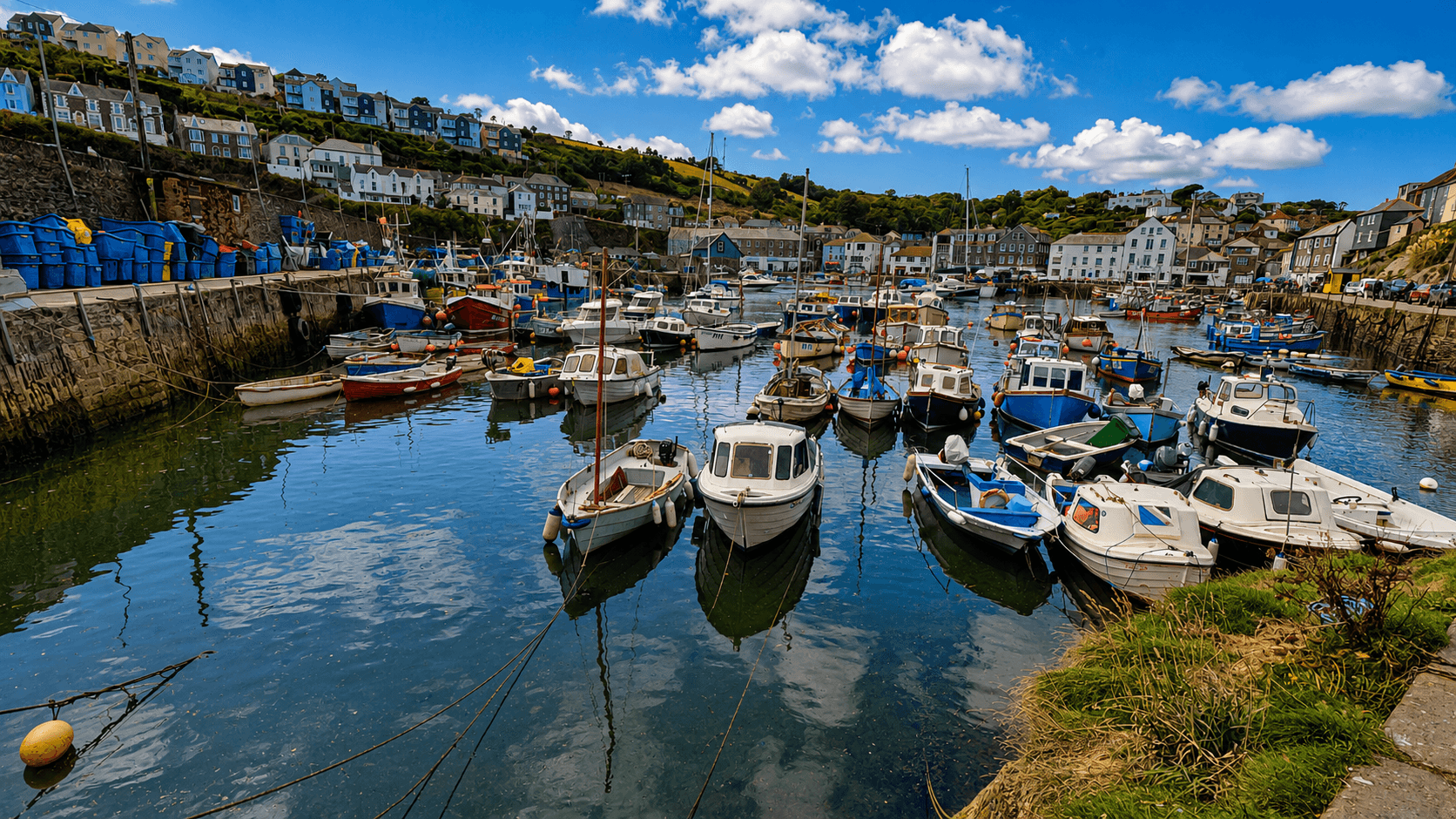
Cornwall is not only worth visiting in summer — some of the best days happen when the crowds thin out.
Best Time To Visit Cornwall: A Cornish View
Ask ten people the best time to visit Cornwall and you’ll probably get ten different answers.
Some will say summer, because the beaches are busy, the ice creams are out, and the sea looks like it belongs on a postcard. Some will say spring, when the lanes are waking up and the crowds have not fully arrived. Others will say September, when the weather can still be kind but Cornwall has taken a breath after the school holiday rush.
Me? I think the best time to visit Cornwall depends on what sort of Cornwall you actually want.
If you want hot beach days, busy harbours, packed pubs, surf lessons, fish and chips by the sea, and that proper holiday feeling, summer is your time.
But if you want the best balance of weather, atmosphere, local food, coastal walks, quieter villages and breathing room, I’d look at September and early October first.
Cornwall is not only worth visiting when the sun is out. Some of the best bits happen when the crowds thin out.
Quick answer: the best time to visit Cornwall
Best overall: September and early October.
Best for families: July and August, with planning.
Best for quieter trips: November to March.
Best for walking: April, May, September and October.
Best for local food and pubs: Spring, autumn and winter.
Best for supporting Cornwall: Outside peak summer.
Best for beach holidays: July and August.
That is the simple answer.
The better answer is this: the best time to visit Cornwall is when you can enjoy it properly, support local places, and understand that Cornwall is more than a holiday backdrop.
The honest Cornish answer
For most respectful visitors, the best time to visit Cornwall is late spring or early autumn.
Winter is excellent too if you want pubs, walks, local food and quieter places rather than guaranteed beach weather.
Summer can be brilliant, but it is also when Cornwall is under the most pressure. Roads are busier, car parks fill up, beaches get crowded, and small villages can feel overwhelmed.
That does not mean “don’t come”.
It means come with your eyes open. Plan properly. Use local businesses. Remember that people live here all year, not just when the sun comes out.
Pasties & Pints is not anti-visitor. The whole point is to help people discover Cornwall properly, support local places, and understand what makes Cornwall worth protecting.
So here’s the Cornish view, season by season.
Visiting Cornwall in spring
Spring is one of the best times to visit Cornwall if you want the place to feel alive without being completely rammed.
The weather can still be mixed, because this is Cornwall and it likes to keep you humble. You might get blue skies and calm sea one day, then sideways rain the next. Bring a coat, don’t trust the forecast too much, and you’ll be alright.
Spring is good for coastal walks, quieter villages, town visits before peak season, pubs with space, cafés without long queues, and seeing the countryside come back to life.
It is also a good time to support local businesses as they come out of the quieter winter stretch. A lot of independent cafés, pubs, shops, farm shops and attractions are getting ready for the year, and visitor spending can make a real difference before the full summer rush arrives.
If you want Cornwall with energy but not chaos, spring is a strong choice.
Visiting Cornwall in summer
Summer is when most people think of Cornwall.
Beaches. Surf. Ice cream. Pasties. Busy harbours. Long evenings. Kids with sandy feet. Car parks full by mid-morning. Queues outside bakeries. Someone trying to reverse a campervan down a lane it had no business being in.
It can be brilliant.
Summer gives families proper holiday memories. It brings beach days, village events, outdoor food, music, markets, boat trips, long evenings and that busy seaside feeling people come here for.
But summer is also when you need to be most thoughtful.
If you’re visiting in peak season, don’t just follow the same overhyped list everyone else is following. Don’t treat small villages like theme parks. Don’t block lanes, park like a fool, leave rubbish, or spend your whole week in national chains while using Cornwall as the scenery.
Go early. Plan parking. Book where needed. Check tide times. Use local businesses. Give yourself more time than you think.
Cornwall’s roads are not built like a city grid. You cannot always hop from one end to the other quickly just because it looks close on a map.
Summer Cornwall rewards people who plan well and behave properly. It punishes people who think they can wing it.
Visiting Cornwall in September and autumn
If I had to point most visitors toward one time of year, I’d say September and early October.
The main school holiday pressure has eased. The sea is often warmer than it was earlier in the year. Places still feel open, but not overloaded.
That is the sweet spot.
Early autumn is good for couples, food and pub trips, coastal walks, quieter beach days, village visits, local markets, farm shops, and visitors who want Cornwall without peak summer pressure.
This is also a good time to get a better version of popular places. Somewhere like St Ives, Padstow, Fowey, Falmouth or Newquay can feel completely different when you are not shoulder-to-shoulder with half the country.
You still get atmosphere, but you also get space to notice things.
The working harbour. The local shop. The pub that has been there long before the “hidden gem” posts. The bakery doing proper pasties. The side streets people rush past.
That is often where the better Cornwall is.
Visiting Cornwall in winter
Winter Cornwall is underrated.
Not everything is open. The weather can be rough. Some places go quiet, some attractions reduce hours, and you need to check before making a special trip.
But winter has something summer cannot give you: room.
Room to walk. Room to sit by a fire in a pub. Room to see villages without the performance of peak tourism. Room to understand that Cornwall is a place people live and work in all year, not just somewhere that exists for holidays.
Winter is good for pub walks, storm watching from safe places, quiet villages, local food, cosy cafés, harbour towns, and supporting businesses outside peak season.
Check opening times. Don’t assume everywhere is shut. Use village shops. Eat in independent pubs. Buy from local producers. Go for walks, but respect the weather and the sea.
A wet day in Cornwall with a proper pub at the end can beat a crowded summer beach if you know what you’re doing.
When is the worst time to visit Cornwall?
There is no single worst time to visit Cornwall. There is only the wrong time for the wrong type of trip.
If you hate crowds, don’t come in peak summer and then complain that it’s busy.
If you want guaranteed beach weather, don’t come in February and act shocked when the sky turns sideways.
If you want every café, attraction and boat trip open, winter might not be for you.
If you want quiet villages, easier parking and peaceful pubs, August probably is not your best bet.
The mistake is not visiting at the wrong time. The mistake is visiting without understanding what Cornwall is like at that time of year.
Best time to visit Cornwall for families
Families will often be tied to school holidays, so summer may be the obvious choice.
That’s fine. Cornwall is brilliant for children when it’s done properly. Beaches, rock pools, coastal walks, pasties, ice cream, boat trips, castles, gardens, surf schools, rainy-day attractions — there is plenty to do.
The main rule is simple: base yourself in one area and plan days around short journeys.
Avoid trying to cram too much into one day. If you are staying near Newquay, don’t assume you need to drive to St Ives, Fowey, Padstow and Land’s End in the same trip just because you saw them all online.
Cornwall looks small until you are sat behind a tractor, a campervan and three cars trying to work out who has right of way.
The better family trip is usually slower.
Beach in the morning. Local food after. One good village, one good walk, one good pub garden, one proper pasty.
That’s enough.
Best time to visit Cornwall for couples
Couples should seriously consider spring, September, autumn or winter.
You’ll get a better chance of quieter meals, better walks, easier parking, and pubs that feel like pubs rather than waiting rooms for the next available table.
Cornwall works well for couples when the trip is built around food-led weekends, coastal walks, proper pub stops, farm shops, harbour towns, and a bit of bad weather handled with humour.
You do not need to chase every famous spot or build the whole trip around an Instagram checklist.
Pick a part of Cornwall and go deeper. That is usually better than rushing around collecting places for the sake of it.
When should locals explore Cornwall?
Locals already know the answer really: outside the peak chaos.
But it is easy to get lazy with your own place. You drive past the same signs, forget the same villages, and only go somewhere when someone visiting asks to see it.
The quieter months are when locals should reclaim a bit of Cornwall for themselves.
Go to the village you usually drive through. Try the pub you keep meaning to visit. Find a farm shop. Walk a stretch of coast you’ve ignored for years. Visit a harbour when it’s not full of people eating chips off their lap.
Support the places that are trying to stay open all year.
A place does not stay alive on summer visitors alone.
When is Cornwall quietest?
Cornwall is usually quietest outside school holidays, especially in winter.
But quiet depends where you go. Some places still get busy at weekends, during good weather, around Christmas markets, storm-watching spots, popular walks, or well-known food destinations.
If you want quieter Cornwall, don’t just think about the month. Think about the day, the time, the place and the weather.
A famous harbour at lunchtime on a sunny Saturday will still feel busy. A nearby village on a weekday morning might feel completely different.
The trick is not always finding a secret place. Sometimes it is visiting a known place at a better time, then spending money somewhere local while you’re there.
A Cornish view on “hidden gems”
Be careful with “hidden gems”.
A lot of Cornwall content loves that phrase because it gets clicks. But small places can be damaged when too much attention arrives without context.
Narrow lanes, no proper parking, no public toilets, fragile paths, working harbours, small villages, local residents — these are not just content opportunities. They are real places.
That does not mean visitors should never explore beyond the obvious spots. Some of the best days in Cornwall come from slowing down, taking a different turn, finding a proper local pub, or stopping in a village you would normally drive past.
But the better question is not “where is the secret place?”
It is “can this place handle more visitors, and how do I go there properly?”
Before chasing a hidden gem, ask yourself: where should I park? Is there a local business I can support? Is this a working place that needs space and respect? Is it better visited outside peak hours? Am I helping the place, or just taking from it?
That is the difference between discovering Cornwall properly and just using it for the view.
How to visit Cornwall properly
A better Cornwall trip is not complicated. It just takes a bit of thought.
Use local pubs, cafés, bakeries, farm shops and independent shops.
Plan parking before you arrive.
Check tide times, weather and opening hours.
Avoid cramming too much into one day.
Respect lanes, harbours, paths, beaches and residents.
Spend money in the places you enjoy.
Leave places better than you found them.
That is not about making visitors feel unwelcome. It is about making sure Cornwall stays worth visiting.
So, when should you visit Cornwall?
Visit in spring if you want Cornwall waking up, with decent energy and fewer crowds.
Visit in summer if you want beach days, family holidays and the full busy holiday atmosphere — but plan properly and respect the pressure Cornwall is under.
Visit in September or early October if you want the best overall balance of weather, atmosphere, food, coast and breathing room.
Visit in winter if you want quiet walks, proper pubs, local food, village life, stormy skies, and the chance to support businesses when they need it most.
But the real best time to visit Cornwall is when you are prepared to treat it like a real place.
Come down. Enjoy yourself. Eat proper local food. Use the pubs. Buy from independent shops. Don’t block lanes. Don’t leave rubbish. Don’t just take the view and leave. Learn a bit about where you are.
Cornwall is beautiful, yes.
But the best version of Cornwall is not just beaches and sunsets.
It is the baker crimping pasties, the pub keeping a village alive, the fisherman landing the catch, the farmer working the land, the local shop staying open through winter, the Cornish place name people keep mispronouncing, the harbour still working, the family business trying to survive beyond August, and the communities behind the postcard.
Visit when you like.
Just visit properly.