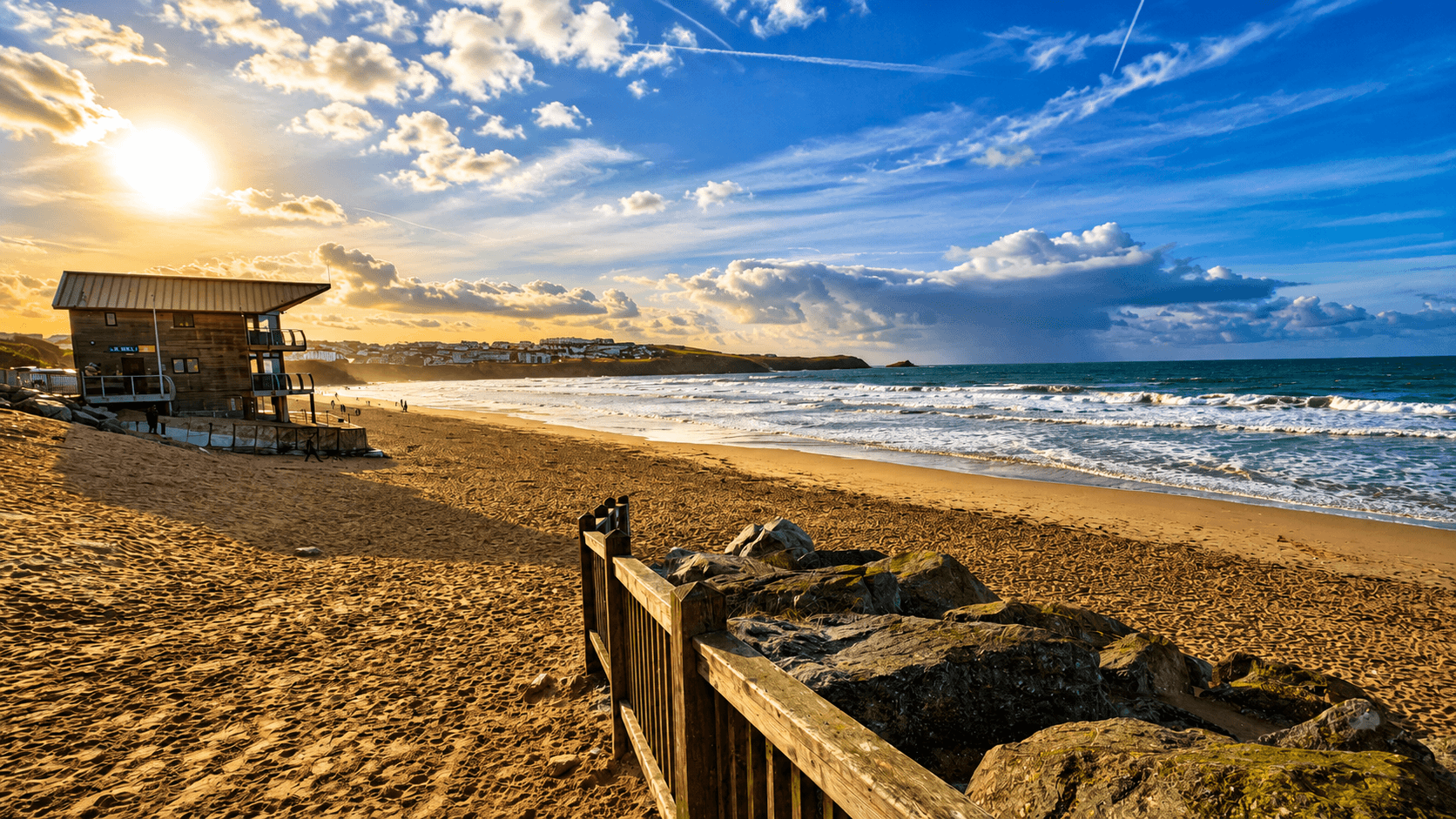
Fistral Beach in Newquay is one of Cornwall’s best-known surf beaches, but like any popular beach it works best when you plan the day properly.
Best Beaches In Cornwall: 30 Beaches For Families, Surf, Dogs And Proper Cornish Days Out
Cornwall has some of the best beaches in the UK, but choosing the right one is where the real trick lies.
Some days you want white sand, turquoise water and cliffs that make you stop talking for a minute. Other days you want easy parking, toilets, a café, lifeguards, a gentle paddle and somewhere to buy chips before everyone gets difficult. Sometimes you want surf. Sometimes you want a calm swim. Sometimes you just want a dog-friendly beach where nobody minds sandy paws and you can finish the day with a pint nearby.
That is why I do not think there is one single “best beach in Cornwall”. The best beach is the one that suits the day you are actually having.
The north coast gives you drama, surf, dunes and huge Atlantic skies. The south coast is generally gentler, greener and better for calmer swimming. West Cornwall has the show-stopping coves. Falmouth and the Roseland are softer and more sheltered. Bude and Newquay are practical family bases. St Ives gives you beaches, food, art and sea views within a short walk.
So this is not just a list of pretty places. This is my proper guide to the best beaches in Cornwall: where to go, who each beach suits, what to watch out for, and how to avoid choosing somewhere beautiful but completely wrong for your day.
A quick Cornwall beach rule before we start: check the tide, respect the sea, and use lifeguarded beaches where you can. A beach can look calm from the car park and still have rips, dumping waves, steep sand, rockfall risk or fast-moving tides. When lifeguards are on duty, swim between the red and yellow flags. If there are no flags, there are no lifeguards.
The best beach in Cornwall is not always the prettiest one. It is the one that fits the tide, the weather, your mood and the people you have brought with you.
Best Beaches In Cornwall At A Glance
If you want the quick answer, this is how I would split them.
Best beach in Cornwall for scenery: Kynance Cove, Porthcurno, Sennen, Godrevy, Holywell Bay, Chapel Porth and Lantic Bay.
Best beaches in Cornwall for families: Porthminster, Gyllyngvase, Maenporth, Summerleaze, Mawgan Porth, Crantock, Harlyn Bay and Daymer Bay.
Best surf beaches in Cornwall: Fistral, Watergate Bay, Sennen, Gwithian, Polzeath, Widemouth Bay and Perranporth.
Best dog-friendly beaches in Cornwall: Watergate Bay, Holywell Bay, Mawgan Porth, Perranporth and Daymer Bay are useful starting points, though seasonal rules vary by beach.
Best beaches in Cornwall for swimming: Porthminster, Gyllyngvase, Maenporth, Daymer Bay, Readymoney Cove and Porthluney are good calmer-water options when conditions suit.
Best beaches in Cornwall for food and drink nearby: Porthminster, Fistral, Watergate Bay, Gyllyngvase, Perranporth, Sennen and Trevaunance Cove.
Best quieter beaches in Cornwall: Hemmick, Porthluney, Porth Joke, Lantic Bay, Daymer Bay and the far ends of the big north coast beaches at low tide.
Best Beaches In Cornwall By Type
Best Beaches In Cornwall For Families
If you are visiting Cornwall with children, I would choose practicality before drama. A steep cove may look glorious in photos, but it quickly loses its charm when you are carrying bags, bodyboards, snacks, towels, buckets and one child who has decided walking is over.
My best family beach picks are:
- Porthminster for gentle St Ives swimming and food nearby
- Gyllyngvase for an easy Falmouth beach day
- Maenporth for calmer south coast water
- Summerleaze for Bude Sea Pool and facilities
- Mawgan Porth for sand, surf schools and year-round dog friendliness
- Harlyn Bay for Padstow-area families
- Daymer Bay for younger children and gentler paddling
For families, I would always prioritise lifeguards, toilets, access, tide space and food nearby before chasing the most dramatic view.
Best Surf Beaches In Cornwall
For surf, go north or west. Cornwall’s Atlantic beaches are popular for a reason, and the best-known surf beaches usually have lessons, hire and lifeguards in the main season.
Start with:
- Fistral for the classic Newquay surf experience
- Watergate Bay for space and lessons
- Sennen for west Cornwall waves
- Gwithian for long sandy surf days
- Polzeath for beginner-friendly surf culture
- Widemouth Bay for Bude-area surfing
- Perranporth for a big beach with plenty going on
If you are new to surfing, book a lesson rather than guessing. Cornwall’s surf beaches are fun, but the sea is powerful and conditions change quickly.
Best Dog-Friendly Beaches In Cornwall
Cornwall is brilliant with a dog, but the beach rules can trip people up. Some beaches welcome dogs year-round. Some have summer daytime restrictions. Some require leads at busy times or in specific areas.
Good dog-friendly Cornwall beach options often include:
- Watergate Bay
- Holywell Bay
- Mawgan Porth
- Perranporth
- Daymer Bay
- Hemmick
- Porthluney
Even where dogs are allowed, keep them under control around cliffs, seals, nesting birds, livestock and busy families. A dog-friendly beach is not a free-for-all.
Best Beaches In Cornwall For Swimming
For calmer swimming, I usually look to the south coast, estuaries or more sheltered bays. No beach is automatically safe, but these are better starting points than the big exposed surf beaches.
Good Cornwall beaches for swimming include:
- Porthminster
- Gyllyngvase
- Maenporth
- Daymer Bay
- Readymoney Cove
- Porthluney
- Carbis Bay
If you want a proper swim and the sea looks messy, Bude Sea Pool at Summerleaze is one of the most useful options in Cornwall.
Best Beaches In Cornwall For Food And Drink
There is no shame in choosing a beach partly because lunch will be easy. In fact, that is often the difference between a good day and a family mutiny.
For food and drink close to the sand, I would look at:
- Porthminster for one of Cornwall’s best beach food setups
- Fistral for surf, coffee, casual food and sea views
- Watergate Bay for beachside eating after a windy walk
- Gyllyngvase for an easy Falmouth swim-and-lunch day
- Perranporth for a big beach with drinks on the sand
- Sennen for west Cornwall food after surf or a walk
- Trevaunance Cove for a St Agnes beach-and-pub day
Best Beaches In Cornwall By Area
Best Beaches Near St Ives
For St Ives, I would choose Porthminster for families and food, Porthmeor for surf and energy, and Carbis Bay for a more sheltered, polished beach day.
St Ives is one of the easiest places in Cornwall to combine beach time with food, shops, galleries and harbour wandering, which makes it useful when the weather cannot make its mind up.
Best Beaches Near Newquay
Near Newquay, the big choices are Fistral for surf, Watergate Bay for space, Crantock for dunes and the Gannel, Holywell Bay for a wilder family day, and Porth Joke when you want somewhere quieter.
Newquay gets busy, but it also gives you some of the most practical beaches in Cornwall if you want surf lessons, food, parking and lifeguarded beach days.
Best Beaches Near Falmouth
Falmouth does easy beach days well. Gyllyngvase is the main all-rounder, Swanpool is good for watersports and café stops, and Maenporth is the one I would choose for a calmer family day.
This is the part of Cornwall I would look at when the north coast is too rough or windy.
Best Beaches Near Bude
For Bude, Summerleaze is the practical family choice, especially because of the sea pool. Widemouth Bay is better for surf, rock pools and a bigger sandy beach.
Bude is sometimes overlooked by people rushing further west, but it is one of Cornwall’s strongest family beach bases.
Best Beaches Near Padstow
Around Padstow and north Cornwall, look at Harlyn Bay for families, Polzeath for surf, Daymer Bay for gentler estuary paddling and Constantine Bay for a wilder sandy stretch.
This area works well if you want a mix of beach days, food, walking and villages without being tied to one type of coast.
1. Kynance Cove, The Lizard
Kynance Cove is the beach people picture when they imagine Cornwall at its most dramatic. White sand, turquoise water, dark serpentine rocks, sea stacks and a winding path down from the cliffs. On the right day, it looks almost unfair.
It is also not an effortless beach.
Kynance is tidal, so timing matters. At low tide, the sand opens up beautifully, with caves, rocks and pools to explore. At high tide, much of that beach disappears. In summer, the car park can fill early, the access path gets busy, and the walk back up feels much longer than the walk down.
I still think Kynance is one of the best beaches in Cornwall, but I would treat it as a coastal outing rather than a lazy, heavy-kit beach day. Go early or later in the day, travel light, check the tide, and combine it with a walk around the Lizard.
Best for: scenery, photography, low-tide exploring, coastal walks.
Watch out for: tide times, steep access, limited summer parking, seasonal dog restrictions.
2. Porthcurno Beach, West Cornwall
Porthcurno is one of Cornwall’s great beach reveals. You come down through the valley and suddenly the cliffs open into pale sand, clear blue-green water and one of the most beautiful coves in the county.
Then you look up and see the Minack Theatre carved into the cliff above, which makes the whole place feel even more special.
Porthcurno is more practical than some of the wilder west Cornwall coves. There is parking up in the valley, toilets nearby and places for food and drink close to the car park. The beach access is still steep and sandy in places, so it is not the easiest choice for anyone with limited mobility, but it is manageable for many visitors who do not mind a short walk down.
The sea can look tropical, but it is still an Atlantic-facing beach. Swim only when conditions are suitable, use the lifeguarded area when patrols are operating, and give the cliffs space.
For a first visit to Cornwall, Porthcurno is one of the strongest “wow” beaches. It looks incredible, but it is still useful enough to make a proper day of it.
Best for: scenery, swimming in calm conditions, combining beach time with the Minack Theatre.
Watch out for: steep access, busy summer lanes, changing sea conditions.
3. Sennen Cove, Near Land’s End
Sennen is a proper west Cornwall beach: broad sand, Atlantic surf, a friendly village feel and enough facilities to make life easy.
It sits just north of Land’s End, but it feels much more relaxed than the tourist bustle nearby. At low tide, the beach opens into a long sandy sweep, and the walk towards Gwenver gives you a wilder edge if you want to escape the main crowd.
This is a brilliant beach for mixed groups. Surfers have waves. Children have sand. Walkers have the coast path. The person who refuses to get wet can sit with a coffee and watch the Atlantic roll in.
Sennen is exposed, so treat the water with respect. It is a surf beach, not a sheltered paddling pool. Use the flagged swimming area when lifeguards are on duty and keep a close eye on bodyboarders.
The village has cafés, surf hire, galleries and a good pub for afterwards. That matters. A beach day is always better when food is already nearby.
Best for: surf, families, west Cornwall atmosphere, coast path walks.
Watch out for: Atlantic swell, summer parking, wind.
4. Porthmeor Beach, St Ives
Porthmeor is St Ives with a surfboard under one arm and an art book under the other. It sits below Tate St Ives and gives you a rare combination: a proper surf beach right next to one of Cornwall’s best towns.
This is the St Ives beach I would choose for energy. There are waves, surf lessons, good food nearby, galleries within a few minutes’ walk, and that bright St Ives light that makes even a grey day feel slightly artistic.
It is not hidden and it is not quiet in summer. That is part of the deal. Porthmeor is popular because it works. You can surf, swim when conditions allow, eat well, wander into town, and retreat indoors if the weather changes.
Parking is the weak point. In peak season, use the larger car parks or public transport where possible. Driving right into St Ives at midday in August is not a relaxing hobby.
Best for: surf, St Ives culture, food, galleries, lively beach days.
Watch out for: crowds, parking, stronger surf.
5. Porthminster Beach, St Ives
If Porthmeor is the surfy one, Porthminster is the gentler one. It has soft sand, calmer water than many north coast beaches, views across to Godrevy Lighthouse and some of the best beachside food in Cornwall.
This is one of the easiest family beaches in St Ives. You can swim, paddle, hire watersports kit when available, eat properly and walk into town without turning the day into a military operation.
It gets busy because it deserves to. Porthminster is polished without feeling soulless, and it is one of the best beaches in Cornwall if you want a relaxed swim followed by a genuinely good lunch.
If you are visiting St Ives with younger children, I would usually start here before Porthmeor. If you want waves, go to Porthmeor. If you want calmer water and food close by, go to Porthminster.
Best for: families, swimming, food, an easy St Ives beach day.
Watch out for: summer crowds and seasonal dog restrictions.
6. Carbis Bay, Near St Ives
Carbis Bay is one of the most sheltered-feeling beaches near St Ives, with soft sand, clear water and a more polished atmosphere than the wilder north coast beaches.
It is not the place I would send you for surf or rugged drama. It is the place I would send you for a calmer swim, a smart beach day, or a less frantic alternative when St Ives itself feels too busy.
The setting is lovely, with views across the bay and easy links towards St Ives by train or coast path. It can feel more resort-like than some Cornish beaches, but that is not always a bad thing. Sometimes you want a beach that behaves itself.
Dogs are restricted during the main summer season, so it is not the easiest beach if you are travelling with one.
Best for: calmer swimming, couples, St Ives-area stays, a more polished beach day.
Watch out for: summer crowds, dog restrictions, less wild atmosphere.
7. Gwithian And Godrevy, Near Hayle
Gwithian and Godrevy give you Cornwall in widescreen: huge sand, dunes, surf, wind, lighthouse views and the kind of sky that makes you feel like you have more room in your head.
At low tide, this stretch feels enormous. It is brilliant for long walks, surfing, bodyboarding, rock pooling, sunset and wearing out children or dogs. Godrevy Lighthouse gives the whole bay a focal point, and the headland above is one of my favourite places for a wander.
You may see seals around the coves below the headland. Enjoy them from a distance. Do not climb down, crowd them or treat wildlife like a photo prop.
This coast is exposed, so it can be windy. Some days that is invigorating; other days your picnic becomes airborne. Bring layers, use the lifeguarded areas for swimming, and do not underestimate rips just because the beach is wide and open.
Best for: big walks, surf, sunsets, wildlife watching, space.
Watch out for: wind, rips, exposed conditions.
8. Fistral Beach, Newquay
Fistral is the big surf name for a reason. It is the home of British surfing, with consistent Atlantic swell, a wide sandy beach, cliffs at either end and a full beach culture built around it.
If someone wants to learn to surf in Cornwall and also wants lessons, board hire, food, parking and atmosphere, Fistral is the obvious answer. It is commercial compared with Cornwall’s hidden coves, but that is not a criticism. Fistral knows exactly what it is.
Families can enjoy it too, but this is a surf beach first. The sea is powerful, and children with bodyboards need proper supervision. Swim between the flags and listen to lifeguards.
Fistral is also one of the best beaches in Cornwall for food and drink close to the sand. You can have a coffee, a casual lunch, a post-surf beer or a full meal overlooking the waves.
Best for: surfing, lessons, atmosphere, food and drink.
Watch out for: strong surf, crowds, less sheltered swimming.
9. Watergate Bay, Near Newquay
Watergate Bay is big, open and properly impressive. At low tide, the beach stretches beneath the cliffs for what feels like forever, giving you space for walks, beach games, surfing, kitesurfing and the kind of windy stomp that makes lunch taste better.
It is also one of Cornwall’s most useful dog-friendly beaches because dogs are generally welcome all year. That makes a real difference if you are travelling with a dog in summer, when many popular beaches have daytime restrictions.
Watergate is practical as well as beautiful. There are places to eat and drink close to the beach, surf lessons and hire, hotels nearby and enough space that it rarely feels as cramped as smaller coves.
The sea is exposed and powerful, so do not treat it as a gentle swimming beach just because the sand is wide and inviting. Use the lifeguarded area when patrols are on and keep children away from rough water.
Best for: dogs, surf, big walks, beachside food.
Watch out for: strong surf, wind, cliffs and tide changes.
10. Crantock Beach, Near Newquay
Crantock is close to Newquay but feels like it has stepped slightly away from the noise. You get a wide sandy beach, dunes, the Gannel estuary, headland walks and a softer, more spacious feel than the main town beaches.
This is a brilliant family beach when conditions are right, especially at lower tide. The dunes give children somewhere to explore, the beach has room to spread out, and the village still has a lovely old-Cornwall feel.
The Gannel is beautiful, but it needs respect. Estuaries have currents, channels and tides that change quickly. Keep children close, do not make casual crossings without knowing the tide, and use the lifeguarded beach area when available.
Crantock also works well as a walking day. Head towards West Pentire and Porth Joke for quieter coast, wildflowers in season and views that feel a long way from Newquay’s busier side.
Best for: families, dunes, walks, a quieter Newquay alternative.
Watch out for: estuary currents, tide changes, limited facilities compared with town beaches.
11. Holywell Bay, Near Newquay
Holywell Bay is Cornwall with the volume turned up: huge dunes, broad sand, twin offshore rocks and a proper sense of space. It has enough drama to feel special but is still practical enough for a family day.
The walk through the dunes is part of the pleasure. Children love it, dogs love it, and adults get that satisfying “we have arrived somewhere good” moment before the sea opens out in front of them.
Holywell is dog-friendly year-round, which makes it especially useful. It is also exposed to Atlantic swell, so surfers and bodyboarders enjoy it, but swimmers need to stick to the lifeguarded area when patrols are running.
There is a pub in the village and seasonal beach food, so you can make a proper day of it without needing a huge plan.
Best for: families, dogs, dunes, space, classic Cornish views.
Watch out for: rips, wind, fragile dune habitats.
12. Perranporth Beach
Perranporth is a proper crowd-pleaser: huge sand, surf, dunes, town facilities and a beach bar actually on the beach. It is one of the best beaches in Cornwall for groups because everyone can do their own thing without the day falling apart.
At low tide, the beach is vast. You can walk towards Penhale Sands, find more space away from the main entrance, build sandcastles, surf, bodyboard or sit outside with a drink and watch the world go by.
Perranporth is also useful for dog owners, though dogs may need to be kept on leads in busier summer periods. As with all Cornish dog rules, do not assume one beach works the same as the next.
The surf can be strong, so choose the flagged area and keep an eye on children with inflatables or bodyboards. Perranporth is fun, but it is still the Atlantic.
Best for: big sandy days, groups, dogs, surf, beach drinks.
Watch out for: strong surf, busy central areas, tide around rocks.
13. Chapel Porth, St Agnes
Chapel Porth is small, dramatic and full of character. It sits in a steep valley near St Agnes, surrounded by mining heritage, cliffs and some of the best short walks on the north coast.
This is a tide-dependent beach. At high tide, there may be very little sand. At low tide, it opens into a much bigger beach with caves, rock pools and space to explore. Get the timing right and it is one of the most atmospheric beaches in Cornwall.
The walk up to Wheal Coates is a must if you have the legs for it. The engine house above the cliffs is one of those Cornish views that looks good in every weather: glowing in sun, moody in mist, battered by wind.
Chapel Porth is not the easiest beach for a big family setup because the car park is limited and the valley road is narrow. I like it best outside peak times, with walking shoes, a towel and no rigid plan.
Best for: low-tide exploring, coastal walks, mining heritage, dramatic scenery.
Watch out for: high tide, narrow access, limited parking.
14. Trevaunance Cove, St Agnes
Trevaunance Cove is the beach for a proper St Agnes day: a bit of surf, cliffs, village character and a pint afterwards. It is smaller than the giant north coast beaches, but that gives it a stronger sense of place.
At low tide, there is more beach to play with. At high tide, it can feel tighter, so timing helps. There are places nearby for food and drink, and the village is close enough to make the day feel easy without becoming too polished.
This is not the beach I would choose if you want acres of flat sand, but it is excellent if you want a village beach with life around it. Walk towards Chapel Porth or Cligga Head and you will quickly see why St Agnes has such a loyal following.
Best for: pub-and-beach days, village atmosphere, walks, casual surf.
Watch out for: tide space, smaller beach feel, busier summer days.
15. Mawgan Porth
Mawgan Porth quietly does almost everything well. It has sand, surf, rock pools, caves, cafés, parking close by and a relaxed family feel. It sits between Newquay and Padstow, which makes it useful if you are staying anywhere along that stretch.
This is a good first-surf beach when conditions are kind. There are surf schools and lifeguards in season, but the waves can still be powerful, so follow the flags.
Families like Mawgan Porth because the beach is easy without feeling overdeveloped. You are close to food, toilets and the village, but the cliffs and open sand still give it a proper coastal feel.
Dogs are generally welcome all year, which gives it another big tick. For a walk, head north along the coast path towards Bedruthan for dramatic views, but do not treat Bedruthan as a beach-access option. The cliff scenery is the point there now.
Best for: families, dogs, beginner surf, easy facilities.
Watch out for: surf conditions, summer traffic, cliff-edge walking nearby.
16. Bedruthan Steps, Near Mawgan Porth
Bedruthan Steps belongs in a Cornwall beach guide, but not as a beach-day recommendation.
The scenery is astonishing: giant rock stacks, high cliffs, crashing sea and some of the most dramatic coast path views in Cornwall. But the steps to the beach are closed, and there is no safe public beach access.
So enjoy Bedruthan from above. Walk the coast path, take in the views, then choose Mawgan Porth, Porthcothan or Watergate Bay if you actually want sand between your toes.
This is one of those places where being sensible does not spoil the day. It preserves it.
Best for: clifftop views, photography, walking.
Watch out for: no beach access, cliff edges, rockfall risk.
17. Polzeath Beach
Polzeath is a north Cornwall favourite for families, surfers and teenagers who need something more active than sitting politely on a towel. The beach is broad and sandy at low tide, the surf is consistent, and the village has cafés, surf schools and shops close by.
It is especially good for learning to surf because the setup is easy. You can hire kit, book lessons and stay close to facilities.
The trade-off is popularity. Polzeath is busy in peak season, and dogs are restricted during the busiest summer daytime period. If you have a dog, Daymer Bay nearby may be easier.
This is a good active beach, not a quiet escape. Come for surf, lessons, bodyboarding, food and a lively north Cornwall feel.
Best for: surf lessons, families with older children, active beach days.
Watch out for: summer crowds, dog restrictions, tide shrinkage at high water.
18. Daymer Bay
Daymer Bay is the calmer counterpoint to Polzeath. It sits on the Camel Estuary side, with gentler water, dunes, views towards Padstow and Rock, and a softer atmosphere.
This is one of my favourite beaches for young families who want paddling rather than surf. It is also good for dog walks, picnics and a slower kind of beach day.
The walk up Brea Hill gives you a lovely view across the estuary, and you can connect Daymer with Rock and Polzeath if you want a longer wander.
You still need to respect tides and channels, because estuary beaches are not automatically risk-free. But compared with the exposed surf beaches nearby, Daymer is a much easier choice for a gentle day.
Best for: young families, paddling, dog walks, estuary views.
Watch out for: tide channels, simpler facilities, limited surf.
19. Harlyn Bay, Near Padstow
Harlyn Bay is one of the easiest family beaches on the Padstow side of north Cornwall. It has a wide sandy beach, rock pools, plenty of room at low tide and a more sheltered feel than many of the west-facing surf beaches.
It is popular with families and beginner surfers because it is practical. You can park nearby, get food close to the beach, and keep the day fairly simple. It is also a good option when some of the more exposed beaches are looking too lively.
Harlyn is not hidden, and it can get very busy in peak weeks, but it is popular for solid reasons. If you are staying around Padstow, Trevone, Constantine or St Merryn, it is one of the most useful beaches to have on your list.
Best for: families, beginner surf, rock pools, Padstow-area stays.
Watch out for: peak-season crowds, tide changes, busy parking.
20. Constantine Bay
Constantine Bay is one of the great sandy beaches on the north Cornwall coast. It feels wilder than Harlyn and less built-up than Polzeath, with dunes, rocks, surf and a broad sweep of sand at lower tide.
This is a beach I like for walkers, surfers and families who are happy with a less serviced setup. You get space, air and proper Atlantic energy, but you do not get everything handed to you on the sand.
The surf can be strong, and swimming needs care. It is not the beach I would choose for nervous swimmers or very young children wanting a gentle paddle. For a walk, a surf, a picnic and a wilder Padstow-area day, it is excellent.
Best for: surf, walks, wilder north Cornwall sand.
Watch out for: strong sea, fewer facilities, exposed conditions.
21. Widemouth Bay, Near Bude
Widemouth Bay is a big, open beach with surf, rock pools, cafés and plenty of space at low tide. It is one of the best options around Bude if you want a classic sandy beach with facilities close by.
Families like it because it is practical. Surfers like it because it catches swell. Children like the rock pools when the tide is out. Nobody has to work too hard to make the day function.
The sea can be powerful, especially for bodyboarders. Use the lifeguarded area when patrols are on and keep an eye on children near the waterline.
Bude is just up the road, which gives you rainy-day backup, shops and the excellent sea pool at Summerleaze. That makes Widemouth especially useful for a north Cornwall family holiday.
Best for: families, surf, rock pools, Bude-area holidays.
Watch out for: exposed surf, tide changes, wind.
22. Summerleaze Beach, Bude
Summerleaze is one of Cornwall’s easiest family beaches. It has sand, parking close by, town facilities, beach huts, canal-side walks and Bude Sea Pool tucked into the rocks.
The sea pool is the reason many people love it. When the Atlantic is too rough or too unpredictable, the pool gives you a more controlled place for a swim, though children still need supervision and conditions still matter.
The beach itself is wide and sandy at low tide, with lifeguards in season and plenty nearby for food and supplies. It is not Cornwall’s wildest or most dramatic beach, but it is extremely useful.
Bude sometimes gets overlooked by people rushing further west. That is a mistake. It is down-to-earth, family-friendly and full of good coastal walks.
Best for: families, sea pool swimming, easy facilities, town access.
Watch out for: less remote atmosphere, changing tide space.
23. Gyllyngvase Beach, Falmouth
Gyllyngvase — Gylly if you want to sound like you have been there more than once — is Falmouth’s main beach and one of the best south coast choices for an easy swim-and-food day.
It has a wide sandy arc, generally gentler water than the big Atlantic beaches, a good café and easy access from town. If you are staying in Falmouth and do not want to drive, this is the beach you will probably use most.
Gylly works well for students, families, couples and shoulder-season swimmers. You can dip, eat, walk into town, or carry on along the coast path to Swanpool.
Because it is so accessible, it gets busy. Dogs are restricted during the main summer daytime period, so plan carefully if you are visiting with one.
Best for: swimming, food, Falmouth stays, easy access.
Watch out for: summer crowds, dog restrictions, town-beach busyness.
24. Swanpool Beach, Falmouth
Swanpool sits just around the corner from Gyllyngvase and has a slightly more relaxed feel. It is smaller, with a beach café, watersports, a nature reserve behind it and a lovely coast path link back towards Falmouth or onwards to Maenporth.
This is a good beach for paddleboarding, kayaking and gentler exploring when conditions are right. Families like it because it is manageable, and it often feels less intense than Gylly on a busy day.
The beach is more shingle-and-sand than endless soft sand, so it may not be the dream bucket-and-spade beach for everyone. But Swanpool has charm, and the café makes a strong argument for lingering.
Best for: paddleboarding, kayaking, relaxed Falmouth beach days.
Watch out for: smaller beach space, less classic soft sand.
25. Maenporth Beach, Near Falmouth
Maenporth is a sheltered south coast beach that works beautifully for families, swimming, kayaking and slower days. It sits just outside Falmouth, with parking, food nearby and a broad beach that feels friendly rather than dramatic.
This is where I would send you when the north coast is too windy or too rough. It is not as famous as Kynance or Fistral, but it may give you a better day if you have young children and just want a calm swim, a bit of sand and a decent lunch.
At low tide, there is more space for beach games. The coast path towards Swanpool and Gyllyngvase is lovely, and you can easily turn the area into a gentle Falmouth beach-hopping day.
Best for: families, swimming, kayaking, south coast shelter.
Watch out for: limited drama, no surf, busier easy-access days.
26. Porthluney Cove, Caerhays
Porthluney is one of the prettiest beaches on the Roseland side, sitting below Caerhays Castle. It has a softer, tucked-away feel compared with the big Atlantic beaches, with sand, seasonal facilities and a lovely setting.
This is a good beach for families who want somewhere scenic but calmer. The castle backdrop gives it character, and the surrounding lanes and villages make the journey feel like part of the day.
Facilities are more seasonal than in the bigger resort beaches, so pack sensibly. The sea is generally gentler than the north coast, but not risk-free. Conditions still change.
Porthluney is a useful reminder that Cornwall’s best beaches are not all clustered around St Ives, Newquay and Bude. The south coast has its own quieter rhythm.
Best for: families, Roseland exploring, calmer beach days.
Watch out for: seasonal facilities, rural lanes, fewer backup options.
27. Hemmick Beach, Near Gorran Haven
Hemmick is for people who like simple beaches. No big resort setup. No loud row of shops. No fuss. Just a tucked-away cove near Dodman Point with sand, cliffs and a quieter feel.
This is not where you go for every facility under the sun. You bring what you need, walk down, and enjoy the fact that Cornwall still has beaches that feel like a proper escape.
Access is less convenient than the big-name beaches, so do not treat it as a pushchair-and-cool-box mission. It is better for couples, walkers and families who are happy travelling light.
Pair it with a walk around Dodman Point or a visit to Gorran Haven. This stretch of coast is softer than the north, but it still has proper drama.
Best for: quiet days, walkers, simple beach escapes.
Watch out for: limited facilities, access, no lifeguard setup.
28. Lantic Bay, Near Fowey
Lantic Bay is stunning: steep green cliffs, pale sand and clear water tucked away near Fowey. It is also a beach that makes you work for it.
The walk down is part of the adventure. The walk back up is the part you will remember in your calves. This is not a beach for overloaded families carrying windbreaks, cool boxes and three bodyboards. It is for walkers, couples and people who want a wild-feeling south coast cove.
There are no proper facilities on the beach, so take water, food and layers. Swimming can be tempting, but there are no lifeguards and conditions vary, so be cautious.
If you are staying around Fowey and want a memorable beach walk, Lantic Bay is one of the best choices in Cornwall. Just leave some energy for the climb.
Best for: walkers, scenery, quieter adventure.
Watch out for: steep access, no facilities, no lifeguards.
29. Readymoney Cove, Fowey
Readymoney Cove is small, sheltered and charming, sitting just outside Fowey below St Catherine’s Castle. It is not a huge beach, but it is a lovely choice if you are staying in Fowey and want a gentle swim, a sit on the sand, or a short coastal wander.
This is the opposite of Fistral. No big surf culture, no vast sweep of sand, no wild Atlantic roar. Instead, you get a compact cove, calm conditions on the right day and easy access from one of Cornwall’s prettiest harbour towns.
Because it is small, it can feel crowded quickly in summer. Use it for a morning dip, a shorter beach stop or part of a Fowey day rather than expecting endless space.
Best for: Fowey visitors, sheltered dips, short beach stops.
Watch out for: limited space, summer crowds, simple facilities.
30. Porth Joke, Near Crantock
Porth Joke — often called Polly Joke — is one of the best beaches near Newquay if you want to feel like you have slipped away from the crowds without driving for hours.
It sits between Crantock and Holywell, backed by fields and cliffs, with no big facilities on the beach. That lack of development is exactly the point. You walk in, bring what you need, and enjoy a sandy cove that feels much quieter than its famous neighbours.
At low tide, there is plenty of space. At high tide, the beach becomes much smaller. There are no lifeguards, so I would not choose it for a serious family swimming day. It is better for picnics, paddling in calm conditions, reading, walking and enjoying a quieter pocket of coast.
Best for: quieter beach days near Newquay, picnics, walks.
Watch out for: no facilities, no lifeguards, tide space.
How To Choose The Right Beach In Cornwall
The biggest mistake is choosing the prettiest beach from a photo and assuming it will suit your day. Cornwall is not like that. The same beach can be perfect at low tide and awkward at high tide. Calm one day, wild the next. Empty in May, packed in August.
Here is the simple way to choose.
If You Have Young Children
Choose easy access, toilets, food nearby and gentler water before you choose drama.
I would start with Porthminster, Gyllyngvase, Maenporth, Summerleaze, Daymer Bay, Mawgan Porth or Harlyn Bay.
Save the steep coves for another day, unless everyone in your group is happy to travel light and walk.
If You Want A Proper Surf Beach
Go for Fistral, Watergate Bay, Sennen, Gwithian, Polzeath, Widemouth Bay or Perranporth.
Book a lesson if you are new to it. Cornwall’s surf beaches are fun, but the sea is powerful and conditions change quickly.
If You Want A Calmer Swim
Look south, east, or estuary-side. Try Porthminster, Gyllyngvase, Swanpool, Maenporth, Readymoney Cove, Porthluney, Carbis Bay or Daymer Bay.
Still use common sense. Sheltered does not mean risk-free.
If You Are Bringing A Dog
Plan before you go. Dog rules vary by beach and season, and some popular beaches restrict dogs during the busiest daytime summer hours.
For an easier start, look at Watergate Bay, Holywell Bay, Mawgan Porth, Perranporth, Daymer Bay, Hemmick or Porthluney.
If You Want Fewer Crowds
Avoid the famous beaches in the middle of the day during school holidays. Go early, go late, go outside peak weeks, or choose somewhere that requires a short walk.
Good quieter options include Hemmick, Porthluney, Porth Joke, Lantic Bay, Daymer Bay and the far ends of bigger beaches like Gwithian, Perranporth and Watergate Bay at low tide.
If Food And Drink Matter
Do not pretend a remote cove will magically provide lunch. Pick somewhere with good options nearby.
I would choose Porthminster, Fistral, Watergate Bay, Gyllyngvase, Perranporth, Sennen or Trevaunance Cove.
There is no shame in choosing a beach partly because lunch will be easy. That is often the difference between a good day and a family mutiny.
My Perfect Cornwall Beach Week
If I had a week to show someone Cornwall’s beaches properly, I would not try to cram in every famous name. I would give each day a different flavour.
I would start with Fistral or Watergate Bay for surf, space and energy. Then I would go west to Porthcurno for the full turquoise-water moment. I would add Sennen for a proper Atlantic beach day with a pint or meal afterwards. I would keep one gentler day for Porthminster, Carbis Bay or Gyllyngvase, where swimming and food are easy. I would use Holywell or Gwithian for dunes, big skies and sunset. I would save Kynance Cove for a low-tide visit when everyone is happy to travel light. Then I would finish somewhere quieter — Porth Joke, Hemmick, Lantic Bay or Daymer Bay — so the trip ends with the feeling that you found your own corner.
That, to me, is how to do Cornwall properly. Not by chasing a single “best” beach, but by choosing the right stretch of coast for the day in front of you.
Some days that means surf and chips. Some days it means a careful swim and a good lunch. Some days it means the dog, a windy walk and a pint afterwards. Some days it means turning up early, checking the tide and being rewarded with a beach that looks far too good to be in Britain.
Cornwall does not need to be perfect to be brilliant. You just need to choose the right beach.
FAQs About The Best Beaches In Cornwall
What Is The Best Beach In Cornwall?
If I had to choose one beach for pure scenery, I would pick Porthcurno or Kynance Cove. For the best all-round beach day, I would choose Porthminster, Sennen, Watergate Bay or Fistral, depending on whether you want swimming, surf, space or food nearby.
Which Part Of Cornwall Has The Best Beaches?
The north coast has the best surf beaches and big sandy stretches, especially around Newquay, Bude, St Agnes and Padstow. West Cornwall has the most dramatic coves, including Porthcurno, Sennen and Kynance. The south coast is usually better for calmer swimming and gentler family beach days.
What Is The Best Beach In Cornwall For Families?
For families, I would start with Porthminster, Gyllyngvase, Maenporth, Summerleaze, Mawgan Porth, Harlyn Bay or Daymer Bay. They are more practical than steep coves and usually easier for food, toilets and a less stressful beach day.
What Is The Best Dog-Friendly Beach In Cornwall?
Watergate Bay, Holywell Bay, Mawgan Porth, Perranporth and Daymer Bay are among the most useful dog-friendly beach options. Rules vary by season and beach, so plan carefully in summer.
What Is The Best Surf Beach In Cornwall?
Fistral Beach is the classic answer and still the best-known surf beach in Cornwall. For other strong surf options, look at Watergate Bay, Sennen, Gwithian, Polzeath, Widemouth Bay and Perranporth.
What Is The Prettiest Beach In Cornwall?
For dramatic beauty, Kynance Cove, Porthcurno, Lantic Bay, Sennen, Holywell Bay and Godrevy are hard to beat. If you want the beach that makes people stop and stare, Porthcurno and Kynance are the obvious showstoppers.
Which Cornwall Beaches Are Best For Swimming?
For calmer swimming, I would look at Porthminster, Gyllyngvase, Maenporth, Carbis Bay, Readymoney Cove, Porthluney and Daymer Bay. Always judge the conditions on the day, and use lifeguarded areas where available.
Are Cornwall Beaches Safe?
Many Cornwall beaches are safe and enjoyable when you choose sensibly, but the sea should always be respected. Rips, tides, waves, cliffs and offshore winds can all create risk. Swim between the red and yellow flags when lifeguards are on duty, avoid swimming alone, and do not ignore warning signs.
When Is The Best Time To Visit Cornwall Beaches?
For warm weather and the most facilities, summer is the obvious choice. For fewer crowds, I prefer June, early July, September and early October. Spring and autumn can be brilliant for walking, dogs and quieter beach days, even if the sea is cooler.
What Beaches In Cornwall Should I Avoid At High Tide?
Tide affects many Cornish beaches, but it matters especially at places like Kynance Cove, Chapel Porth, Porth Joke and some smaller coves around the coast. At high tide, you may have little or no sand, and some areas can become cut off.
What Is The Best Beach Near Newquay?
For surf, choose Fistral Beach. For space and dogs, choose Watergate Bay. For dunes and a slightly quieter family day, choose Crantock or Holywell Bay. For somewhere quieter with fewer facilities, choose Porth Joke.
What Is The Best Beach Near St Ives?
For families and food, choose Porthminster. For surf and atmosphere, choose Porthmeor. For calmer water and a more polished beach day, choose Carbis Bay.
What Should I Pack For A Cornwall Beach Day?
Bring layers, water, sun cream, a towel, something warm for after swimming, and shoes you can walk in if you are visiting a cove. I would also bring snacks even if there is a café nearby, because Cornwall beach hunger waits for nobody.