
Details
Address & Contact
Port Isaac
Cornwall
PL29 3SB
United Kingdom
Sorry, no records were found. Please adjust your search criteria and try again.
Sorry, unable to load the Maps API.
Is Port Isaac Worth Visiting? My Honest Guide to the Village
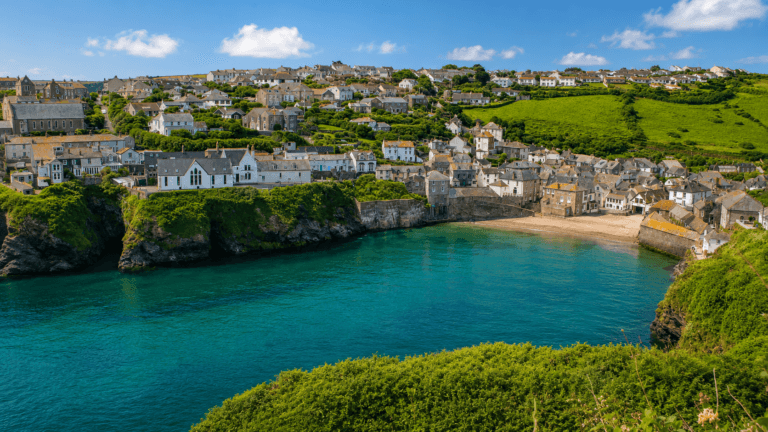
Port Isaac is a small fishing village on the north Cornwall coast, roughly between Wadebridge and Tintagel. It is known for its tightly packed cottages, working harbour, strong seafood scene and starring role as Port Wenn in Doc Martin.
So, is Port Isaac worth visiting? I think it deserves a place in a north Cornwall itinerary, but I would use it as a well-planned half-day rather than expect it to fill an entire trip. The village is atmospheric, easy to explore and surrounded by excellent coast, but it is also steep, compact and extremely busy at predictable times.
Park above the village, walk down through the old streets, spend time around the harbour, eat well and add Port Gaverne or a short coastal walk. That is Port Isaac at its best.
Port Isaac works best as a half-day: harbour, lanes, lunch and one good stretch of coast.
What Port Isaac is actually like
Port Isaac is built tightly around a natural harbour, with old cottages and narrow streets rising sharply from the water. The Platt, the open area beside the harbour, remains the centre of the village.
Fishing still forms part of everyday life here. Boats, equipment and working buildings sit alongside cafés, restaurants and visitors photographing the waterfront. That mixture stops the village from feeling like a carefully preserved attraction.
The Doc Martin connection is impossible to ignore. Port Isaac appeared as the fictional village of Port Wenn, and fans will recognise several streets and buildings. Even so, I would not reduce the visit to a filming-location hunt. The television series brought Port Isaac to a much wider audience, but the village had a long life before the cameras arrived.
Port Isaac is also closely associated with the Fisherman’s Friends, whose sea-shanty performances took the village’s name far beyond Cornwall.
What makes Port Isaac appealing is its concentration. You reach the most atmospheric part quickly, and there is enough detail in the harbour and side streets to reward a slow wander. You do not need to chase a long list of attractions.
That compactness is also the main limitation. There is little spare space, the lower lanes are awkward for traffic and summer crowds can change the character of the village remarkably quickly.
The best way to spend half a day in Port Isaac
I would begin at the top of the village and walk down rather than trying to drive closer to the harbour.
The descent is part of the experience. Roofs begin to stack below you, the sea appears between buildings and the lanes become narrower as you reach the old centre. Allow yourself to follow a few side streets rather than heading straight for the waterfront.
Once you reach the Platt, spend some time looking around rather than taking one photograph and moving on. Port Isaac is a working harbour, and its appearance changes noticeably with the tide.
At low water, a small area of sand and rock pools appears inside the harbour. It is not a full-scale beach and I would not carry a day’s worth of beach equipment down there, but families may find enough to occupy younger children for a while.
At higher water, the harbour feels more enclosed and the classic Port Isaac view comes together. When conditions allow, a walk along the harbour wall gives you a useful angle back towards the village and the houses climbing behind it.
From the harbour, wander through the lower lanes and visit St Peter’s Church. It contains the free Port Isaac Heritage exhibitions, which cover fishing, the lifeboat, school life, local churches and chapels, wartime history and the Fisherman’s Friends.
The displays are a useful addition because they explain the community behind the scenery. Port Isaac makes more sense once you have seen something of its history beyond Doc Martin.
For the village alone, I would allow around two or three hours. Add lunch, Port Gaverne or a coastal walk and the visit naturally becomes a half-day.
Things to do in Port Isaac
Port Isaac does not have a long attractions list, and I do not think it needs one. The interest lies in the harbour, the streets and the coast around them.
The most worthwhile things to do are:
- Explore the harbour and the Platt.
- Wander through the old streets and narrow lanes.
- Visit the Port Isaac Heritage exhibitions.
- Look for familiar Doc Martin locations without making them the sole focus.
- Walk above the village for harbour views.
- Continue to neighbouring Port Gaverne.
- Stop for lunch, seafood or a pint.
- Follow part of the South West Coast Path.
Port Isaac rewards curiosity more than planning. Leave some room to wander rather than trying to give every street a purpose.
Food and drink in Port Isaac
Port Isaac has a stronger food scene than many villages of a similar size. Options range from bakeries and cafés to pubs and serious seafood restaurants.
For a casual visit, I would keep lunch fairly flexible. A pasty, crab sandwich or fish lunch suits the harbour setting and leaves you with time to explore.
If the meal is a major part of the day, book it in advance. Port Isaac has destination dining, including Outlaw’s Fish Kitchen close to the harbour, and the smaller restaurants do not have much room for spontaneous arrivals.
The old buildings add atmosphere but can bring practical limitations. Tight dining rooms, steps, restricted toilet access and individual policies on dogs or younger children are all possible. Choose the venue around the needs of your group rather than assuming every restaurant will work equally well.
During the busiest weeks, eating slightly before or after the main lunchtime rush gives you more choice. Port Isaac can receive a large number of visitors, but the kitchens and dining rooms remain village-sized.
Port Isaac and Port Gaverne
Port Gaverne is the most natural addition to a Port Isaac visit.
The cove lies immediately around the coast and can be reached on foot. It feels more open and generally less compressed, with high cliffs, a small shore, rock pools and access to the coast path.
Port Gaverne once handled slate, coal and limestone. Today, it is quieter than Port Isaac and offers a welcome change of pace when the main village is busy.
The walk between the two places is short, although it involves slopes and is not completely level. I would leave the car above Port Isaac rather than attempt to move it between villages. Parking around Port Gaverne is very limited, and driving such a short distance rarely saves much effort.
There is a pub beside the cove serving food and drinks, with outdoor seating when the weather cooperates. The main bar and restaurant have accessible areas, although the wider terrain around the cove remains uneven and hilly.
Combining Port Isaac and Port Gaverne gives the visit better balance. Port Isaac supplies the tightly packed harbour village; Port Gaverne adds space, cliffs and a quieter stretch of coast.
Walks from Port Isaac
Port Isaac sits directly on the South West Coast Path, but this is not a gentle part of the route. Expect steep climbs, steps and repeated changes in height.
A short walk above the village is enough to produce a fine harbour view. You do not need to commit to several miles. Follow the path until you reach a viewpoint that feels worthwhile, then return the same way.
Port Quin is the obvious longer destination. The route between the two villages follows an exposed and rugged piece of coast, passing small coves and headlands along the way.
It is an excellent walk for capable walkers, but I would treat it as the main activity rather than an afterthought. The distance may look manageable on paper, yet the climbs make it more demanding than an equivalent inland route.
Proper footwear is sensible even in dry weather. After rain, stone steps and worn paths can become slippery.
For anyone who wants the view without the full workout, the first section of the coast path delivers plenty of reward.
Port Isaac parking
The easiest option is to park above Port Isaac and walk into the village.
The main visitor car parks sit near the top of the village, including the council-run New Road car park. From there, the harbour is reached on foot down a sustained slope.
The distance is not great, but the gradient matters. The walk back feels considerably steeper after lunch, particularly for anyone carrying bags, managing a pushchair or travelling with tired children.
Trying to drive into the lower village rarely improves matters. The streets are narrow, turning space is limited and the old centre was not built to absorb visitor traffic.
On a fine summer day, I would arrive during the morning. Late afternoon can also work well once some day visitors have left. Lunchtime tends to bring the greatest pressure on parking, food venues and the lanes around the harbour.
Parking charges and payment arrangements can change, so I would budget for paid parking rather than rely on finding a free roadside space.
Public toilets are available near the upper part of the village, making them useful before starting the walk down.
Visiting Port Isaac without a car
Port Isaac can be reached by bus from several north Cornwall towns and villages.
The local service connects Port Isaac with places including Wadebridge, Rock, Polzeath and Camelford. This can be a useful way to avoid parking, particularly during the busiest part of summer.
The main limitation is frequency. I would decide which return service I intended to use before arriving rather than assume there will be a convenient bus later.
Bodmin Parkway is the nearest mainline railway station, but Port Isaac is not directly linked to it by a simple rail connection. Reaching the village normally involves an onward bus, taxi or a combination of the two.
For most people, Port Isaac fits more naturally into a longer north Cornwall stay than a standalone railway day trip.
Accessibility in Port Isaac
Port Isaac is difficult for anyone who struggles with hills, uneven ground or sustained walking.
The main parking is above the old village, and reaching the harbour involves a steep descent followed by the same climb back. The lower streets can be narrow and uneven, while several businesses occupy historic buildings with steps and limited internal space.
The harbour area itself is more manageable once you reach it. The main challenge is the journey between the harbour and the upper village.
A wheelchair visit may be possible with planning and assistance, but I would not describe Port Isaac as consistently step-free. The same caution applies to visitors who can walk short distances but find long gradients difficult.
A compact pushchair is much easier to manage than a large travel system. Crowded lanes and the return climb are likely to cause more difficulty than the harbour itself.
Blue Badge holders should not assume that parking will be free. Normal charges can still apply unless the vehicle is covered by one of Cornwall Council’s relevant exemption arrangements.
When is the best time to visit Port Isaac?
Late spring and early autumn give Port Isaac a good balance of atmosphere and manageable visitor numbers.
Summer brings the liveliest village and the widest choice of places to eat, but it also brings the greatest pressure on parking and the lower streets. An early arrival makes a noticeable difference.
Winter can be atmospheric, particularly when the sea is lively and the village is quiet. The trade-off is that some businesses may operate more limited seasonal hours, and the coast path requires greater care in wet or windy conditions.
The tide also changes the experience:
- Low tide exposes sand and rock pools inside the harbour.
- Higher tide creates the fuller, more enclosed harbour view.
Neither is necessarily better. The right choice depends on whether you are more interested in getting onto the shore or seeing the harbour filled with water.
Who Port Isaac suits best
Port Isaac works particularly well for:
- Couples looking for a harbour wander and lunch.
- Visitors who enjoy old fishing villages and coastal scenery.
- Doc Martin fans who want to recognise the setting.
- Walkers seeking a demanding stretch of the South West Coast Path.
- Food-led visitors prepared to reserve a table.
- Families satisfied with rock pools and a small harbour beach.
- Photographers able to arrive early or stay later.
It is a weaker fit for:
- Anyone looking for a large, easy-access sandy beach.
- Visitors who need flat or reliably step-free surroundings.
- Families carrying a full day’s beach equipment.
- Drivers determined to park close to the harbour.
- Anyone who strongly dislikes crowds but can only arrive at midday in peak summer.
Places to visit near Port Isaac
Port Gaverne is the easiest addition because you can reach it on foot.
For a larger beach, Polzeath offers broad sand, surfing and a more conventional seaside day. It works well after a morning in Port Isaac.
Rock is another sensible pairing, particularly when the Camel Estuary, a meal or the passenger ferry towards Padstow is part of the plan.
Port Quin suits walkers and visitors looking for a smaller, more isolated cove. Tintagel and Boscastle can also be combined with Port Isaac as part of a north Cornwall day, although I would choose one rather than attempt to collect every well-known village along the coast.
Too many stops will turn the day into a sequence of car parks. Port Isaac is more rewarding when you give the harbour and lanes enough time to settle in.
Port Isaac FAQs
How long do you need in Port Isaac?
Allow two or three hours for the village itself. With lunch, Port Gaverne or a coastal walk, plan for around half a day.
Where should I park for Port Isaac?
Use one of the main visitor car parks above the village and walk down. Driving towards the harbour is unlikely to save time and can leave you dealing with very narrow streets.
Is Port Isaac suitable for wheelchairs?
The harbour area is relatively compact, but reaching it from the main parking involves a steep hill. Uneven streets, steps and historic buildings make access difficult rather than consistently step-free.
Can you visit Port Isaac and Port Gaverne together?
Yes. The two villages are close enough to combine on foot, although the route includes slopes and uneven sections.
Is Port Isaac good on a rainy day?
Light rain does not ruin the village, and the harbour can be atmospheric in unsettled weather. Heavy rain is more limiting because most of the experience is outdoors and the steep streets can become slippery.
Can you visit Port Isaac by bus?
Yes. Local services connect the village with Wadebridge, Rock, Polzeath and Camelford, though the timetable needs to shape the day because departures are not constant.
How I would fit Port Isaac into a Cornwall itinerary
I would arrive in the morning, park above the village and take my time walking down. I would explore the harbour around the tide, visit the heritage displays and stop for an early lunch.
Afterwards, I would walk to Port Gaverne or climb part of the coast path for a higher view, then continue to one other north Cornwall stop rather than trying to fill the entire day in Port Isaac.
That gives the village enough time to show what it does well: harbour character, old lanes, good food and a dramatic piece of coast, all within a compact and manageable visit.
Is Port Isaac Worth Visiting? My Honest Guide to the Village
Port Isaac is a small fishing village on the north Cornwall coast, roughly between Wadebridge and Tintagel. It is known for its tightly packed cottages, working harbour, strong seafood scene and starring role as Port Wenn in Doc Martin.
So, is Port Isaac worth visiting? I think it deserves a place in a north Cornwall itinerary, but I would use it as a well-planned half-day rather than expect it to fill an entire trip. The village is atmospheric, easy to explore and surrounded by excellent coast, but it is also steep, compact and extremely busy at predictable times.
Park above the village, walk down through the old streets, spend time around the harbour, eat well and add Port Gaverne or a short coastal walk. That is Port Isaac at its best.
Port Isaac works best as a half-day: harbour, lanes, lunch and one good stretch of coast.
What Port Isaac is actually like
Port Isaac is built tightly around a natural harbour, with old cottages and narrow streets rising sharply from the water. The Platt, the open area beside the harbour, remains the centre of the village.
Fishing still forms part of everyday life here. Boats, equipment and working buildings sit alongside cafés, restaurants and visitors photographing the waterfront. That mixture stops the village from feeling like a carefully preserved attraction.
The Doc Martin connection is impossible to ignore. Port Isaac appeared as the fictional village of Port Wenn, and fans will recognise several streets and buildings. Even so, I would not reduce the visit to a filming-location hunt. The television series brought Port Isaac to a much wider audience, but the village had a long life before the cameras arrived.
Port Isaac is also closely associated with the Fisherman’s Friends, whose sea-shanty performances took the village’s name far beyond Cornwall.
What makes Port Isaac appealing is its concentration. You reach the most atmospheric part quickly, and there is enough detail in the harbour and side streets to reward a slow wander. You do not need to chase a long list of attractions.
That compactness is also the main limitation. There is little spare space, the lower lanes are awkward for traffic and summer crowds can change the character of the village remarkably quickly.
The best way to spend half a day in Port Isaac
I would begin at the top of the village and walk down rather than trying to drive closer to the harbour.
The descent is part of the experience. Roofs begin to stack below you, the sea appears between buildings and the lanes become narrower as you reach the old centre. Allow yourself to follow a few side streets rather than heading straight for the waterfront.
Once you reach the Platt, spend some time looking around rather than taking one photograph and moving on. Port Isaac is a working harbour, and its appearance changes noticeably with the tide.
At low water, a small area of sand and rock pools appears inside the harbour. It is not a full-scale beach and I would not carry a day’s worth of beach equipment down there, but families may find enough to occupy younger children for a while.
At higher water, the harbour feels more enclosed and the classic Port Isaac view comes together. When conditions allow, a walk along the harbour wall gives you a useful angle back towards the village and the houses climbing behind it.
From the harbour, wander through the lower lanes and visit St Peter’s Church. It contains the free Port Isaac Heritage exhibitions, which cover fishing, the lifeboat, school life, local churches and chapels, wartime history and the Fisherman’s Friends.
The displays are a useful addition because they explain the community behind the scenery. Port Isaac makes more sense once you have seen something of its history beyond Doc Martin.
For the village alone, I would allow around two or three hours. Add lunch, Port Gaverne or a coastal walk and the visit naturally becomes a half-day.
Things to do in Port Isaac
Port Isaac does not have a long attractions list, and I do not think it needs one. The interest lies in the harbour, the streets and the coast around them.
The most worthwhile things to do are:
- Explore the harbour and the Platt.
- Wander through the old streets and narrow lanes.
- Visit the Port Isaac Heritage exhibitions.
- Look for familiar Doc Martin locations without making them the sole focus.
- Walk above the village for harbour views.
- Continue to neighbouring Port Gaverne.
- Stop for lunch, seafood or a pint.
- Follow part of the South West Coast Path.
Port Isaac rewards curiosity more than planning. Leave some room to wander rather than trying to give every street a purpose.
Food and drink in Port Isaac
Port Isaac has a stronger food scene than many villages of a similar size. Options range from bakeries and cafés to pubs and serious seafood restaurants.
For a casual visit, I would keep lunch fairly flexible. A pasty, crab sandwich or fish lunch suits the harbour setting and leaves you with time to explore.
If the meal is a major part of the day, book it in advance. Port Isaac has destination dining, including Outlaw’s Fish Kitchen close to the harbour, and the smaller restaurants do not have much room for spontaneous arrivals.
The old buildings add atmosphere but can bring practical limitations. Tight dining rooms, steps, restricted toilet access and individual policies on dogs or younger children are all possible. Choose the venue around the needs of your group rather than assuming every restaurant will work equally well.
During the busiest weeks, eating slightly before or after the main lunchtime rush gives you more choice. Port Isaac can receive a large number of visitors, but the kitchens and dining rooms remain village-sized.
Port Isaac and Port Gaverne
Port Gaverne is the most natural addition to a Port Isaac visit.
The cove lies immediately around the coast and can be reached on foot. It feels more open and generally less compressed, with high cliffs, a small shore, rock pools and access to the coast path.
Port Gaverne once handled slate, coal and limestone. Today, it is quieter than Port Isaac and offers a welcome change of pace when the main village is busy.
The walk between the two places is short, although it involves slopes and is not completely level. I would leave the car above Port Isaac rather than attempt to move it between villages. Parking around Port Gaverne is very limited, and driving such a short distance rarely saves much effort.
There is a pub beside the cove serving food and drinks, with outdoor seating when the weather cooperates. The main bar and restaurant have accessible areas, although the wider terrain around the cove remains uneven and hilly.
Combining Port Isaac and Port Gaverne gives the visit better balance. Port Isaac supplies the tightly packed harbour village; Port Gaverne adds space, cliffs and a quieter stretch of coast.
Walks from Port Isaac
Port Isaac sits directly on the South West Coast Path, but this is not a gentle part of the route. Expect steep climbs, steps and repeated changes in height.
A short walk above the village is enough to produce a fine harbour view. You do not need to commit to several miles. Follow the path until you reach a viewpoint that feels worthwhile, then return the same way.
Port Quin is the obvious longer destination. The route between the two villages follows an exposed and rugged piece of coast, passing small coves and headlands along the way.
It is an excellent walk for capable walkers, but I would treat it as the main activity rather than an afterthought. The distance may look manageable on paper, yet the climbs make it more demanding than an equivalent inland route.
Proper footwear is sensible even in dry weather. After rain, stone steps and worn paths can become slippery.
For anyone who wants the view without the full workout, the first section of the coast path delivers plenty of reward.
Port Isaac parking
The easiest option is to park above Port Isaac and walk into the village.
The main visitor car parks sit near the top of the village, including the council-run New Road car park. From there, the harbour is reached on foot down a sustained slope.
The distance is not great, but the gradient matters. The walk back feels considerably steeper after lunch, particularly for anyone carrying bags, managing a pushchair or travelling with tired children.
Trying to drive into the lower village rarely improves matters. The streets are narrow, turning space is limited and the old centre was not built to absorb visitor traffic.
On a fine summer day, I would arrive during the morning. Late afternoon can also work well once some day visitors have left. Lunchtime tends to bring the greatest pressure on parking, food venues and the lanes around the harbour.
Parking charges and payment arrangements can change, so I would budget for paid parking rather than rely on finding a free roadside space.
Public toilets are available near the upper part of the village, making them useful before starting the walk down.
Visiting Port Isaac without a car
Port Isaac can be reached by bus from several north Cornwall towns and villages.
The local service connects Port Isaac with places including Wadebridge, Rock, Polzeath and Camelford. This can be a useful way to avoid parking, particularly during the busiest part of summer.
The main limitation is frequency. I would decide which return service I intended to use before arriving rather than assume there will be a convenient bus later.
Bodmin Parkway is the nearest mainline railway station, but Port Isaac is not directly linked to it by a simple rail connection. Reaching the village normally involves an onward bus, taxi or a combination of the two.
For most people, Port Isaac fits more naturally into a longer north Cornwall stay than a standalone railway day trip.
Accessibility in Port Isaac
Port Isaac is difficult for anyone who struggles with hills, uneven ground or sustained walking.
The main parking is above the old village, and reaching the harbour involves a steep descent followed by the same climb back. The lower streets can be narrow and uneven, while several businesses occupy historic buildings with steps and limited internal space.
The harbour area itself is more manageable once you reach it. The main challenge is the journey between the harbour and the upper village.
A wheelchair visit may be possible with planning and assistance, but I would not describe Port Isaac as consistently step-free. The same caution applies to visitors who can walk short distances but find long gradients difficult.
A compact pushchair is much easier to manage than a large travel system. Crowded lanes and the return climb are likely to cause more difficulty than the harbour itself.
Blue Badge holders should not assume that parking will be free. Normal charges can still apply unless the vehicle is covered by one of Cornwall Council’s relevant exemption arrangements.
When is the best time to visit Port Isaac?
Late spring and early autumn give Port Isaac a good balance of atmosphere and manageable visitor numbers.
Summer brings the liveliest village and the widest choice of places to eat, but it also brings the greatest pressure on parking and the lower streets. An early arrival makes a noticeable difference.
Winter can be atmospheric, particularly when the sea is lively and the village is quiet. The trade-off is that some businesses may operate more limited seasonal hours, and the coast path requires greater care in wet or windy conditions.
The tide also changes the experience:
- Low tide exposes sand and rock pools inside the harbour.
- Higher tide creates the fuller, more enclosed harbour view.
Neither is necessarily better. The right choice depends on whether you are more interested in getting onto the shore or seeing the harbour filled with water.
Who Port Isaac suits best
Port Isaac works particularly well for:
- Couples looking for a harbour wander and lunch.
- Visitors who enjoy old fishing villages and coastal scenery.
- Doc Martin fans who want to recognise the setting.
- Walkers seeking a demanding stretch of the South West Coast Path.
- Food-led visitors prepared to reserve a table.
- Families satisfied with rock pools and a small harbour beach.
- Photographers able to arrive early or stay later.
It is a weaker fit for:
- Anyone looking for a large, easy-access sandy beach.
- Visitors who need flat or reliably step-free surroundings.
- Families carrying a full day’s beach equipment.
- Drivers determined to park close to the harbour.
- Anyone who strongly dislikes crowds but can only arrive at midday in peak summer.
Places to visit near Port Isaac
Port Gaverne is the easiest addition because you can reach it on foot.
For a larger beach, Polzeath offers broad sand, surfing and a more conventional seaside day. It works well after a morning in Port Isaac.
Rock is another sensible pairing, particularly when the Camel Estuary, a meal or the passenger ferry towards Padstow is part of the plan.
Port Quin suits walkers and visitors looking for a smaller, more isolated cove. Tintagel and Boscastle can also be combined with Port Isaac as part of a north Cornwall day, although I would choose one rather than attempt to collect every well-known village along the coast.
Too many stops will turn the day into a sequence of car parks. Port Isaac is more rewarding when you give the harbour and lanes enough time to settle in.
Port Isaac FAQs
How long do you need in Port Isaac?
Allow two or three hours for the village itself. With lunch, Port Gaverne or a coastal walk, plan for around half a day.
Where should I park for Port Isaac?
Use one of the main visitor car parks above the village and walk down. Driving towards the harbour is unlikely to save time and can leave you dealing with very narrow streets.
Is Port Isaac suitable for wheelchairs?
The harbour area is relatively compact, but reaching it from the main parking involves a steep hill. Uneven streets, steps and historic buildings make access difficult rather than consistently step-free.
Can you visit Port Isaac and Port Gaverne together?
Yes. The two villages are close enough to combine on foot, although the route includes slopes and uneven sections.
Is Port Isaac good on a rainy day?
Light rain does not ruin the village, and the harbour can be atmospheric in unsettled weather. Heavy rain is more limiting because most of the experience is outdoors and the steep streets can become slippery.
Can you visit Port Isaac by bus?
Yes. Local services connect the village with Wadebridge, Rock, Polzeath and Camelford, though the timetable needs to shape the day because departures are not constant.
How I would fit Port Isaac into a Cornwall itinerary
I would arrive in the morning, park above the village and take my time walking down. I would explore the harbour around the tide, visit the heritage displays and stop for an early lunch.
Afterwards, I would walk to Port Gaverne or climb part of the coast path for a higher view, then continue to one other north Cornwall stop rather than trying to fill the entire day in Port Isaac.
That gives the village enough time to show what it does well: harbour character, old lanes, good food and a dramatic piece of coast, all within a compact and manageable visit.
Contact & Details
Port Isaac
Cornwall
PL29 3SB
United Kingdom
Sorry, no records were found. Please adjust your search criteria and try again.
Sorry, unable to load the Maps API.