A proper Cornish pasty is more than lunch — it carries Cornwall’s working food culture, local pride, and tradition.
The Story Behind The Cornish Pasty: Why It Matters To Cornwall
A Cornish pasty is not just something to grab on holiday because you forgot to book lunch.
It is one of Cornwall’s clearest food symbols: practical, filling, local, and tied to working life. Long before pasties became something visitors carried down the high street in a paper bag, they were part of everyday Cornish food culture — made, bought, packed, argued over, and eaten by families, workers, miners, farmers, tradespeople, and whole communities.
That is why people in Cornwall care about them. Not because we are precious about pastry for the sake of it, but because the pasty has a story behind it. It says something about Cornwall: the work, the people, the pride, the humour, the tradition, and the difference between something properly made and something churned out because tourists will buy it anyway.
This is not a guide to where to buy the best pasty in Cornwall. That deserves its own article.
This is about why the Cornish pasty matters — from mining heritage and working food to crimping, local pride, protected status, and the old shout of “oggy, oggy, oggy.”
A working food, not a tourist gimmick
The Cornish pasty was built for real life.
It is simple food, but that does not mean it is basic. A proper pasty had to do a job. It had to be strong enough to hold together, filling enough to keep someone going, and practical enough to carry.
That is a big part of why the pasty is so closely associated with Cornwall’s working life, especially mining. Workers needed food that could travel, survive the day, and be eaten without fuss. In Cornwall, the pasty became closely tied to that world: meat, potato, swede, onion, seasoning, all held together in a sturdy pastry case.
There are plenty of stories around pasties and mining, and like most old food traditions, some of them get repeated more neatly than real life probably was. But the broader truth matters: the pasty was working food. It came from a Cornwall where people grafted hard, families stretched ingredients, and food had to be useful before it was fashionable.
That is part of the reason a pasty still feels different from ordinary takeaway food. It carries a bit of working Cornwall with it.
Mining, working life, and the pasty
Cornwall’s mining history is not just something for museums and old engine houses on the skyline. It shaped families, villages, migration, industry, pride, and the way Cornwall sees itself.
The pasty sits inside that story.
For generations, Cornish families were connected to hard physical work: mining, fishing, farming, quarrying, harbour work, baking, market trading, and trades passed down through families. Food had to match that life. It had to be practical, affordable, portable, and made with care.
So when people talk about the Cornish pasty, they are not only talking about lunch. They are talking about a food that belongs to a working culture.
That matters because Cornwall is too often presented as just beaches, cottages, sunsets, and summer holidays. The pasty reminds people there is another Cornwall behind the postcard: a place of work, skill, family, hardship, humour, and pride.
Oggy, oggy, oggy: what it means
You might have heard the chant:
“Oggy, oggy, oggy!”
“Oi, oi, oi!”
It gets used all over the place now — sport, crowds, festivals, rugby, football, and plenty of noisy gatherings where people probably have no idea what they are shouting.
But the word “oggy”, sometimes written “oggie”, has a strong Cornish and West Country connection.
An oggy is a slang word for a pasty. It is often linked to older Cornish words such as hoggan or hogen, connected with a pasty or pie. The exact origin is hard to pin down perfectly, because old food words and folk sayings tend to travel through working communities before anyone writes them down neatly. But the meaning is clear enough: oggy means pasty.
One common story links the chant to pasty sellers calling out that oggies were ready, with workers calling back “oi, oi, oi.” Other versions connect it with miners, sailors, dockyards, rugby, and the wider West Country. Like a lot of old working phrases, the exact route is messy — but the meaning is clear enough.
An oggy is a pasty.
That is why the chant belongs in this story.
It is not just a funny noise shouted at a match. It is a little bit of food history that travelled. A word connected to Cornish pasties moved from working life into popular culture, and now plenty of people shout it without realising they are echoing something older and more local.
So when someone shouts “oggy, oggy, oggy,” they are not just starting a chant.
They are shouting for pasties.
And in Cornwall, that makes perfect sense.
The crimp is part of the identity
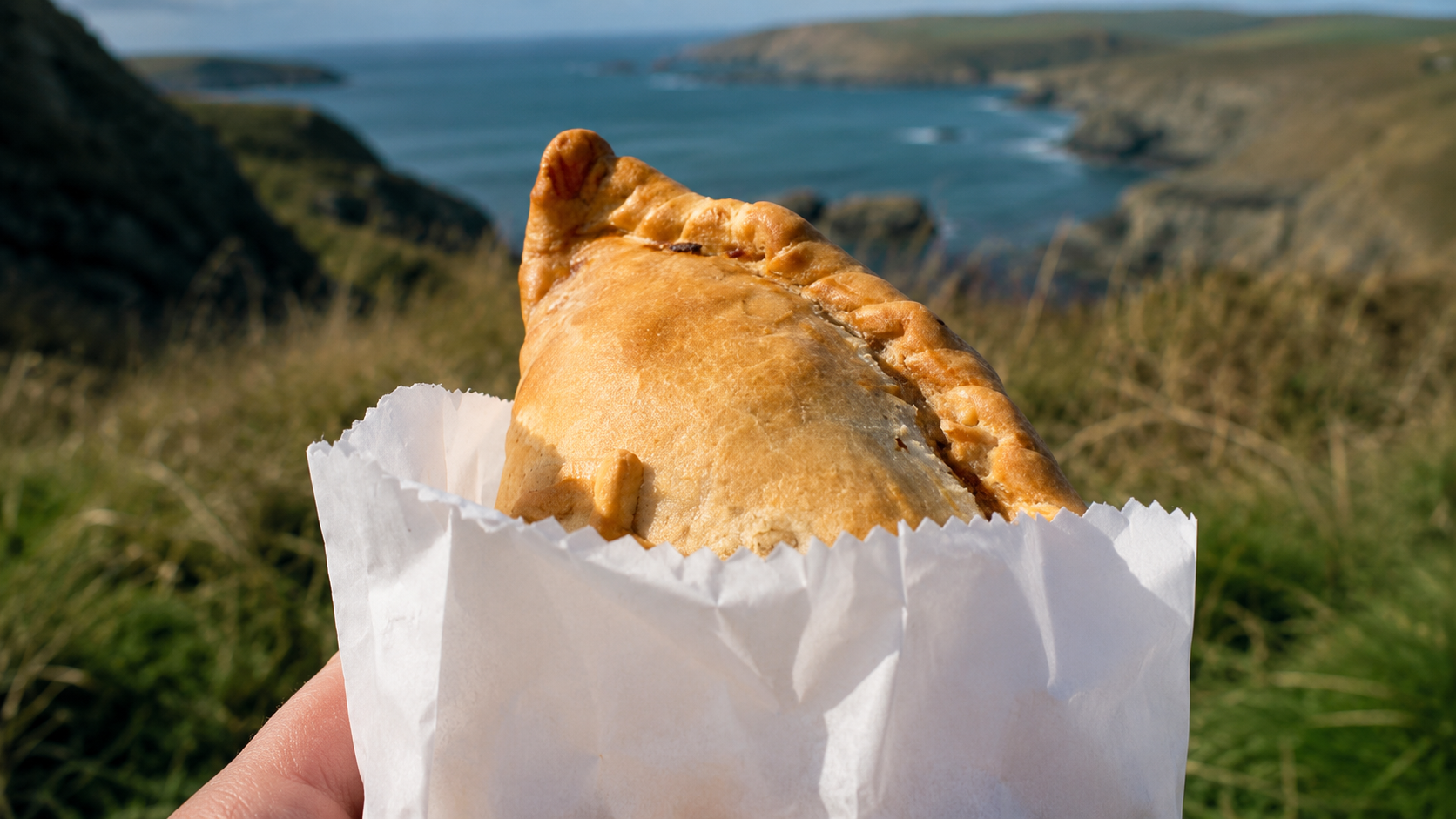
One of the most recognisable parts of a Cornish pasty is the crimp.
That folded edge is not just decoration. It seals the pasty, gives it its shape, and helps make it instantly recognisable. For a lot of Cornish people, the crimp is also part of the memory of pasties being made at home, bought from a trusted bakery, or eaten after work, school, a match, a beach walk, or a long day out.
A proper pasty should feel like someone knew what they were doing. The pastry should hold. The filling should be balanced. The seasoning should be right. The whole thing should feel like food with a bit of backbone.
There are arguments over details, because of course there are. Everyone has an opinion. Some people care about the pastry. Some care about the filling. Some judge by the crimp. Some judge by whether the thing collapses after two bites. Some have one bakery they will defend like family.
That is part of the point.
The pasty is not just food in Cornwall. It is something people have standards about.
Simple ingredients, proper meaning
A traditional Cornish pasty does not need to be complicated.
Beef, potato, swede, onion, seasoning, pastry. That is the heart of it.
But simple food depends on quality and judgement. There is nowhere to hide. If the pastry is poor, you know. If the filling is mean, you know. If it is under-seasoned, sloppy, dry, greasy, or made without care, you know.
That is why local bakeries matter.
A good Cornish bakery is not just selling a snack. It is keeping a local food tradition alive. It is supporting jobs, suppliers, high streets, villages, and the idea that Cornwall’s food culture should be made properly, not watered down for convenience.
This is where the pasty connects directly to local produce. The ingredients may be ordinary on paper, but they come from a deeper food culture: farming, butchery, baking, family recipes, local taste, and pride in making something properly.
A pasty does not need to be fancy.
It needs to be right.
Protected status: why the name matters
The Cornish pasty also has protected status. The UK protected food name register lists “Cornish Pasty” as a registered Protected Geographical Indication product, meaning the name is tied to Cornwall and to defined production standards.
That matters.
It does not mean every protected pasty is automatically brilliant. It does not mean every pasty outside that conversation is worthless. But it does mean the name “Cornish Pasty” cannot just be used carelessly by anyone, anywhere, with no connection to Cornwall.
And that is important because Cornwall gets borrowed a lot.
Cornish names, symbols, food, language, landscape, and identity are often used to sell things. Sometimes that supports Cornwall. Sometimes it does not. Protected status helps defend one of Cornwall’s most famous foods from being turned into a vague marketing label.
For a place that has seen its identity packaged up and sold back to people many times, that protection means something.
Why bad tourist pasties annoy people
Visitors are welcome to enjoy a pasty. That is not the problem.
The problem is when the pasty gets treated as a cheap tourist prop. Something to sell quickly, make badly, and move on from. Something with “Cornish” slapped on it because people are on holiday and will probably buy it anyway.
That is what annoys people.
Not every visitor knows the difference between a good pasty and a poor one. That is fair enough. If you are new to Cornwall, you might not know which places are proper local bakeries and which ones are just trading off the name. But the difference matters.
A bad pasty does more than disappoint someone’s lunch. It weakens the thing itself. It turns a proud local food into a generic souvenir.
And Cornwall has enough of that already.
The answer is not to make visitors feel awkward. The answer is to point people towards better choices: proper bakeries, local producers, independent businesses, and places that care about what they are making.
A pasty is one of the easiest ways to spend local
One of the best things about a pasty is that it gives visitors a simple way to support Cornwall properly.
You do not need a complicated plan. You do not need to spend a fortune. You just need to buy from a good local bakery instead of grabbing the most convenient, mass-produced thing on offer.
That money matters.
It supports local jobs. It keeps bakeries going. It helps high streets. It rewards people who still make things properly. It keeps a bit more value in Cornwall instead of letting the place become just a backdrop for outside businesses.
That is exactly the sort of tourism Cornwall needs more of: come down, enjoy yourself, but spend in a way that helps the place you have come to enjoy.
A pasty is a small purchase, but it is a meaningful one when done properly.
The pasty is still alive
The best thing about the Cornish pasty is that it is not just heritage.
It is still eaten. Still argued over. Still made by local bakeries. Still taken to work. Still bought on cold days, wet days, beach days, match days, and quick lunch breaks. Still part of family routines and local habits.
That matters because culture is strongest when it is lived, not just preserved.
The pasty does not need to be turned into a museum piece. It needs to be respected as everyday Cornish food with a serious story behind it.
That is why Cornish people can be protective of it. It is not about gatekeeping lunch. It is about not letting something rooted in Cornish life become just another tourist product with the meaning stripped out.
The more famous something becomes, the easier it is for people to copy it badly, flatten it out, and sell a weaker version. The pasty deserves better than that.
It deserves to be made properly, bought locally, and understood as part of Cornwall’s living culture.
Final thought
The Cornish pasty matters because it carries Cornwall in a way few foods can.
It is practical, not precious. Simple, but not careless. Traditional, but still alive. It belongs to working people, family kitchens, local bakeries, mining heritage, high streets, farms, and village life.
Even the old shout of “oggy, oggy, oggy” carries a bit of that with it. What sounds like a chant is also a reminder that the pasty has travelled from working Cornwall into wider culture.
So if you are visiting Cornwall, do not just buy any old pasty because it is there.
Find one made properly. Buy it from a local bakery. Spend your money somewhere that still cares about the thing it is making.
Because a proper Cornish pasty is not just food.
It is Cornwall, wrapped in pastry.